


Executive Summary
Your concept at a glance



You receive a complete, editable Microsoft Word document containing all six essential chapters of a franchise unit business plan, including pre-populated financial tables and market analysis.
Your concept at a glance
What you sell and why
Market size and rivals
Channels, promotions, conversions
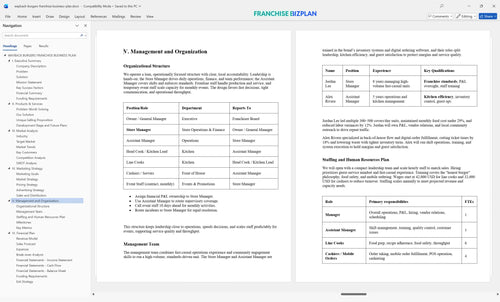
Team roles and org chart
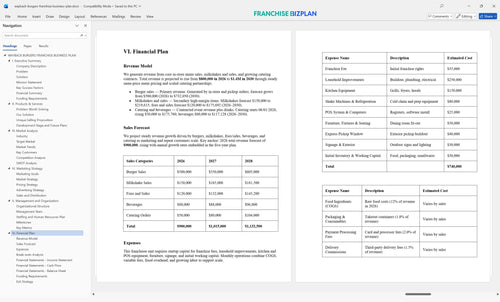
P&L cash flow break-even

Edit fast on any device

All core chapters included
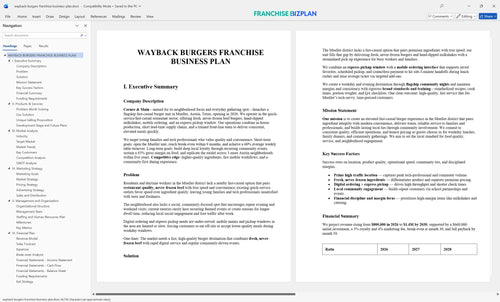
We developed this comprehensive franchise unit business plan in Microsoft Word based on our independent analysis of the fast-casual burger model. The plan comes pre-populated with data-driven assumptions for a single unit, including projected first-year revenue of $1,285,000 and initial capital expenditures for items like leasehold improvements ($250,000) and kitchen equipment ($150,000). All six chapters are fully editable, allowing you to adapt this fast-casual franchise startup guide to your specific market and financial needs.
The business case is centered on opening a premium fast-casual burger restaurant in a high-traffic urban district, targeting young families and professionals. The model leverages a nostalgic brand identity and a commitment to quality ingredients to capture a segment of the market seeking an experience above traditional fast food. Success depends on executing community-focused marketing and maintaining high operational standards to justify a premium price point.
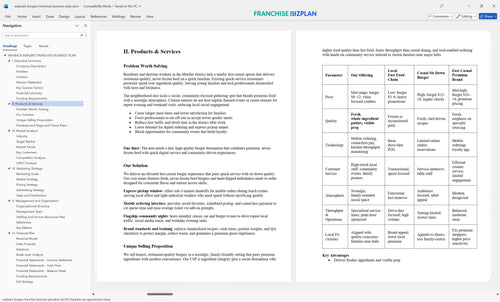
The franchise unit sells high-quality, made-to-order burgers, hand-dipped milkshakes, fries, and other classic American fare. Customers will choose this restaurant for its 'honest burger' philosophy, which uses fresh, never-frozen beef, and for the convenience of its streamlined mobile ordering and dedicated express pickup window. The combination of quality ingredients and efficient service creates a strong value proposition for busy customers who don't want to compromise on taste.
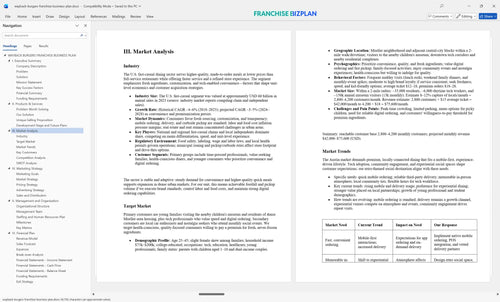
The target market consists of three core segments: young families visiting nearby attractions, tech professionals seeking quick and high-quality lunch options, and local residents looking for a premium alternative to traditional fast food. The market opportunity lies in serving these distinct groups through a combination of a family-friendly atmosphere, efficient digital ordering, and community-centric events that build local loyalty.
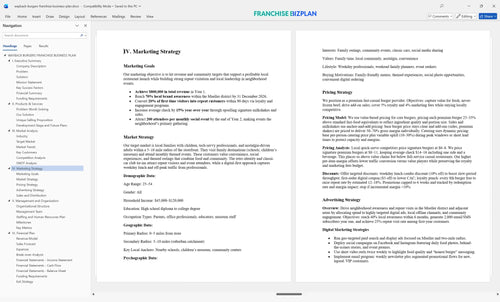
The unit will attract customers through a blended marketing strategy that combines brand-level advertising with hyper-local initiatives. This includes digital marketing campaigns targeting local professionals, partnerships with community organizations like schools and museums, and hosting recurring monthly events to create a loyal following. The key is to build a strong local presence that drives repeat business beyond what the national brand marketing provides.
The franchise unit will be run by a full-time Store Manager with an annual salary of $75,000, supported by an Assistant Manager and a team of line cooks and cashiers. The staffing plan projects a starting team of one Store Manager, one Assistant Manager, three Line Cooks, and four Cashiers/Servers. This structure is designed to ensure consistent execution of brand standards, manage food service business model costs, and deliver a high level of guest service from day one.
The total initial investment for capital expenditures is estimated at $660,000, covering the franchise fee, leasehold improvements, and all necessary equipment. The financial model projects first-year revenue of $1,285,000, growing to $1,984,000 by year five. While the unit is projected to reach its breakeven point within four months, the full payback of the initial investment is defintely a long-term play, occurring after year five, with a projected Internal Rate of Return (IRR) of 2.28%.
This franchise business plan template is a complete, pre-written document designed to save you dozens of hours. It provides a solid foundation based on the fast-casual franchise model, yet it remains fully editable in Microsoft Word. This allows you to tailor the plan to your specific location, financial situation, and operational strategy, ensuring it aligns perfectly with both franchisor requirements and lender expectations for a burger restaurant business plan.

The included Word document contains a comprehensive franchise unit financial model template, complete with detailed startup costs, operating expenses, and a five-year revenue forecast. With projected first-year sales of $1,285,000, these figures provide a clear, data-driven basis for evaluating the unit's potential profitability, securing funding, and understanding the complete financial picture before you invest.

Our business plan template for a food franchise startup offers a practical, cost-effective alternative to hiring expensive consultants. By providing a comprehensive framework, it saves you both time and money. This allows you to allocate more of your capital toward critical startup needs like the initial franchise fee, equipment, leasehold improvements, and essential working capital for the first few months of fast-casual restaurant operations.

This burger restaurant business plan is structured to make a professional and credible impression on lenders, investors, and the franchisor's review board. The clear narrative, logical flow, and detailed financial tables demonstrate a thorough understanding of franchise economics. It helps you confidently answer questions and supports your request for funding by presenting a well-organized and compelling case for your proposed franchise location.

The template delivers a complete overview of your franchise unit, covering everything from the mission and vision to the specific target market and local competitive landscape. It provides a structured narrative that explains your value proposition within the brand's framework. This ensures you have a clear and coherent story for how your franchise unit operational plan will succeed in your chosen territory.


Purchase the template and download it immediately. Open and edit it seamlessly using Microsoft Word or Google Docs, making it easy to start working on your business plan right away.

Modify each section to align with your business concept, industry, and financial goals. Personalize the content to reflect your target market, unique value proposition, and key financial details.

Leverage the provided example financial projections or seamlessly incorporate your specific figures, utilizing an optional financial model available for purchase.

Conduct a thorough review of your business plan, refining the content to ensure it's investor-ready and serves as an effective operational guide.