


Executive Summary
Your concept at a glance



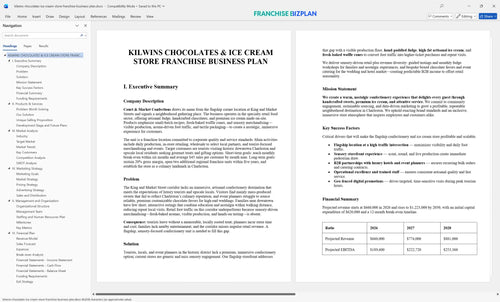
This franchise unit business plan template includes a complete, pre-written business plan in Microsoft Word and franchise-specific financial tables.
Your concept at a glance
What you sell and why
Market size and rivals
Channels, promotions, conversions
Team roles and org chart
P&L cash flow break-even

Edit fast on any device

All core chapters included
We developed this franchise unit business plan in Microsoft Word using our own independent research into the premium dessert and confectionery sector. All six chapters are pre-populated with data specific to opening and operating a high-end chocolate and ice cream store franchise, and every section is fully editable. The financial model assumes a significant initial investment to cover costs like a $40,000 franchise fee and $280,000 in leasehold improvements, targeting first-year revenue of $955,000.
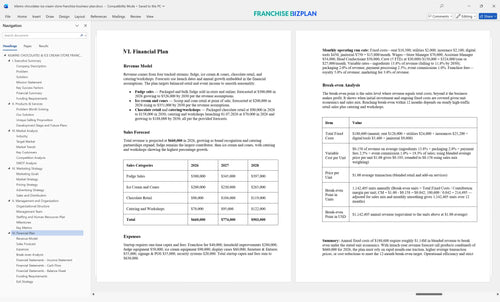
The business case is to establish a high-revenue, premium confectionery retail store in a prime, high-traffic location that attracts both tourists and affluent local customers. This is a capital-intensive model requiring a minimum of $623,000 in cash to manage the build-out and initial operating phase. While the unit is projected to break even within 4 months, the full payback on the initial investment is expected to take 5 years, making it a long-term play.
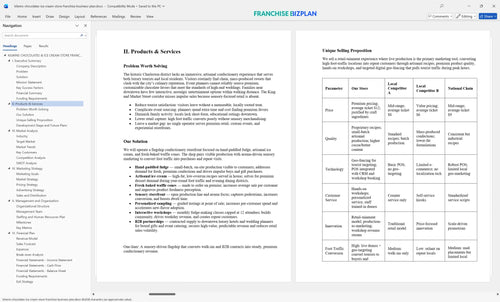
The unit sells a range of premium, artisanal confectionery products, with a primary focus on fudge, ice cream, and chocolates. Customers are not just buying a product; they are buying a nostalgic, sensory experience, often driven by in-store activities like visible fudge-making. Fudge sales are the core revenue driver, projected to generate $300,000 in the first year alone, followed by ice cream at $200,000.
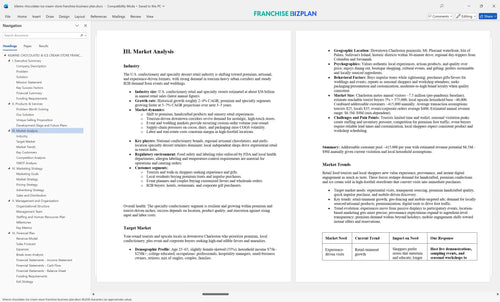
The primary customer segments are tourists seeking unique local experiences and upscale local residents who value high-quality, premium treats. The opportunity lies in securing a prime retail location with high foot traffic from both groups. The business model's success depends on a location where the high fixed rent of $10,500 per month can be supported by consistent, year-round demand from these target demographics.
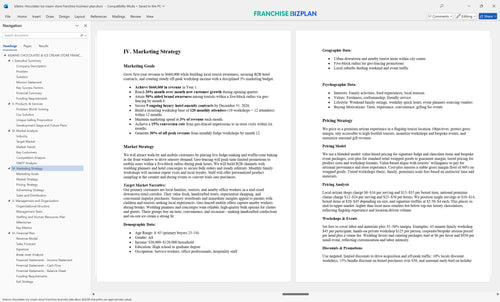
Customer acquisition will be driven by a combination of the franchisor's brand power, the store's prime physical location, and local marketing efforts. A mandatory 3% marketing fee contributes to national brand awareness, which must be supplemented by in-store 'retail theater' like visible fudge production to draw in street traffic. Local digital marketing and partnerships with nearby businesses like hotels will be key to driving consistent sales.
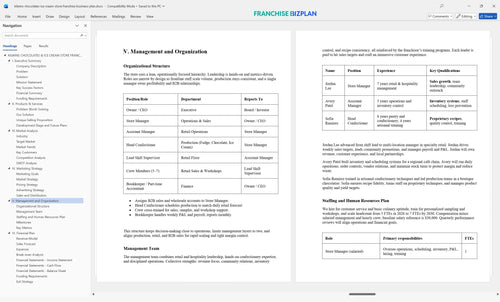
The unit will be run by a full-time, salaried management team to ensure operational consistency and adherence to strict franchise standards. The plan budgets for a Store Manager ($70,000 annual salary), an Assistant Manager ($54,000), and a Head Confectioner ($50,000). This leadership team will oversee a staff of 5.0 full-time equivalent (FTE) crew members in the first year, scaling up as revenue grows.
The startup capital requirement is significant, estimated at over $630,000 to cover major one-time costs, including a $40,000 franchise fee and $280,000 for leasehold improvements. The financial model projects first-year revenue of $955,000, growing to over $1.7 million by year five. However, the high initial investment and operating costs result in a 5-year payback period and a modest 2.89% Internal Rate of Return (IRR), which defintely highlights this as a long-term investment.
This ice cream shop business plan is a complete, pre-written document designed to save you dozens of hours. It provides a solid foundation based on the franchise model, but it's also fully editable in Microsoft Word. This flexibility allows you to customize the plan to fit your specific location, local market data, and personal financial situation, ensuring it aligns perfectly with both franchisor expectations and lender requirements.

The included franchise financial projections give you a clear view of the unit's economic potential. The template breaks down startup capital requirements, ongoing operating costs, and revenue forecasts based on the specific model of a premium confectionery franchise. This helps you understand the path to profitability, calculate your break-even point, and present a credible financial case to secure funding for your food franchise startup.

Using this chocolate store franchise template is a cost-effective way to develop a professional business plan without the high fees of a consultant. It saves you time and money that are better spent on critical startup needs. You can reallocate those funds directly into your franchise fee, equipment purchases, initial inventory, or the working capital needed to cover costs before you open your doors.

This retail franchise business plan is formatted to make a strong, professional impression on banks, investors, and the franchisor's review committee. The clear structure, logical financial tables, and comprehensive narrative demonstrate that you have thoroughly analyzed the opportunity. It builds credibility and shows you are prepared for the financial and operational realities of opening a new franchise unit, improving your chances of securing approval and funding.

The template provides a complete business overview, covering everything from your mission and vision to your local market positioning and operational plan. It gives you a well-structured narrative for your specific franchise unit within the brand's established framework. This ensures all critical aspects of the business are considered and presented clearly, creating a cohesive and compelling story for your confectionery franchise opportunity.


Purchase the template and download it immediately. Open and edit it seamlessly using Microsoft Word or Google Docs, making it easy to start working on your business plan right away.

Modify each section to align with your business concept, industry, and financial goals. Personalize the content to reflect your target market, unique value proposition, and key financial details.

Leverage the provided example financial projections or seamlessly incorporate your specific figures, utilizing an optional financial model available for purchase.

Conduct a thorough review of your business plan, refining the content to ensure it's investor-ready and serves as an effective operational guide.