


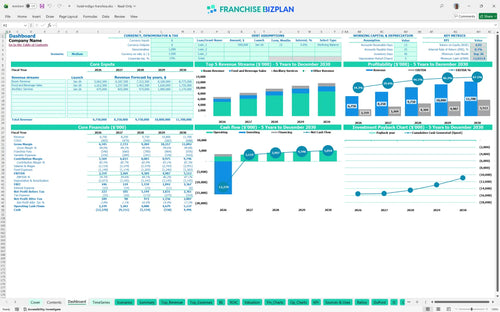
All-in-one Dashboard
Core inputs and core outputs



This comprehensive startup budget template for historic building hotel conversion provides a detailed roadmap for managing a luxury hospitality unit from site selection through five years of operations. This is the blueprint for your boutique hotel investment.
Core inputs and core outputs
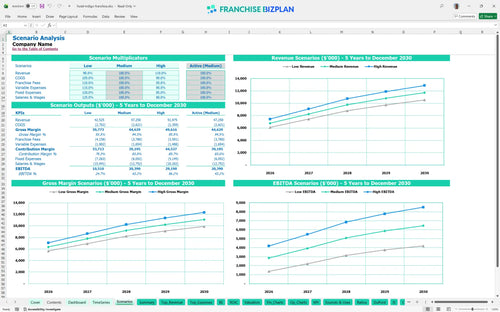
Three scenario analysis
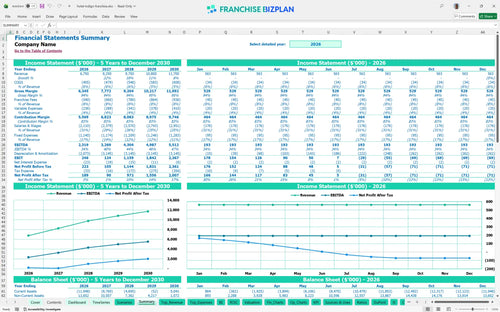
Presentation ready
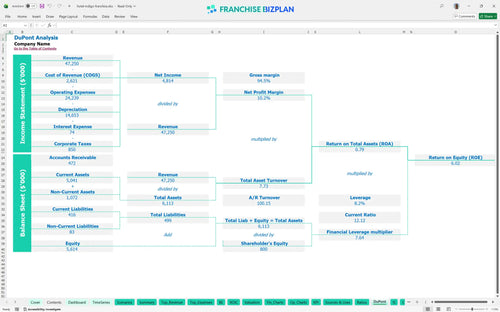
DuPont analysis
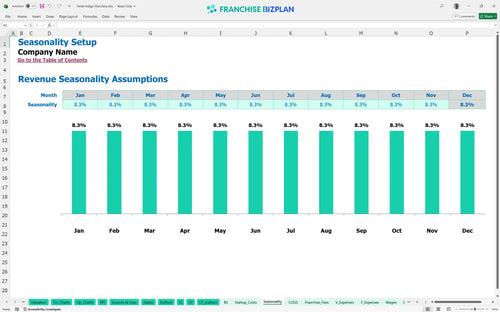
Researched revenue assumptions
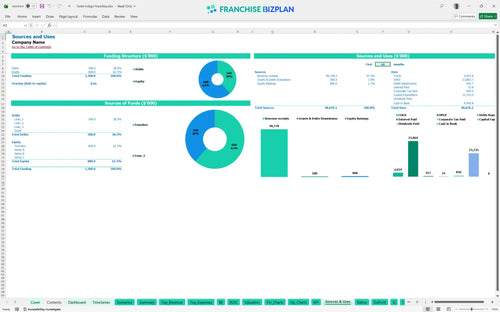
Lender-friendly financial outputs
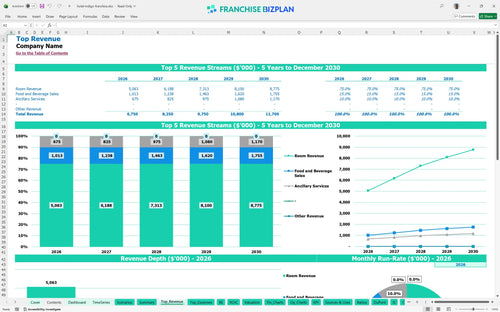
Revenue stream detailed view
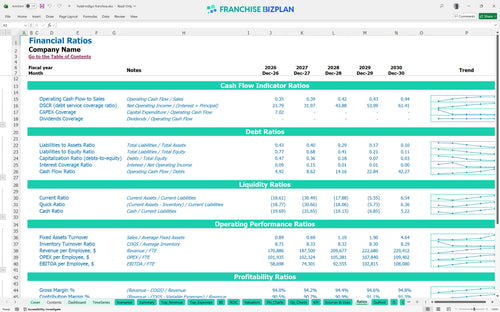
Performance metrics benchmark
We built this boutique hotel franchise model using detailed research into upscale historic conversions and brand standards. Key assumptions like revenue stream forecasting for luxury hotel franchises, $12,000 monthly property taxes, and a $350,000 AI personalization tech spend are pre-populated and fully editable to fit your specific feasibility study template for boutique hotel development. Year one revenue is projected at $6.75 million with an EBITDA of $2.319 million, giving you a realistic starting point for your investment.
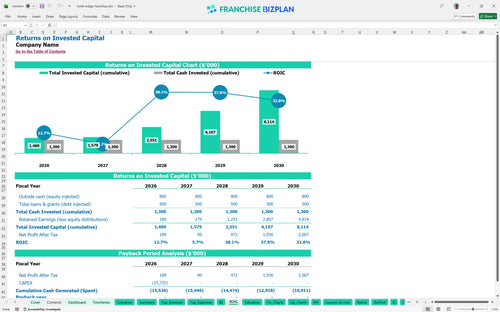
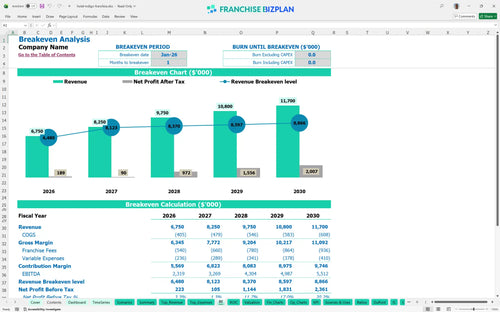
The unit hits a technical break-even in January 2026, just one month after launch, but true cash flow stability takes longer due to the massive $15.7 million initial investment. While EBITDA grows from $2.3 million to $5.5 million over five years, the high debt service or equity requirements mean you are playing a long game. Profitability is a marathon, not a sprint.
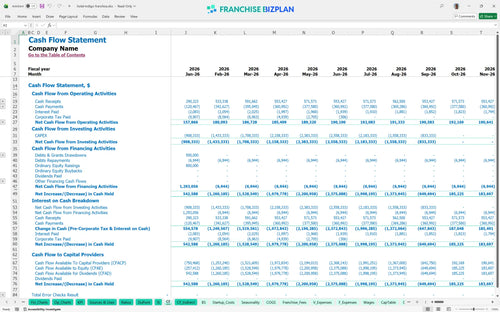
You need roughly $15.7 million for franchise unit startup costs, primarily covering the $7.5 million historic building conversion and $4.2 million in furnishings. The model shows a lowest cash point of -$12.8 million in September 2026, suggesting you need a significant capital stack or financing to survive the ramp-up. You can't build a luxury experience on a budget motel stack.
The internal rate of return (IRR) is a modest 0.72% over five years, with a return on equity (ROE) of 6.02%. Because of the high initial investment in historic assets, the payback period extends beyond the initial five-year window, making this an asset-appreciation play. This is a real estate play disguised as a hotel.
Monthly break-even requires covering approximately $95,000 in fixed costs, including $35,000 for rent and $12,000 in property taxes. The biggest lever here is room revenue, which must hit at least $3.3 million annually to keep the lights on and cover the 8% total franchise fee burden. Volume is the only way to outrun high fixed costs.
Your lowest cash point hits -$12.8 million in September 2026, which is common when analyzing profitability for hospitality franchise units with heavy capital expenditure planning. You will defintely need a robust financing plan or a large equity partner to cover the gap between the $7.5 million build-out and the point where $2.3 million in annual EBITDA starts to chip away at the debt. Cash is oxygen; don't run out before the summit.
A high-performance scenario could push year-5 revenue toward $13 million, significantly improving the 0.72% IRR. Conversely, a low-demand scenario where RevPAR drops by 15% would likely push the payback period toward year 10 and require even more working capital to cover the $160,000 GM salary. Plan for the worst, but build for the best.
Finance: update unit break-even and payback model by Friday.
This boutique hotel franchise model is built in Excel with open formulas, allowing you to tweak every variable from room rates to local labor costs. You can swap out the assumptions for any US market to see how local demand shifts your bottom line. Every 1-point margin leak matters fast in a single-unit model.

Mapping out a hotel franchise financial plan requires a long-term lens, especially with revenue scaling from $6.75 million in year one to $11.7 million by year five. This model tracks the ramp-up phase and mature-state performance to help you manage the transition from opening jitters to steady-state hotel asset management. Timing gaps between opening costs and mature-unit performance are the real killers.

The model accounts for the $75,000 initial franchise fee and ongoing obligations like the 5% royalty and 3% marketing fund found in a typical franchise disclosure document. At $8.25 million in year two revenue, these fees total $660,000, which is a significant line item that impacts your operating expense ratio. Royalties are a top-line tax that doesn't care if you're profitable yet.

Use this boutique hotel franchise financial model excel template to track a heavy upfront investment, including $7.5 million for historic building leasehold improvements and $4.2 million for guest room furnishings. We calculate the exact occupancy and RevPAR forecasting needed to clear your $35,000 monthly rent and $18,000 utility bills. Break-even depends less on headline sales and more on local density.

We include benchmarks for the operational cost breakdown for boutique hotel properties to ensure your $160,000 GM salary and $1.1 million kitchen equipment spend align with market standards. Comparing your 1.3% payment processing fee and 2.2% OTA commissions against industry norms helps you spot margin leaks early. Labor is your biggest controllable, so watch the FTE count.


Simply purchase and download the financial model template, then access it instantly using Microsoft Excel or Google Sheets. No installation or technical expertise required-just open and start working.

Enter your business-specific numbers, including revenue projections, costs, and investment details. The pre-built formulas will automatically calculate financial insights, saving you time and effort.

Leverage the investor-ready format to confidently showcase your financial projections to banks, franchise representatives, or investors. Impress stakeholders with clear, data-driven insights and professional reports.

Leverage the investor-ready format to confidently present your projections to banks, franchise representatives, or investors.