


Executive Summary
Your concept at a glance



This purchase includes a complete, editable sushi franchise business plan in Microsoft Word and a guide on how to write a business plan for a sushi franchise.
Your concept at a glance
What you sell and why
Market size and rivals
Channels, promotions, conversions
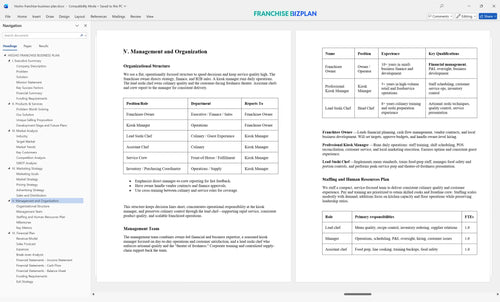
Team roles and org chart
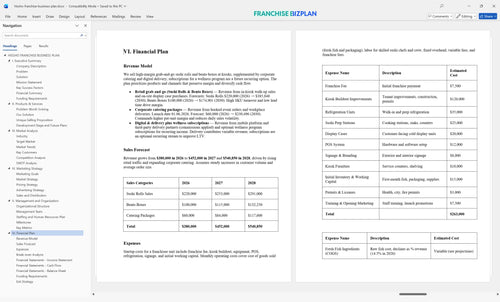
P&L cash flow break-even

Edit fast on any device

All core chapters included
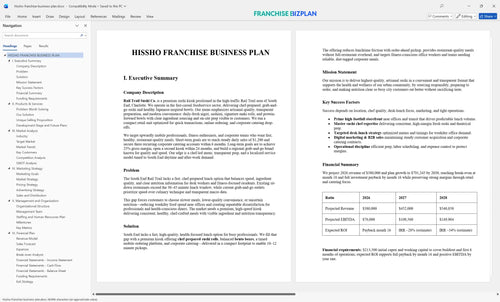
We developed this franchise unit business plan in Microsoft Word based on our independent analysis of this retail kiosk business model. All six chapters are pre-populated with researched data specific to opening and operating a high-end sushi kiosk, including financial projections showing a 4-year payback period but also high initial capital costs of over $237,500. The entire document is fully editable, allowing you to adapt the plan to your specific location and financing needs.
The opportunity is to launch a premium grab-and-go sushi kiosk in a high-traffic urban location, capturing demand from affluent young professionals and corporate clients. The business model leverages a well-known franchise brand to deliver artisanal quality with the speed required by a 'desk-lunch' demographic, supplemented by a strong corporate catering revenue stream.
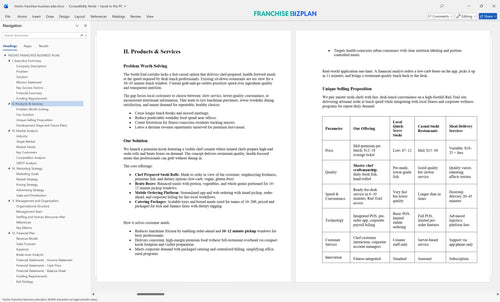
The franchise unit sells premium, freshly prepared sushi rolls, bento boxes, and specialized catering packages. Customers choose this concept for its 'theater of freshness,' where they see master chefs preparing their food, and for its convenient, healthy alignment with a fast-paced, wellness-focused lifestyle. The product mix is designed for high-volume grab-and-go sales and profitable B2B catering.
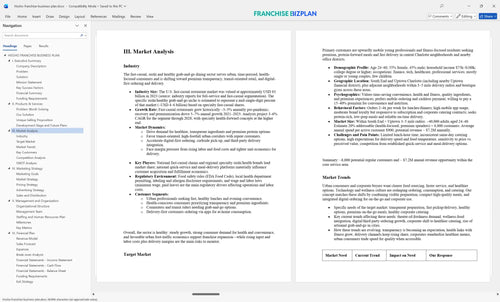
The primary customers are upwardly mobile young professionals, fitness enthusiasts, and corporate employees in nearby financial and tech hubs. The market is characterized by high disposable income and strong demand for convenient, healthy, and premium food options. This franchise unit is designed to win by positioning itself in a high-foot-traffic location and directly targeting the lucrative 'desk-lunch' and corporate catering segments.
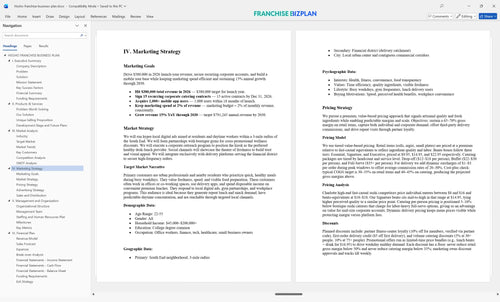
Customer acquisition will be driven by the kiosk's prime physical location, supplemented by digital marketing, a streamlined mobile ordering platform, and partnerships with third-party delivery services. A dedicated focus on B2B outreach will secure corporate catering contracts. With a 2% marketing fee paid to the franchisor, the local marketing plan must efficiently convert foot traffic and build a loyal base to cover the $5,000 monthly rent and other fixed costs.
The unit will be run by a hands-on franchisee or a dedicated Kiosk Manager, overseeing a team that includes a Lead Sushi Chef, an Assistant Sushi Chef, and several Crew Members. The initial staffing plan calls for 5.5 full-time equivalent (FTE) employees, growing to 8.3 FTEs by Year 5. Success defintely depends on the Lead Chef's skill and the Manager's ability to control a high labor budget, projected at 38.7% of revenue in Year 1.
The initial investment required is approximately $237,500 to cover the franchise fee, build-out, and equipment. The financial model projects the unit to reach break-even in just four months and achieve payback in four years. However, franchisees must be prepared for significant cash needs, with a minimum cash requirement of $975,000 projected for June 2026, and manage operations carefully to overcome a low 3.05% IRR driven by high royalties (8%) and labor costs.
This professional business plan template for food franchises is fully pre-written, saving you dozens of hours in research and writing. It is also 100% editable in Microsoft Word, allowing you to customize every detail to match your specific location, financial assumptions, and operational strategy. This combination ensures your final document aligns perfectly with franchisor expectations while reflecting your unique local market conditions, making it a powerful tool for securing approvals and funding.

Our franchise unit business plan includes a complete financial model with detailed startup cost estimates, five-year revenue projections, and a full breakdown of operating expenses. These pre-built financial tables help you immediately assess the unit's potential profitability, understand your total franchise investment requirements, and determine the funding needed to launch and sustain operations until you reach break-even. This financial planning for a retail food franchise is essental for any serious candidate.

Developing a business plan from scratch is expensive and time-consuming, often requiring costly consultants. This template provides a cost-effective solution, giving you a polished, lender-ready document for a fraction of the price. By using our sushi kiosk business plan template for investors, you can redirect your capital toward what truly matters: the initial franchise fee, equipment purchases, and the working capital needed for a strong opening.

This restaurant business plan template is structured to make a credible and compelling case to lenders, investors, and the franchise approval committee. The professional formatting, clear narrative, and logical financial projections demonstrate that you have thoroughly analyzed the opportunity and are prepared for the realities of food service entrepreneurship. It helps you confidently answer tough questions and build the trust needed to secure financing and territory rights.

Beyond the numbers, this template provides a comprehensive overview of your entire business operation. It includes pre-written sections covering your mission, vision, target market, competitive positioning, and operational plan for a grab-and-go sushi business. This complete narrative gives you a clear and structured way to present your vision within the established framework of the franchise brand, ensuring consistency and clarity for all stakeholders.


Purchase the template and download it immediately. Open and edit it seamlessly using Microsoft Word or Google Docs, making it easy to start working on your business plan right away.

Modify each section to align with your business concept, industry, and financial goals. Personalize the content to reflect your target market, unique value proposition, and key financial details.

Leverage the provided example financial projections or seamlessly incorporate your specific figures, utilizing an optional financial model available for purchase.

Conduct a thorough review of your business plan, refining the content to ensure it's investor-ready and serves as an effective operational guide.