


Executive Summary
Your concept at a glance



You will receive a comprehensive, fully editable Microsoft Word document that serves as a complete business plan outline for technology franchise units, including pre-populated text and financial tables.
Your concept at a glance
What you sell and why
Market size and rivals
Channels, promotions, conversions
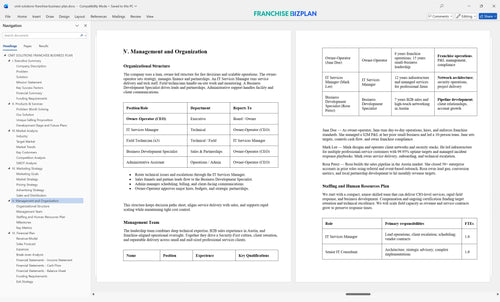
Team roles and org chart
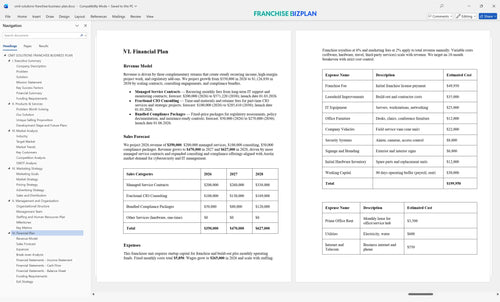
P&L cash flow break-even

Edit fast on any device

All core chapters included
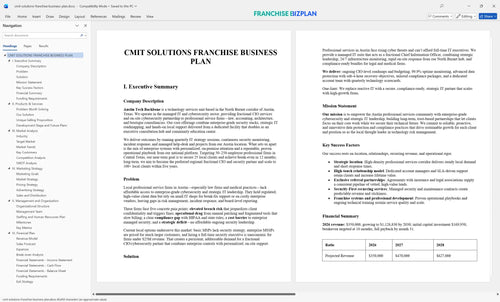
We developed this managed IT services franchise business plan in Microsoft Word using our own independent research into the franchise model. All six chapters are pre-populated with data specific to opening and operating a unit, including revenue streams that grow from $525,000 in Year 1 to over $1.69 million by Year 5. The entire document is fully editable, allowing you to align the plan with your specific territory and financial assumptions.
The business case is built on providing enterprise-grade managed IT and cybersecurity services to an underserved local market of small-to-medium-sized professional firms. The model focuses on establishing recurring revenue through long-term contracts, supplemented by high-margin fractional CIO (Chief Information Officer) consulting. It's a B2B model that solves critical data protection and compliance needs for businesses like law firms and medical practices.
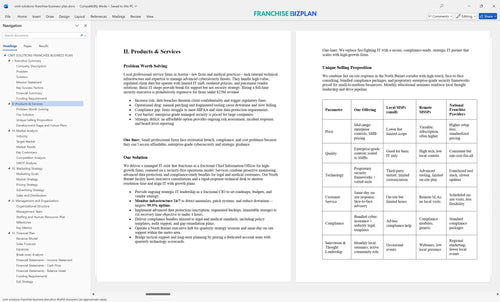
The unit's offerings are centered around three core revenue streams designed to create a stable, scalable business. The foundation is recurring revenue from Managed Service Contracts, projected to start at $200,000 in the first year. This is complemented by Fractional CIO Consulting for strategic guidance and Bundled Compliance Packages that address specific industry regulations, providing a comprehensive IT business franchise guide for clients.
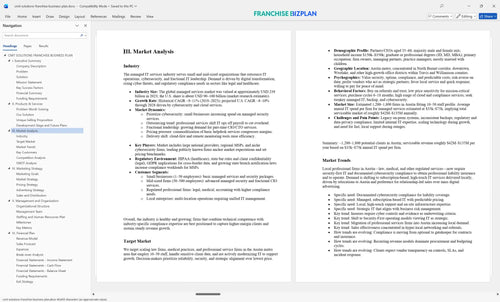
The primary customers are local professional service firms, specifically scaling law firms and medical practices that require sophisticated cybersecurity and data protection. These clients have outgrown basic IT support and need a proactive partner. The market is often fragmented with small, independent IT shops that lack the franchisor's enterprise-grade tools and standardized security frameworks, creating a clear opening for a more professional MSP franchise opportunity.
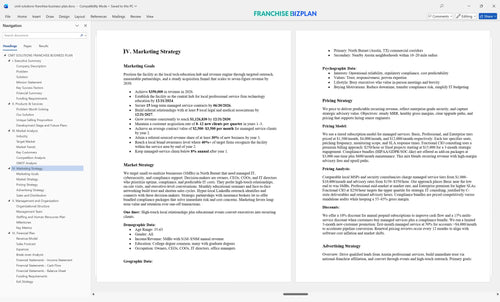
Customer acquisition will rely on a high-touch, hyper-local strategy focused on building trust and demonstrating expertise. This includes targeted LinkedIn outreach to decision-makers, hosting educational seminars on cybersecurity managed services, and building referral networks with local insurance providers and industry associations. The goal is to become the go-to local authority, not just another vendor, which is one of the best practices for opening an IT managed service franchise.
The unit will be led by a hands-on owner or a dedicated IT Services Manager with an annual salary of $75,000, responsible for operations and business development. The initial team includes a Senior IT Consultant and two Field Technicians to ensure service delivery standards are met from day one. As revenue scales, the plan accounts for adding more technicians and administrative support, ensuring the team can handle growth without sacrificing service quality.
The financial plan requires significant initial capital, including a $49,950 franchise fee and other startup costs for equipment and improvements. The model projects reaching breakeven within 4 months and achieves a full payback in 4 years. Success will be measured by hitting key milestones, such as achieving Year 1 revenue of $525,000 and growing EBITDA (earnings before interest, taxes, depreciation, and amortization) from $9,000 in Year 1 to $233,000 in Year 3. This is defintely an ambitious but achievable plan.
This managed IT services franchise business plan is a fully pre-written template designed to save you dozens of hours, while also being completely editable in Microsoft Word. This combination gives you a strong head start, allowing you to focus on tailoring the plan to your specific territory, local market conditions, and personal financial situation. It helps you create a document that meets franchisor expectations and supports your funding discussions.

The included Word template contains a complete financial model for IT services franchise operations, detailing startup costs, operating expenses, and revenue assumptions. It breaks down key capital expenditures like the $49,950 franchise fee and projects revenue streams from managed services, consulting, and compliance packages. These figures provide a clear framework for evaluating profitability, securing financing, and understanding the unit's economic engine from day one.

Using this IT franchise business plan template is a highly cost-effective solution for prospective franchisees. It provides a professional, comprehensive document without the high fees associated with hiring a consultant, saving you thousands of dollars. That capital can be better used for critical startup needs like your initial franchise fee, marketing launch, or hiring your first technician.

This business plan is structured to make a strong, credible impression on lenders, investors, and the franchise approval committee. The professional layout, clear financial logic, and comprehensive operational details demonstrate that you have a serious and well-researched strategy. It's a tool designed to build confidence and support your request for capital for starting an IT services franchise.

Complete Business Overview
The template provides a complete business overview, covering your unit's mission, target market, local competitive landscape, operational plan, and staffing structure. It gives you a well-organized narrative for presenting your vision within the established framework of the franchise system. This helps ensure all key business components are considered, from marketing to management.


Purchase the template and download it immediately. Open and edit it seamlessly using Microsoft Word or Google Docs, making it easy to start working on your business plan right away.

Modify each section to align with your business concept, industry, and financial goals. Personalize the content to reflect your target market, unique value proposition, and key financial details.

Leverage the provided example financial projections or seamlessly incorporate your specific figures, utilizing an optional financial model available for purchase.

Conduct a thorough review of your business plan, refining the content to ensure it's investor-ready and serves as an effective operational guide.