


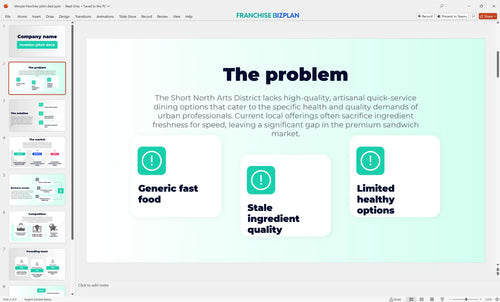
Problem
Defines market pain



This template provides a complete strategic growth plan for a sub shop franchise unit, including detailed financial models and operational strategies.
Defines market pain
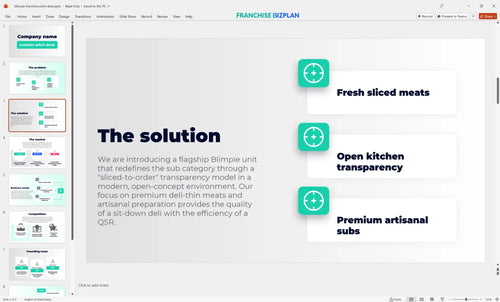
Explains your fix
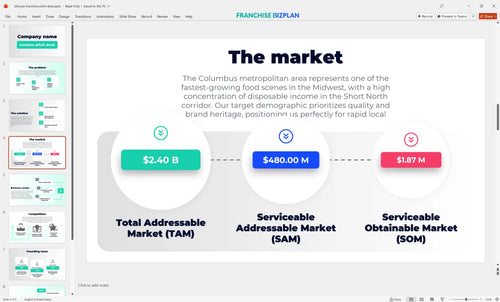
Quantifies opportunity size
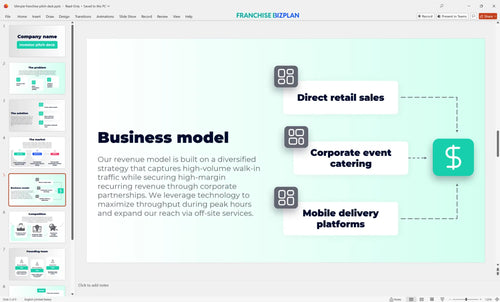
Shows revenue engine
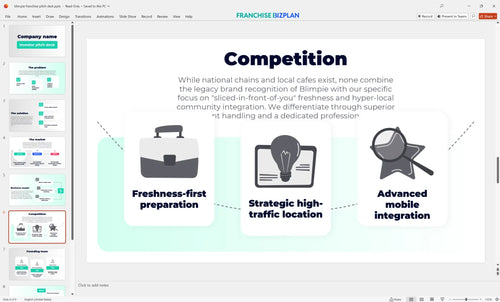
Highlights competitive edge
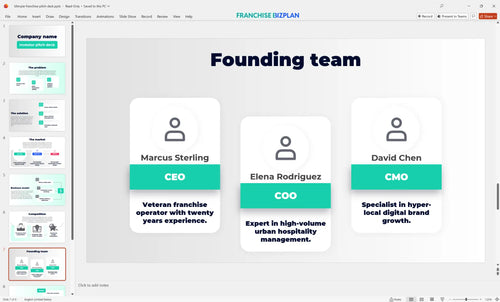
Proves operator credibility
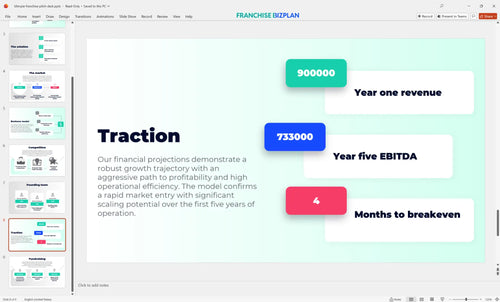
Demonstrates market momentum
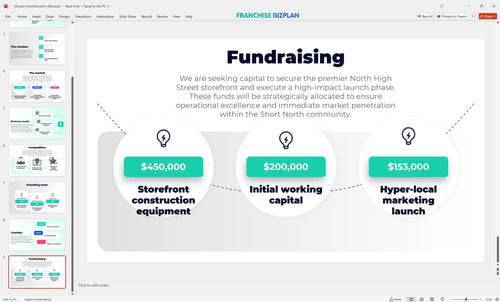
Details capital use
We developed this franchise unit pitch deck template using real-world data to ensure your projections are grounded in reality. The slides are pre-populated with researched figures, such as an expected $237,000 EBITDA in the first year and a clear four-month path to break-even. It is fully editable in Microsoft PowerPoint, so you can adjust the $220,000 build-out cost or the $9,000 monthly rent to match your specific site. Real data beats guesswork every time you talk to a lender.
Urban professionals need high-quality, fast-casual options that don't sacrifice health for speed. This unit fills that gap by offering fresh, artisanal sandwiches with a dedicated 'grab-and-go' lane for maximum efficiency. Timing your entry into a high-traffic zone is half the battle.
The unit offers a premium dining experience where deli-thin meats are sliced fresh to order in an open-concept kitchen. This transparency and quality provide a significant edge over pre-packaged or standardized fast-food competitors. Transparency in the kitchen builds trust at the register.
The primary customers are young professionals and health-conscious urban dwellers who value quality and speed. With projected first-year revenue of $900,000, the local market shows strong demand for both individual meals and corporate catering. A $900,000 top line starts with understanding your local foot traffic.
Revenue comes from three main channels: in-store sandwich sales, sides/drinks, and high-volume catering contracts. Sub sandwiches alone are projected to drive $420,000 in the first year, while food costs are kept tight at 13.5% to protect margins. Managing a 13.5% food cost is the key to protecting your bottom line.
Main competitors include national sub chains and local cafes, but our edge is the combination of brand legacy and hyper-local community roots. By slicing meat to order and sponsoring local arts events, we build a level of trust and loyalty that generic chains can't match. Local roots create a moat that national competitors can't easily cross.
Total startup costs include an $18,000 franchise fee and $220,000 for leasehold improvements. Reaching the break-even point by April 2026 is the primary milestone, followed by achieving a full payback on investment within three years. Capital is the fuel, but milestones are the map.
This franchise unit startup proposal is a ready-to-use resource for securing funding or internal approval. It eliminates the need to build from scratch by providing a proffesional structure that you can adapt to your specific urban territory. You can easily edit the PowerPoint slides to reflect your local market data, specific lease terms, or unique staffing needs. Customization is defintely the fastest way to go from a blank page to a bank-ready proposal.

Showing how the unit generates cash is vital for any investor presentation. This template breaks down revenue by product line, including walk-in sales and high-margin catering contracts. It helps you explain the path to $900,000 in first-year sales while keeping the focus on unit-level profitability. Numbers tell the story that words can't always finish.

Success in the fast-casual space depends on local density and understanding who else is feeding your customers. The deck includes structured slides to map out your specific neighborhood demand and how your fresh-sliced model beats the local competition. You need to show why your high-traffic retail location will capture the 25-45 age demographic effectively. Knowing your neighbors is just as important as knowing your recipes.

A clean layout ensures that lenders focus on your numbers rather than distracting graphics. This franchise investment presentation uses a professional flow that moves from the high-level opportunity to the granular financial projections. It's designed to look like a CFO prepared it, giving you instant credibility during high-stakes meetings. Good design makes complex math feel like common sense.

You must clearly state why this sub shop franchise unit stands out in a crowded market. This dedicated slide lets you highlight the artisanal experience, like slicing meats fresh in front of the customer, which justifies a higher average ticket. It connects your QSR operational strategy directly to the customer's desire for transparency and quality. Standing out is the only way to survive a crowded food court.


Get instant access to your pitch deck by downloading the template in PowerPoint or Google Slides. Open it in your preferred software and start customizing immediately.

Easily personalize each slide by replacing the placeholder text with your business information, market insights, and key financial details, ensuring the deck aligns perfectly with your vision.

Review and adjust the financial slides to align with your revenue model, cost breakdown, and funding needs, ensuring investors receive a clear and professional financial overview.

Refine your presentation for clarity and impact, ensuring it tells a compelling story about your business, highlights your competitive edge, and makes a strong case for investment.