


Executive Summary
Your concept at a glance



You will receive a complete, pre-written beef jerky franchise business plan in an editable Microsoft Word document, along with a guide on how to write a business plan for a new franchise unit.
Your concept at a glance
What you sell and why
Market size and rivals
Channels, promotions, conversions
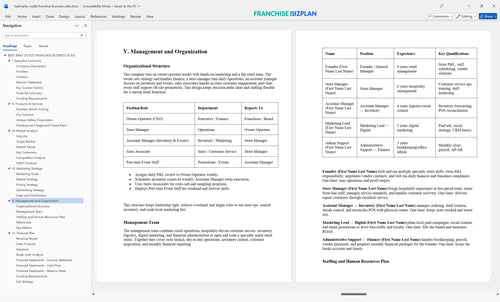
Team roles and org chart
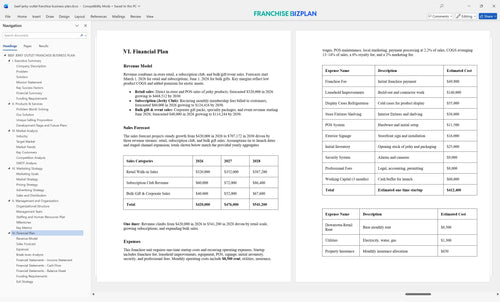
P&L cash flow break-even

Edit fast on any device

All core chapters included
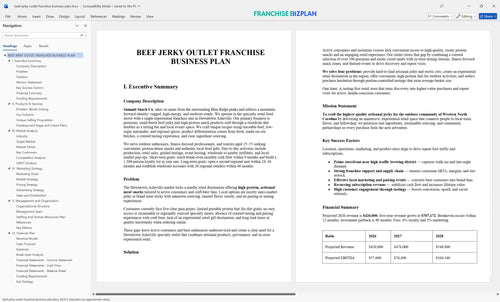
We developed this franchise unit business plan in Microsoft Word using our own independent research into the specialty food retail model. All six chapters are pre-populated with data specific to opening and operating a high-traffic retail food franchise, including financial assumptions that project first-year revenue of $630,000. The entire document is fully editable, allowing you to tailor the plan to your unique location and operational strategy.
The business case is built on an experiential 'try-before-you-buy' retail model in a prime, high-traffic downtown location that attracts both tourists and local craft beer enthusiasts. The unique, immersive store environment creates a destination, driving sales through direct customer engagement and a massive product selection not available in conventional stores.
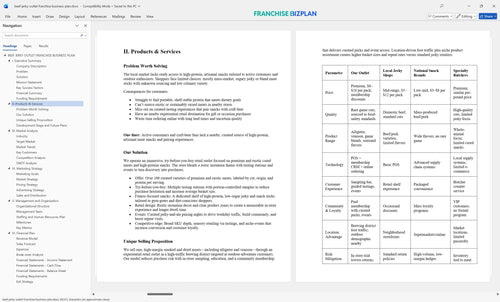
The unit will sell over 100 varieties of premium and exotic jerky, including unique options like alligator and venison, alongside other artisanal snacks. The core value proposition is the 'try-before-you-buy' experience, allowing customers to sample products before purchasing. The store will also offer a 'Jerky Club' subscription for recurring revenue and bulk gift packages.
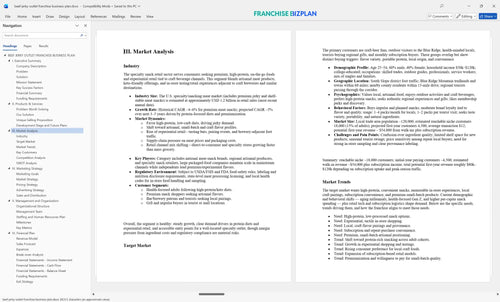
The primary customer segments are tourists visiting the Blue Ridge Mountains, craft beer enthusiasts from the nearby brewing district, and fitness-conscious locals seeking high-protein snacks. The market opportunity lies in capturing foot traffic from these diverse groups by offering a unique, memorable retail experience that complements the local culture of outdoor adventure and artisanal food and drink.
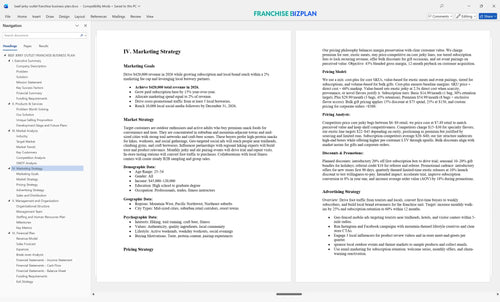
Customer acquisition will be driven by the high-visibility downtown location and local marketing strategies, including partnerships with nearby breweries for pairing events. We will use geo-targeted social media ads to reach tourists and locals. Customer retention will be achieved through the 'Jerky Club' subscription program and the unique in-store experience that encourages repeat visits and word-of-mouth referrals.
The unit will be run by a full-time Store Manager with an annual salary of $58,000, supported by an Assistant Manager and a team of Sales Associates. The staffing plan calls for three full-time equivalent sales associates in the first year, growing to five by year five to support sales growth. This team will be responsible for executing the franchise's operational standards, managing inventory, and delivering the signature 'try-before-you-buy' customer experience.
The initial startup investment is estimated at $344,400, which covers the franchise fee, leasehold improvements, equipment, and initial inventory. The financial model projects first-year revenue of $630,000, growing to over $1 million by year five. Key metrics for this franchise unit profitability analysis include a 4-month timeline to breakeven and a 5-year payback period, with a minimum cash requirement of $916,000 needed by April 2026 to ensure sufficient working capital.
This specialty food store business plan is a comprehensive, pre-written document designed to save you dozens of hours. It provides a solid framework based on the franchise model, but remains fully editable in Microsoft Word. This allows you to quickly customize the content to reflect your specific location, local market data, and personal financial situation, ensuring it aligns perfectly with both franchisor and lender expectations.

Our food franchise business plan template includes detailed financial projections built for a retail franchise startup guide. It outlines startup costs, a complete franchise unit financial plan, operating expenses, and revenue assumptions based on the franchise's model. These figures are critical for assessing your funding needs, forecasting profitability, and proving the financial viability of your proposed location to lenders and the franchisor.

Using this template is a smart, cost-effective alternative to hiring expensive consultants, saving you thousands of dollars. That capital is better spent on critical startup needs like the initial franchise fee, leasehold improvements, inventory, and working capital. It provides a professional, lender-ready document without the high cost, giving you more resources to invest directly into your new franchise unit.

This plan is structured to make a strong, credible impression on lenders, investors, and the franchise approval committee. The professional formatting, clear financial logic, and comprehensive operational details demonstrate that you have a thorough understanding of the business. It's designed to support your funding application and build confidence in your ability to successfully launch and operate the franchise unit.

The template delivers a complete business overview, covering your mission, vision, target market, and local competitive positioning. It also details your operational strategy for this experiential retail franchise, from staffing to inventory management. This gives you a clear and compelling narrative to present your business case, grounded in the proven framework of the franchise brand while tailored to your specific territory.


Purchase the template and download it immediately. Open and edit it seamlessly using Microsoft Word or Google Docs, making it easy to start working on your business plan right away.

Modify each section to align with your business concept, industry, and financial goals. Personalize the content to reflect your target market, unique value proposition, and key financial details.

Leverage the provided example financial projections or seamlessly incorporate your specific figures, utilizing an optional financial model available for purchase.

Conduct a thorough review of your business plan, refining the content to ensure it's investor-ready and serves as an effective operational guide.