


Problem
Defines market pain



This investor ready pitch deck for hospitality startups includes 13 essential building blocks covering everything from capital expenditure analysis to detailed franchise operation plans for historic properties.
Defines market pain
Explains your fix
Quantifies opportunity size
Shows revenue engine
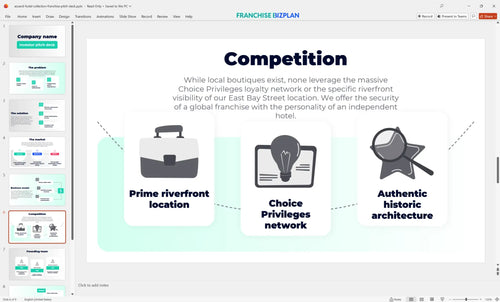
Highlights competitive edge
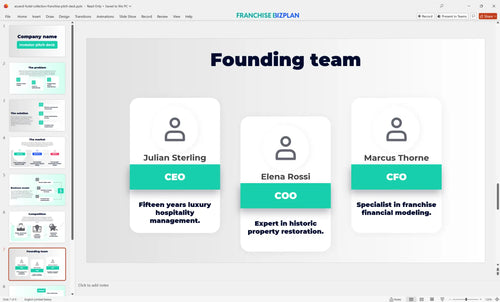
Proves operator credibility
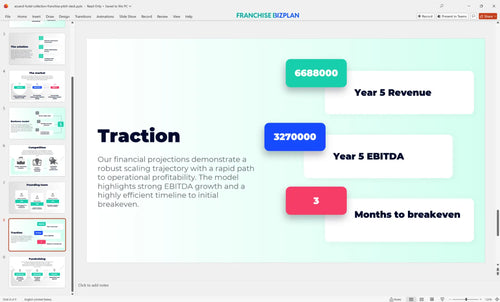
Demonstrates market momentum
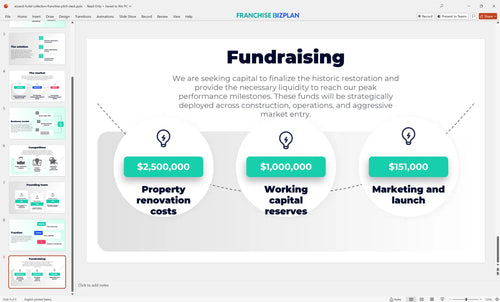
Details capital use
We built this franchise unit pitch deck in Microsoft PowerPoint format using our own research to save you weeks of work. All slides are pre-populated with data specific to this upscale hotel franchise, including a Year 1 revenue projection of $3,725,000 and an initial EBITDA of $1,620,000. It is a practical, fully editable tool designed for real-world franchise execution and funding rounds.
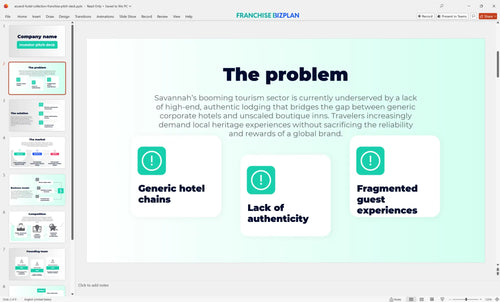
Modern travelers are tired of sterile, identical hotel rooms and crave authentic, culturally rich experiences. This unit addresses the urgent need for boutique lodging in historic districts that offers both local character and global brand reliability. The market is shifting toward these 'upscale explorer' stays where the building itself is part of the story. Authenticity is the new luxury.
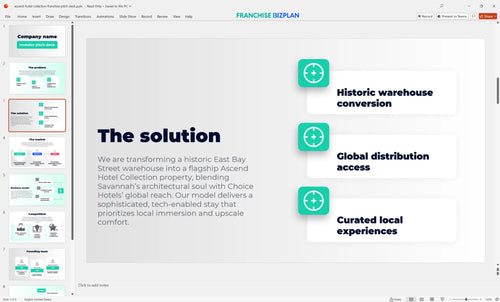
This franchise unit offers a high-touch, personalized stay in a refurbished warehouse, featuring a rooftop lounge that serves as a local social hub. It beats local alternatives by providing the unique charm of an independent hotel backed by a massive global distribution system and loyalty program. You get the personality of a boutique with the booking power of a major player. It is the best of both worlds for a franchise operation plan.
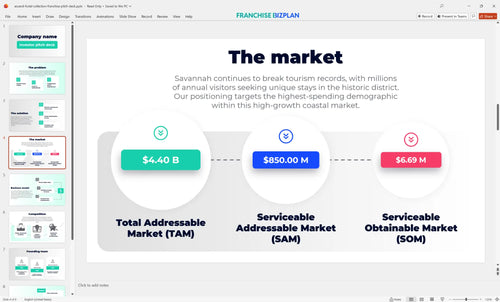
The primary guests are upscale explorers and mid-week business travelers who value sophisticated, authentic accommodations. The numbers are defintely achievable if occupancy stays on track, especially with a Year 1 room revenue target of $1,800,000. The local opportunity is massive, supported by a growing database of loyalty members who prioritize unique, brand-affiliated stays. High-end travelers spend more and stay longer.
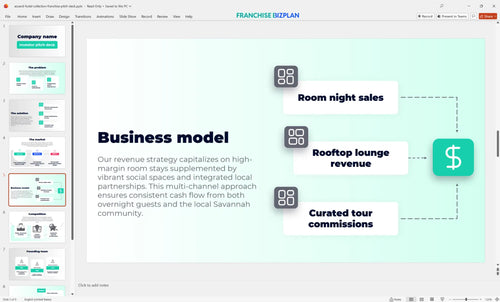
Revenue is generated through four primary streams: room rates, rooftop food and beverage, experience commissions, and event hosting. Here's the quick math: with a 5% royalty fee and a 3% marketing fund, the model maintains a strong EBITDA of $1,620,000 in the first year. The internal rate of return (IRR) is projected at 2.22% as the property scales toward a Year 5 revenue of $6,688,000. Margin control is built into every guest supply and labor hour.
The main competitors are independent boutique hotels and traditional upscale chains, but neither offers the same mix of historic authenticity and global reach. The defensible moat is the prime real estate in a refurbished warehouse and the exclusive partnerships with local artisans. You aren't just selling a bed; you are selling exclusive access to the city. Location and brand power create a barrier that is hard to bridge.
Total startup costs include a $45,000 franchise fee, $1.5 million for historic renovation, and $2 million for interior fit-out. These funds will be used to transform the warehouse into a luxury destination, with a critical milestone of reaching operational breakeven by March 2026. This investment covers everything from FFE procurement to IT systems, ensuring a seamless launch. The goal is a stabilized asset that pays back after year five.
Finance: update unit break-even and payback model by Friday
This franchise pitch deck template provides a professional, ready-to-use structure that eliminates the need to start from scratch. It is designed for Microsoft PowerPoint, allowing you to quickly swap in your specific site details or funding requirements. By using a pre-formatted layout, you ensure your presentation meets the high standards expected by institutional lenders and hospitality investors. Honestly, it is the fastest way to turn a complex boutique hotel business plan into a visual story that closes deals.

The template includes a dedicated revenue model slide to show exactly how your hotel franchise investment generates cash. It breaks down income from room stays, food and beverage, and even commissions from local experience bookings. This makes it easy to explain your pricing logic and unit economics to people who care most about the bottom line. Clear math on revenue drivers is what separates a hobby project from a serious commercial real estate investment.

Success in the hospitality sector depends on how well you understand local demand and your competition. This deck includes structured slides for market insights, helping you define the upscale explorer segment and map out the competitive landscape. You can easily highlight why your specific location on East Bay Street will outperform generic hotel chains. Knowing your local density and guest profile is the key to a winning hospitality startup pitch deck.

Lenders and equity partners see hundreds of deals, so your presentation needs to be scannable and professional. This franchise unit investment proposal example uses a clean, investor-focused design that prioritizes data over fluff. The layout guides the viewer through the executive summary, operations, and financial projections without overwhelming them. A professional look builds immediate credibility before you even say a word. Good design is just good business.

You need to articulate why this boutique hotel franchise startup is a better bet than other opportunities. This slide helps you define your unique value proposition, such as combining the soul of an independent hotel with the reliability of a global distribution system. It's about showing how you capture the 'Hostess City' spirit while leveraging a massive loyalty program. If you can't explain why you're different, you're just another room. This slide ensures your competitive edge is front and center.


Get instant access to your pitch deck by downloading the template in PowerPoint or Google Slides. Open it in your preferred software and start customizing immediately.

Easily personalize each slide by replacing the placeholder text with your business information, market insights, and key financial details, ensuring the deck aligns perfectly with your vision.

Review and adjust the financial slides to align with your revenue model, cost breakdown, and funding needs, ensuring investors receive a clear and professional financial overview.

Refine your presentation for clarity and impact, ensuring it tells a compelling story about your business, highlights your competitive edge, and makes a strong case for investment.