


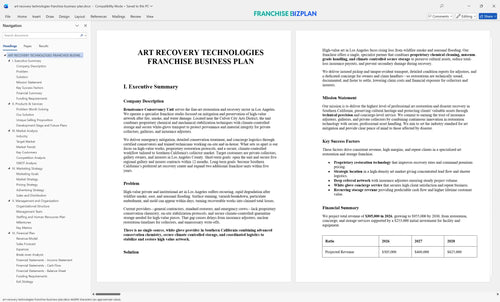
Executive Summary
Your concept at a glance



You get a complete, editable Microsoft Word business plan with pre-written text and fully researched financial tables tailored to a franchise unit.
Your concept at a glance
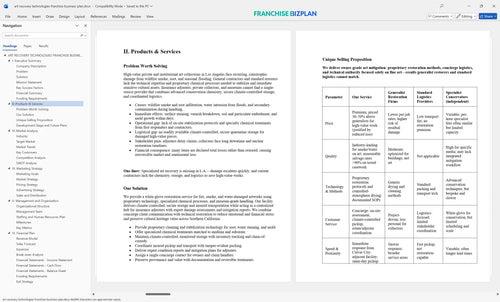
What you sell and why
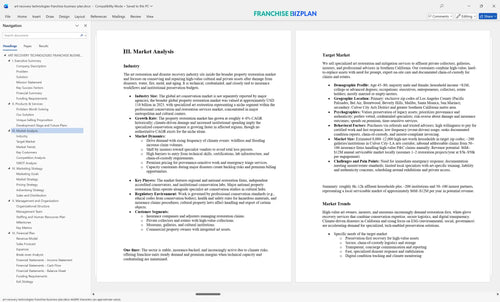
Market size and rivals
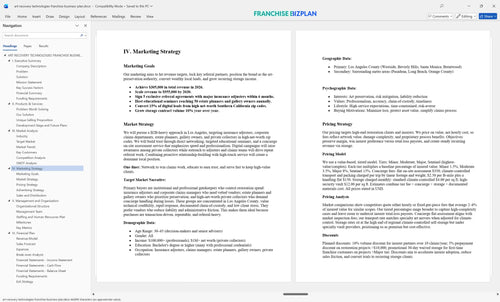
Channels, promotions, conversions
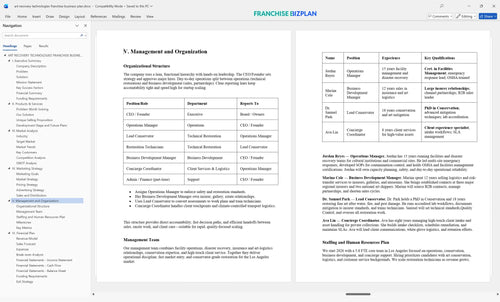
Team roles and org chart
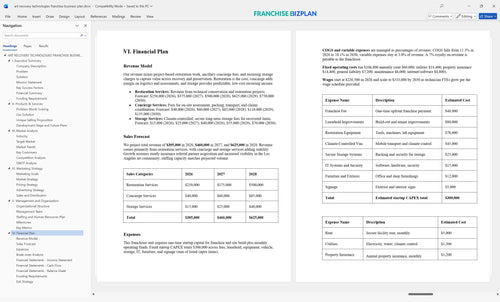
P&L cash flow break-even

Edit fast on any device

All core chapters included
We built this franchise unit business plan in Microsoft Word using our own independent research into the asset recovery business. All six chapters are pre-populated with data specific to opening and operating a specialized art restoration franchise and are fully editable to fit your local market. For example, the financial model projects first-year revenue of $458,000 and a 5-year payback period, giving you a solid, data-driven starting point for your own planning.
The business case is centered on providing specialized, high-value art mitigation business services to a niche market that general restoration companies cannot serve. By targeting high-net-worth individuals, galleries, and insurance firms in an arts-focused area like Culver City, the unit leverages proprietary technology to meet a critical demand for fine art conservation after disasters like fires and floods.
The unit's revenue comes from three primary sources: technical restoration services, high-touch concierge services, and secure storage solutions. Restoration services are the core of the business, projected to generate $250,000 in the first partial year of operation. This specialized service offering provides professional art restoration services for insurance claims, which drives the majority of the business.
The primary customers are high-net-worth private art collectors, art galleries, corporate insurance adjusters, and estate planners in affluent Southern California zip codes. The market is not based on volume but on high-value transactions driven by insurance claims and the need to protect irreplaceable assets. The business model focuses on building deep relationships within this exclusive community.
Customer acquisition is driven by direct B2B networking and establishing referral partnerships with insurance adjusters, high-end moving companies, and art gallery owners. The franchise model includes a 7% royalty fee but no national marketing fee, which underscores the importance of local, relationship-based sales efforts. Profitability comes from high-margin jobs secured through these trusted channels, not mass-market advertising.
The operational plan requires a lean, highly skilled team led by an Operations Manager with an annual salary of $75,000. Key technical roles include a Lead Conservator ($60,000) and Restoration Technicians ($42,000) who are trained in the franchisor's proprietary methods. This structure ensures that both client-facing service and the technical work of fine art conservation meet brand standards. The team will defintely need to be experts in their field.
Starting a specialized high-end art mitigation company requires significant capital, with a minimum cash requirement of $762,000 to cover the franchise fee, equipment, and facility build-out. The financial plan projects the unit will reach its breakeven point in 8 months. Revenue is forecast to start at $458,000 in the first year and grow to $1.43 million by year five, with a full payback of the initial investment expected within 5 years.
This business plan template for a franchise startup is fully pre-written, saving you dozens of hours of work. It's also delivered as a Microsoft Word document, making it 100% customizable. You can easily edit the text, tables, and financial assumptions to align the plan with specific franchise system requirements, your local market conditions, and your unique operational strategy for the art restoration franchise.

The included Word document contains a complete franchise unit financial projections template with detailed startup costs, operating expenses, and revenue assumptions. These figures are critical for evaluating the potential profitability of your restoration franchise opportunity. They help you calculate funding needs, understand the breakeven point, and present a clear financial case to lenders and the franchisor.

Using this template is a highly cost-effective business planning solution that provides a solid franchise investment guide. It reduces the need to hire expensive consultants, saving you thousands of dollars. That capital is better allocated toward the initial franchise fee, leasehold improvements, specialized equipment, and the working capital needed to launch your art mitigation business successfully.

This plan is structured to make a strong, professional impression on lenders, investors, and the franchise approval committee. Knowing how to write a business plan for a restoration franchise is about clarity and credibility. The logical flow, well-defined financial model, and organized presentation support your funding discussions and demonstrate a thorough understanding of the franchise opportunity.

The template provides a complete overview of your proposed franchise unit, detailing its mission, vision, target market, and operational plan. It provides a clear and structured narrative for presenting the art damage restoration business model. This framework helps you define your local positioning and value proposition within the broader context of the franchise brand, ensuring alignment and a clear path to execution.


Purchase the template and download it immediately. Open and edit it seamlessly using Microsoft Word or Google Docs, making it easy to start working on your business plan right away.

Modify each section to align with your business concept, industry, and financial goals. Personalize the content to reflect your target market, unique value proposition, and key financial details.

Leverage the provided example financial projections or seamlessly incorporate your specific figures, utilizing an optional financial model available for purchase.

Conduct a thorough review of your business plan, refining the content to ensure it's investor-ready and serves as an effective operational guide.