


Executive Summary
Your concept at a glance



You receive a complete, pre-written restaurant startup business plan in an editable Microsoft Word document, including a full set of franchise-specific financial projections and operational strategies.
Your concept at a glance
What you sell and why
Market size and rivals
Channels, promotions, conversions
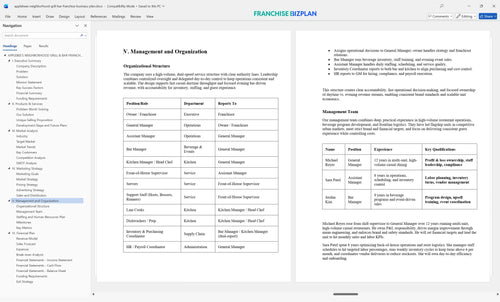
Team roles and org chart
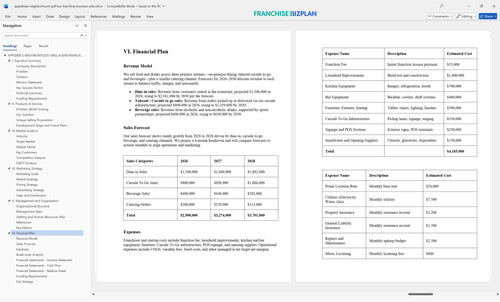
P&L cash flow break-even

Edit fast on any device

All core chapters included
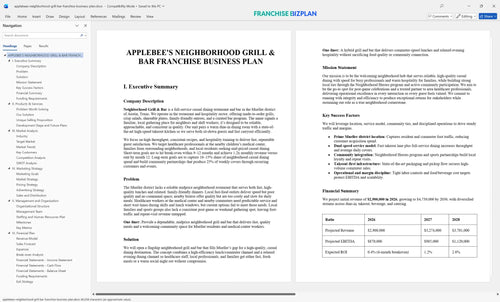
We developed this comprehensive business plan for a family restaurant franchise using our own industry research and financial modeling expertise. The plan, delivered in Microsoft Word, comes pre-populated with data-driven assumptions for a high-volume casual dining unit, including a five-year forecast projecting revenue growth from $4.25 million to over $6.8 million. All chapters are fully editable, allowing you to tailor the franchise operational plan to your specific market and financial situation.
The opportunity is to launch a new casual dining restaurant franchise unit in a prime, high-traffic urban location, leveraging a nationally recognized brand to capture a well-defined local customer base of healthcare professionals, families, and affluent residents. The business model is built on a dual-revenue stream of high-volume dine-in service and a technologically advanced to-go platform.
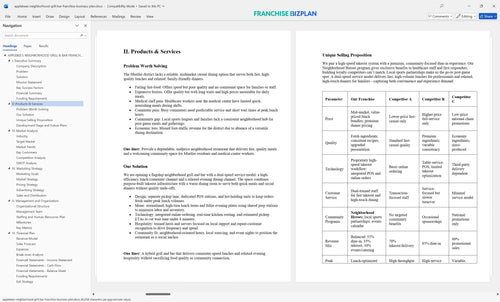
The franchise unit sells reliable, high-quality American-style casual dining food and beverages in a welcoming, neighborhood-focused atmosphere. The value proposition is centered on providing a consistent and convenient dining experience that bridges the gap between fast food and fine dining, with a specific operational focus on speed and efficiency for takeout customers.
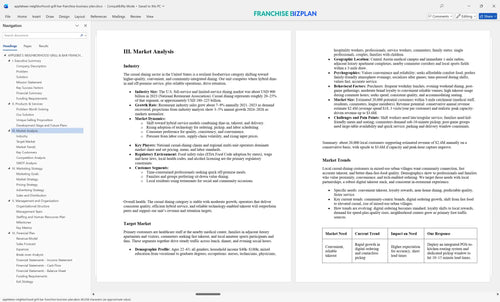
The primary customers are healthcare professionals and visiting families from the adjacent major medical center, supplemented by residents of the surrounding upscale apartments and participants from local sports leagues. This market analysis for a casual dining restaurant location identifies a diverse customer base with distinct needs, from quick lunch options to relaxed family dinners.
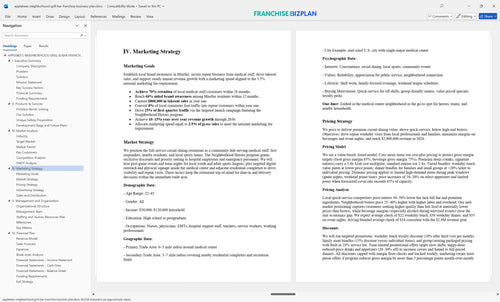
Customer acquisition will be driven by a combination of the franchisor's national brand campaigns, funded by a 3.5% marketing fee, and hyper-local marketing initiatives. The local strategy will focus on direct outreach and partnership programs with the nearby medical center and community sports leagues, amplified by the restaurant's high-visibility location to capture walk-in and drive-by traffic.
The unit will be run by an experienced General Manager who oversees a full management team, including an Assistant Manager and a Bar Manager. This leadership team will manage a large staff of hourly employees, projected to include 14 servers and 9 line cooks in the first year, to ensure consistent execution of brand standards and manage high-volume restaurant operational efficiency.
The financial plan requires a significant upfront investment, including $1.8 million for leasehold improvements and $700,000 for kitchen equipment. The model projects the unit will reach break-even within 3 months of opening and generate $4.25 million in first-year revenue, with a 4% royalty fee and 3.5% marketing fee paid to the franchisor. The payback period is projected to be after year 5, which is a realistic timeline for an investment of this scale and defintely requires careful cash flow management.
This restaurant franchise business plan provides a complete, pre-written template that saves you dozens of hours, allowing you to focus on site selection and operations. It is delivered as a fully editable Microsoft Word document, making it simple to customize the text, financials, and local market data to align perfectly with your specific location, franchisor requirements, and lender expectations. This is how to write a business plan for a restaurant franchise efficiently.

Our franchise business plan template includes detailed financial projections built for a high-volume casual dining restaurant. The plan outlines startup costs, a five-year revenue forecast starting at $4.25 million in year one, operating expenses, and key performance indicators. These financial projections for a restaurant franchise startup help you validate the unit economics, secure funding, and map out a clear path to profitability.

Developing a business plan for a new franchise location from scratch is expensive and time-consuming. This template is a cost-effective alternative to hiring consultants, saving you thousands of dollars that can be better invested in your franchise fee, leasehold improvements, or initial working capital. It's a practical tool designed for entrepreneurs who need to move quickly and efficiently.

This casual dining franchise plan is structured to build confidence with lenders, investors, and the franchisor's review committee. The professional layout, clear narrative, and data-driven financial model demonstrate a thorough understanding of restaurant unit economics and operational planning. It's designed to support your funding request and strengthen your credibility as a capable franchisee.

The template provides a comprehensive overview of your proposed franchise unit, covering everything from the mission and vision to the target market and local competitive landscape. It provides a clear framework for your restaurant franchise operational strategy template. This structured narrative ensures all critical aspects of the business are considered and clearly communicated, forming the foundation of your management and operations manual.


Purchase the template and download it immediately. Open and edit it seamlessly using Microsoft Word or Google Docs, making it easy to start working on your business plan right away.

Modify each section to align with your business concept, industry, and financial goals. Personalize the content to reflect your target market, unique value proposition, and key financial details.

Leverage the provided example financial projections or seamlessly incorporate your specific figures, utilizing an optional financial model available for purchase.

Conduct a thorough review of your business plan, refining the content to ensure it's investor-ready and serves as an effective operational guide.