


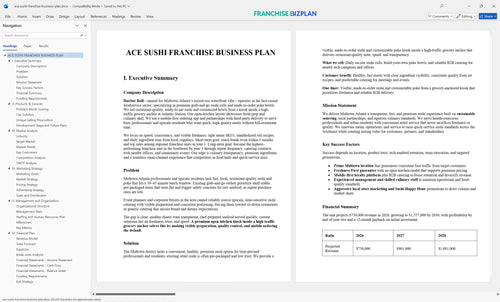
Executive Summary
Your concept at a glance



You get a complete, editable franchise unit business plan in a Word document that includes a market-researched operational strategy and a full five-year financial model.
Your concept at a glance
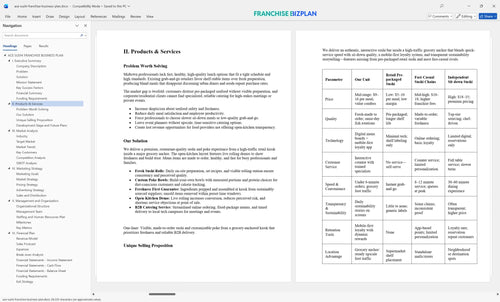
What you sell and why
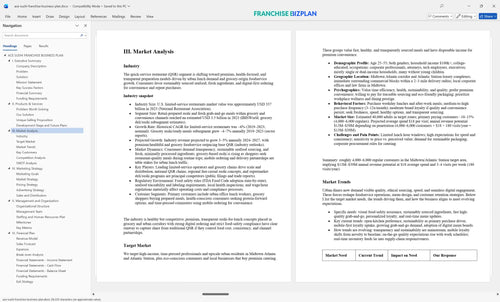
Market size and rivals
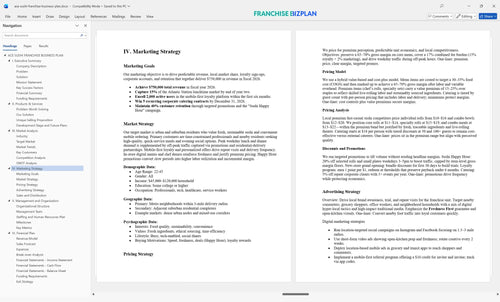
Channels, promotions, conversions
Team roles and org chart
P&L cash flow break-even

Edit fast on any device

All core chapters included
We built this comprehensive franchise unit business plan in Microsoft Word using our own independent research into this specific franchise model. All six chapters are pre-populated with data specific to opening and operating a high-traffic retail food kiosk, including a plan to reach breakeven within 4 months. The entire document is fully editable, allowing you to tailor the strategy to your location and management style.
The business case is built on placing a premium grab-and-go sushi kiosk in a high-traffic grocery store, targeting time-constrained corporate professionals and upscale urban residents who value convenience and quality. The model leverages the host location's foot traffic and the franchisor's brand recognition to drive high-volume sales with relatively low overhead compared to a traditional restaurant.
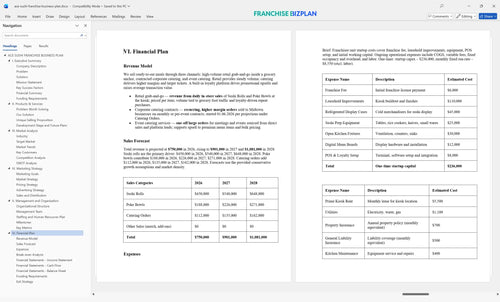
The unit primarily sells restaurant-quality sushi rolls, poke bowls, and catering platters, with projected first-year roll sales of $450,000. Customers will choose this option because of its unique value proposition: the convenience of grab-and-go combined with the transparency of an open-kitchen concept, a 'Freshness First' guarantee, and the use of sustainably sourced ingredients.
The target market consists of three core segments: corporate professionals working in the surrounding district, upscale urban residents living nearby, and local businesses seeking B2B catering services. The opportunity lies in serving these groups' demand for high-quality, convenient, and healthy food options that are a clear step up from typical pre-packaged retail offerings.
Customer acquisition will be driven by the host store's foot traffic, supplemented by local store marketing like 'Sushi Happy Hour' promotions. Retention will be managed through a mobile-first loyalty rewards program and by securing recurring revenue from corporate catering contracts, which defintely helps smooth out daily sales fluctuations.
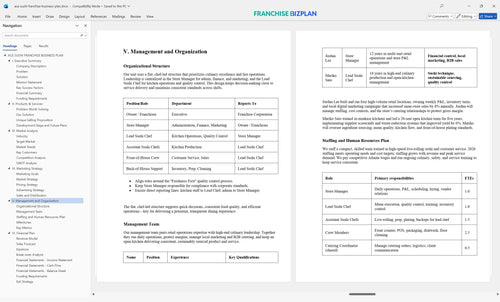
The unit will be run by a full-time Store Manager responsible for daily operations, inventory, and staff supervision, reporting directly to the franchisee. The core production team will include a Lead Sushi Chef, supported by Assistant Sushi Chefs and Crew Members, with staffing levels scaling up from 5.5 full-time equivalents in Year 1 to meet growing demand.
The initial startup investment is driven by a $110,000 kiosk build-out and a $6,000 franchise fee. The financial model projects first-year revenue of $1,125,000, growing to over $2.3 million by Year 5. With a steep 15% royalty fee, cost control is critical, but the model still shows a payback period of just 2 years, demonstrating a strong potential return on investment.
This franchise unit business plan template is fully pre-written to save you dozens of hours, while remaining 100% editable in Microsoft Word. This combination of a ready-made structure and complete customization helps you align the plan with the franchisor's expectations, your specific local market conditions, and your own operational strategy for a successful launch.

The included Word document contains detailed franchise unit financial projections, a full breakdown of restaurant startup costs, operating expenses, and clear revenue assumptions. These figures are essential for helping you evaluate the unit's potential profitability, secure the necessary funding, and confirm the financial feasibility of opening a new franchise location.

Using this franchise business plan template is a highly cost-effective solution for any prospective franchise owner. It significantly reduces the need for expensive consultants, saving you both time and money that can be better allocated toward the initial franchise investment plan, equipment, staffing, and critical working capital for your first few months of operation.

This plan is designed to create a strong, professional impression on lenders, investors, and the franchisor's own approval committee. The professional structure, clear financial logic, and organized presentation outlined in this sample business plan for a retail food and beverage franchise help support your funding discussions and substantially improve the credibility of your franchise unit opportunity.

The template provides a complete business overview for your franchise unit, including its mission, vision, target market, local positioning, operational plan, and value proposition. This gives you a clear and well-structured narrative for presenting your business within the framework of the franchise brand, tailored to the unique opportunities in your specific territory.


Purchase the template and download it immediately. Open and edit it seamlessly using Microsoft Word or Google Docs, making it easy to start working on your business plan right away.

Modify each section to align with your business concept, industry, and financial goals. Personalize the content to reflect your target market, unique value proposition, and key financial details.

Leverage the provided example financial projections or seamlessly incorporate your specific figures, utilizing an optional financial model available for purchase.

Conduct a thorough review of your business plan, refining the content to ensure it's investor-ready and serves as an effective operational guide.