


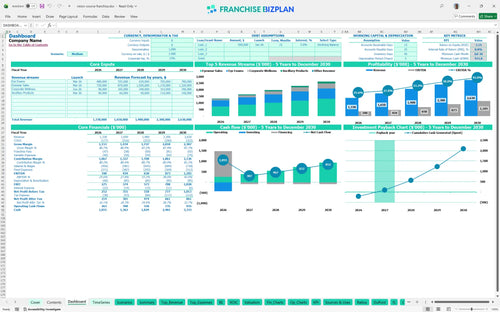
All-in-one Dashboard
Core inputs and core outputs



The franchise unit financial model template provides a complete toolkit for analyzing revenue streams, staffing costs, and long-term ROI for a boutique optometry practice.
Core inputs and core outputs
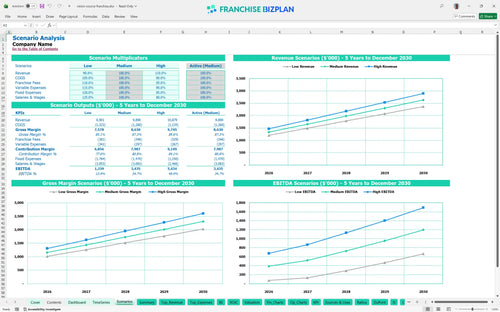
Three scenario analysis
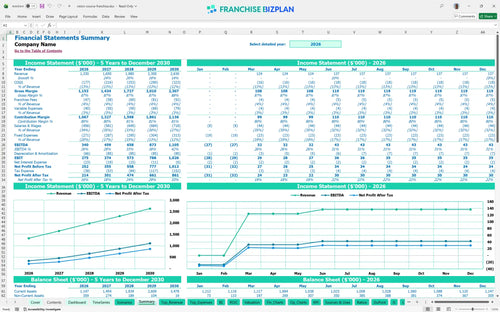
Presentation ready
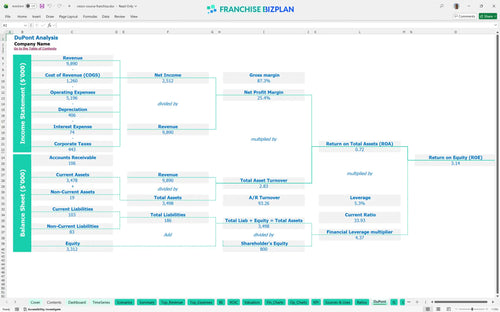
DuPont analysis
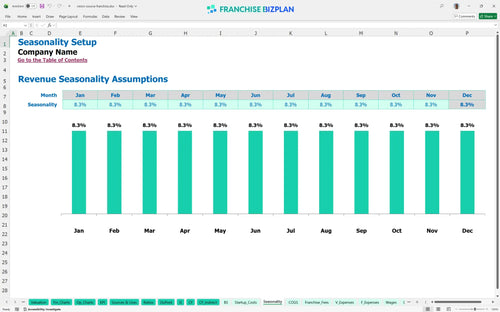
Researched revenue assumptions
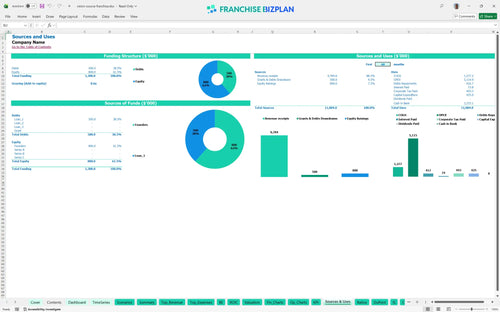
Lender-friendly financial outputs
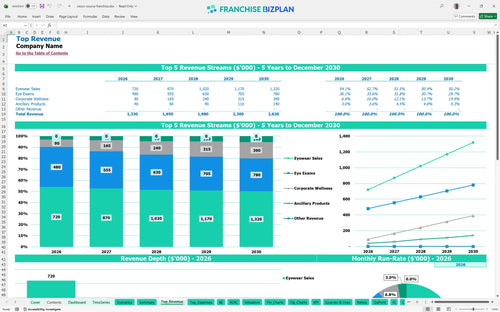
Revenue stream detailed view
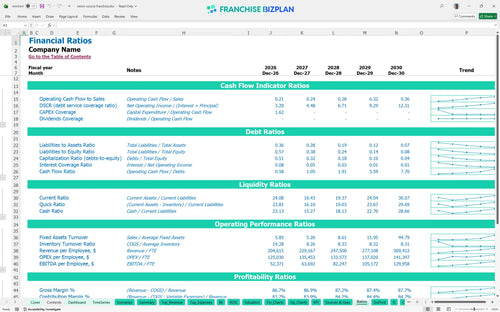
Performance metrics benchmark
We built this optometry practice revenue stream analysis using our own research into the unit economics of a premium eye care clinic. Key assumptions for revenue like eye exams and eyewear sales, plus operating expenses and the $45,000 franchise fee, are pre-populated and fully editable. With year one revenue projected at $1,330,000 and EBITDA starting at $340,000, this tool helps you see the real-world potential of your investment.
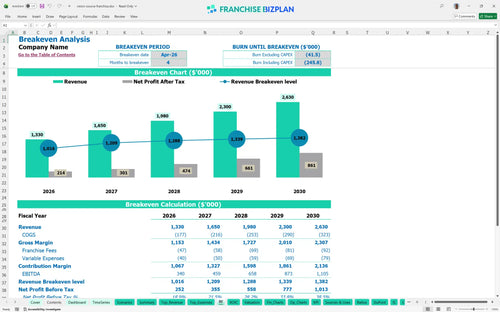
Your unit hits a positive stride quickly, with the break-even date landing in April 2026. By year two, EBITDA is projected to climb to $459,000 after accounting for the 2.5% royalty and 1.0% marketing fees, showing a clear path to scaling your medical clinic capital expenditure planning.
To get this clinic off the ground, you are looking at a significant layout. The total investment covers the $45,000 franchise fee, $150,000 for leasehold improvements, and $100,000 for diagnostic equipment, plus you'll need a healthy cash buffer to handle the early months before patient volume ramps up.
The financial feasibility study for new medical franchise shows a 2-year payback period, which is quite strong for a clinical model. With an Internal Rate of Return (IRR) of 8.02% and a focus on profitability metrics for boutique eyewear retail, the model suggests a steady, reliable return once the initial capital is recovered.
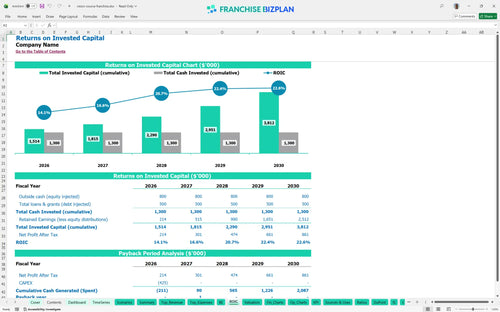
You need to hit your stride by month 4 to stay on track with the April 2026 break-even target. The biggest driver here is your eyewear sales volume, so keeping your opticians focused on a high average ticket is defintely the fastest way to cover that $17,000 monthly rent and professional labor costs.
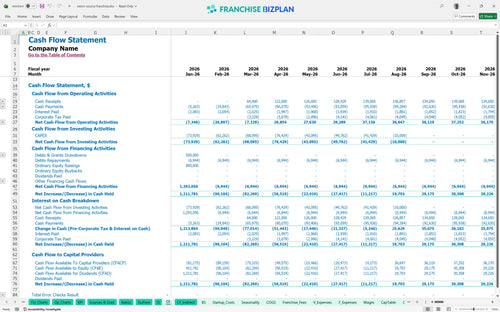
The lowest cash point occurs in July 2026 at $916,000, which means you need to be very careful with your medical clinic capital expenditure planning during the first six months. Having a solid runway is vital because unexpected delays in equipment delivery or insurance credentialing can eat through your buffer fast.
The model allows you to toggle between Low, Medium, and High cases to see how a 10% drop in patient volume or a spike in lab fees affects your year-1 margin. In the high-growth scenario, your ROI analysis for medical franchise investment looks much better, as fixed costs like rent stay flat while revenue from corporate wellness contracts scales.
Finance: update unit break-even and payback model by Friday
This optometry franchise financial model is built in Excel so you can easily change assumptions to fit your retail optical business model. It features pre-filled formulas for revenue drivers and operating expenses, allowing you to start creating a budget for a new optometry clinic without starting from scratch.

This optical store business plan template provides a clear look at your franchise P&L statement over a five-year horizon. It maps out the growth from $1,330,000 in year one to $2,630,000 in year five, giving you the data needed for long-term financial planning for independent optical retail businesses.

Managing your franchise royalty fee calculation is simple with this tool, as it automatically applies the 2.5% royalty and 1.0% marketing fee to your gross sales. It tracks these ongoing obligations alongside the initial $45,000 franchise fee so you can see the true cost of the brand's support and systems.

Learning how to estimate medical equipment costs for a new practice is a huge part of your franchise unit startup costs. This model breaks down the $100,000 for diagnostic tools and $40,000 for exam lanes, helping you find the exact revenue needed to cover your fixed expenses and reach the break-even point.

We used optometry practice financial benchmarking to set realistic targets for your store-level margins. By comparing your projected labor costs for your Lead Optometrist and Opticians against industry standards, you can ensure your medical practice profitability analysis remains grounded in reality.


Simply purchase and download the financial model template, then access it instantly using Microsoft Excel or Google Sheets. No installation or technical expertise required-just open and start working.

Enter your business-specific numbers, including revenue projections, costs, and investment details. The pre-built formulas will automatically calculate financial insights, saving you time and effort.

Leverage the investor-ready format to confidently showcase your financial projections to banks, franchise representatives, or investors. Impress stakeholders with clear, data-driven insights and professional reports.

Leverage the investor-ready format to confidently present your projections to banks, franchise representatives, or investors.