


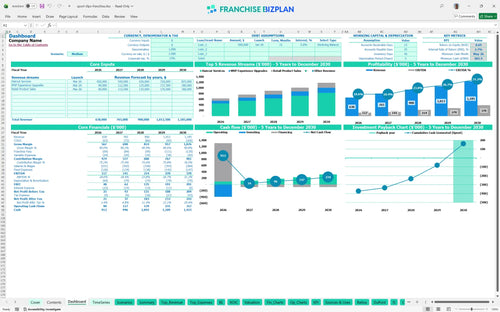
All-in-one Dashboard
Core inputs and core outputs



This franchise unit financial model template provides a comprehensive Excel-based tool for projecting revenue, expenses, and cash flow for a new grooming location.
Core inputs and core outputs
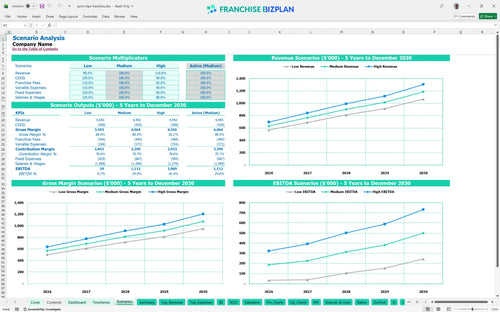
Three scenario analysis
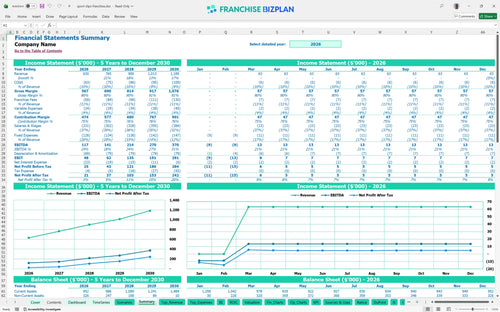
Presentation ready
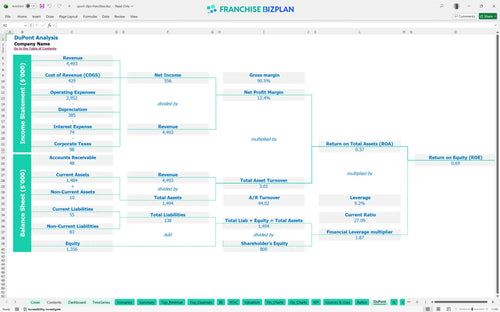
DuPont analysis
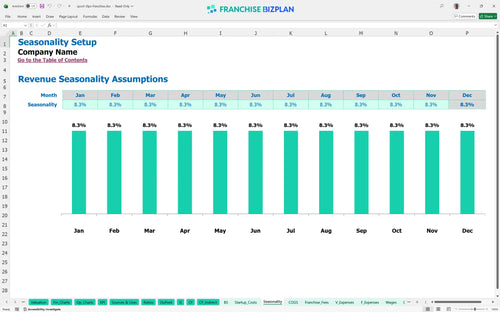
Researched revenue assumptions
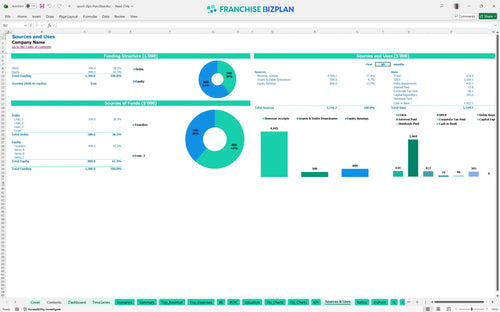
Lender-friendly financial outputs
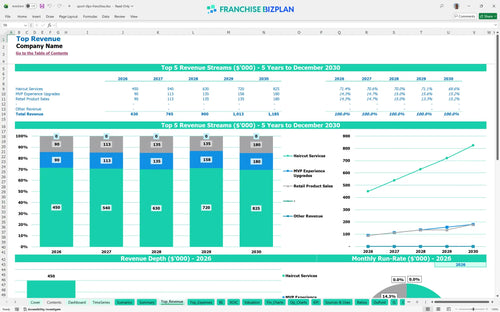
Revenue stream detailed view
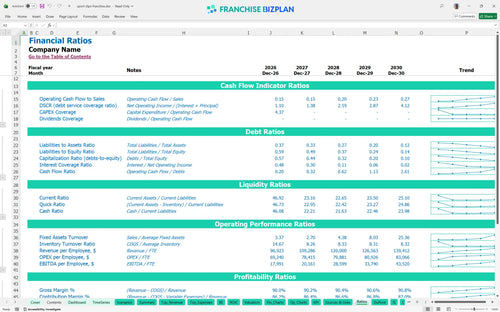
Performance metrics benchmark
We built this franchise unit financial model using our own research into the men's grooming franchise sector. Key assumptions like the $300,000 initial haircut revenue and the 6% royalty fee are pre-populated with researched data and are fully editable. With a projected year-one EBITDA of $117,000, this tool helps you validate the unit economics of a high-traffic retail service location.
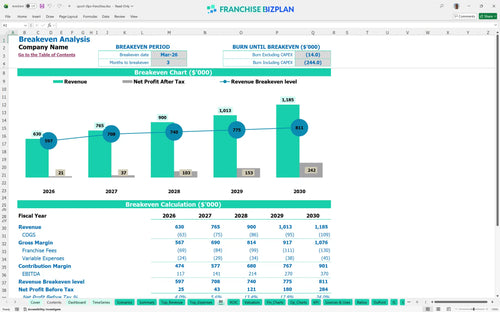
This unit is projected to hit its break-even date in March 2026, just three months after launching. Profitability scales as revenue grows from $630,000 to $1,185,000 over five years, even with a 6% royalty burden. Honestly, this franchise profitability analysis shows that volume is your best friend. Profitability is a marathon, not a sprint.
You will need approximately $395,000 in total capital to get this unit off the ground in the US. This covers everything from the initial franchise fee to the $60,000 styling chair setup and $20,000 for exterior signage. Learning how to estimate startup costs for a hair salon franchise is the first step to securing funding. Capital allocation is your first big test.
Investors can expect a 5-year payback period and an internal rate of return (IRR) of 2.73%. While the initial return on equity is 0.69, the steady climb in EBITDA to $370,000 by year five shows the long-term value. This investment return projection for hair salon franchise helps you see the big picture. Focus on the long-term yield.
The unit reaches break-even in month 3, driven primarily by the volume of haircut services and MVP upgrades. With rent fixed at $7,500 monthly, hitting your traffic targets early is the fastest way to cover your overhead. This profitability analysis for retail service franchise highlights the importance of early local marketing. Volume is the engine of this business.
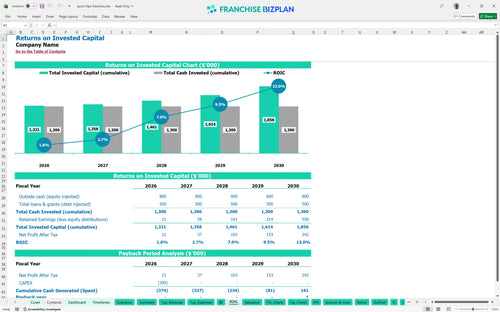
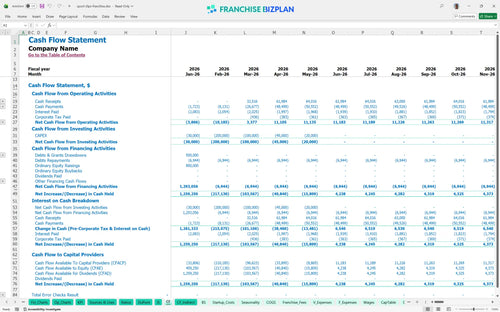
The lowest cash point is $882,000 in May 2026, suggesting you need a solid buffer to handle the ramp-up phase. Since the model shows a 3-month path to break-even, your primary risk is a slower-than-expected start in the first 90 days. This franchise unit operating expenses spreadsheet helps you track every penny. Cash is your oxygen during the ramp-up.
Moving from a medium to a high scenario significantly boosts your year-5 EBITDA from $370,000 by increasing throughput. Conversely, a low scenario might extend your 5-year payback period if stylist labor stays at 3.0 FTE while traffic lags. Financial planning for new franchise unit requires looking at all three paths. Plan for the best but prepare for the rest.
This small business financial model for grooming franchise provides the precision needed to evaluate your investment. By mapping out the $395,000 startup cost against a 5-year revenue climb, you can make a confident, data-backed decision on your next territory. Data drives the best investment decisions.
Finance: update unit break-even and payback model by Friday.
This franchise financial model lives in Excel, so you can tweak every variable to fit your specific territory. Whether you are adjusting stylist headcount or local rent, the pre-filled formulas handle the heavy lifting so you can focus on the strategy. It is the ultimate Excel template for franchise unit cash flow analysis. Every 1-point margin leak matters fast in a single-unit model.

Planning for the long haul requires more than a one-year snapshot, so we built a full 5-year franchise unit financial projection. You can track how revenue climbs from $630,000 in year one to over $1.1M by year five, giving you a clear view of your growth trajectory. Plus, learning how to forecast revenue for a service-based franchise is easier when the structure is already built. Long-term success depends on consistent traffic growth.

Running a franchise means managing specific overhead like the 6% royalty and 5% marketing fee. This franchise business plan template bakes those costs directly into your monthly cash flow, ensuring you see the true net profit after the brand takes its cut. Still, tracking these franchise royalty fees accurately is the only way to understand your real take-home pay. Royalties are a fixed reality of the brand system.

Starting a new location requires significant upfront capital, including $200,000 for leasehold improvements alone. This tool helps you map out every dollar of the franchise startup costs and identifies exactly when your sales volume covers your fixed costs. Calculating break-even point for franchise location is critical before you sign a lease. Knowing your break-even point keeps the lights on.

We included researched benchmarks for labor and supplies so you can defintely see if your costs are out of line. If your grooming supplies exceed the 8% target, the model flags it, helping you maintain the tight unit economics necessary for a successful hair salon business model. Benchmarks keep your assumptions grounded in reality.


Simply purchase and download the financial model template, then access it instantly using Microsoft Excel or Google Sheets. No installation or technical expertise required-just open and start working.

Enter your business-specific numbers, including revenue projections, costs, and investment details. The pre-built formulas will automatically calculate financial insights, saving you time and effort.

Leverage the investor-ready format to confidently showcase your financial projections to banks, franchise representatives, or investors. Impress stakeholders with clear, data-driven insights and professional reports.

Leverage the investor-ready format to confidently present your projections to banks, franchise representatives, or investors.