


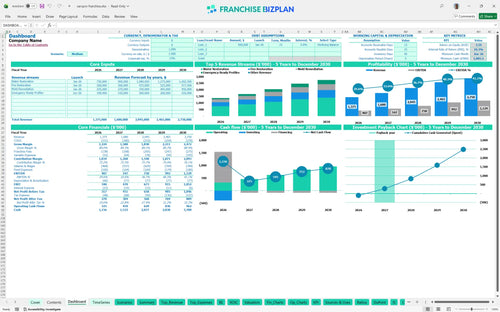
All-in-one Dashboard
Core inputs and core outputs



This franchise unit financial model template includes everything from CapEx planning for water extractors to multi-year EBITDA forecasting for a restoration territory.
Core inputs and core outputs
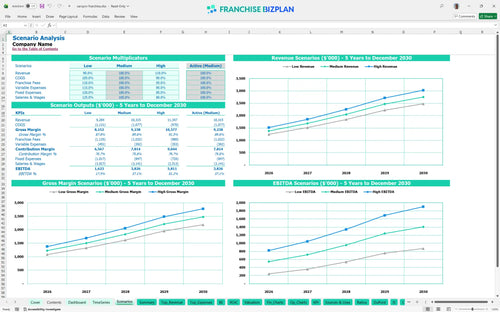
Three scenario analysis
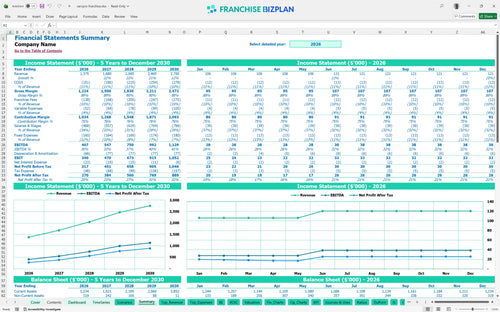
Presentation ready
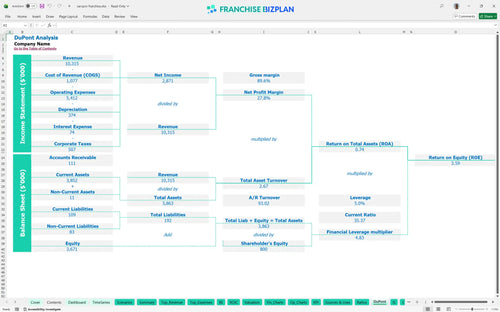
DuPont analysis
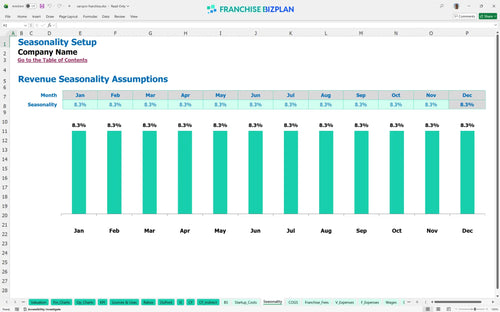
Researched revenue assumptions
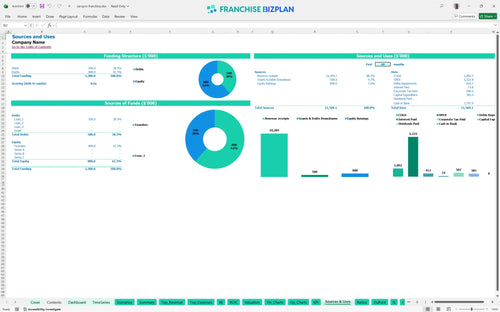
Lender-friendly financial outputs
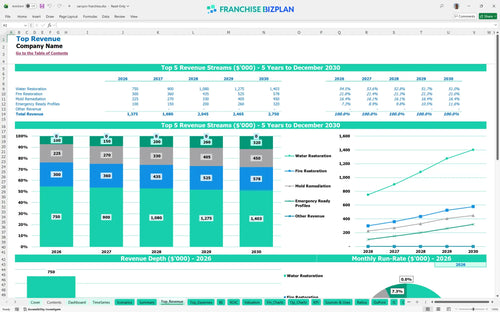
Revenue stream detailed view
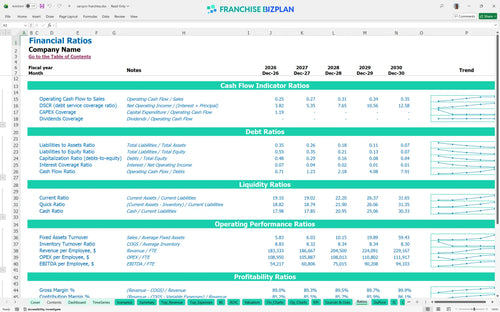
Performance metrics benchmark
We built this restoration franchise unit financial model using our own research into industry standards and brand-specific requirements. Key assumptions like the 7% royalty, water restoration revenue streams, and specialized equipment costs are pre-populated and fully editable. With Year 1 EBITDA projected at $407,000, this model gives you a defintely solid starting point for your own territory analysis.
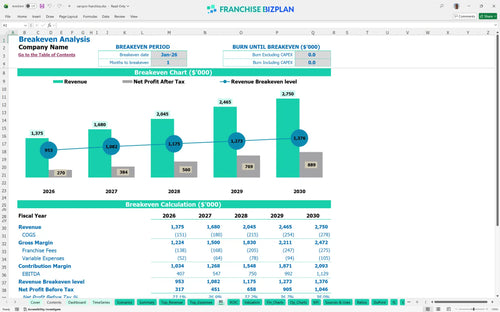
This restoration unit hits profitability almost immediately, with a break-even date of January 2026. After accounting for the 10% combined royalty and marketing fees, the model shows EBITDA growing from $407,000 in Year 1 to over $1.1M by Year 5. Here is the quick math: a 41% EBITDA margin is achievable but requires strict control over your 8.5% material costs.
You need significant capital to launch, primarily for the $100,000 franchise fee and $120,000 for branded service vehicles. The total initial investment covers leasehold improvements, dehumidifiers, and a cash buffer to handle the $1,006,000 minimum cash point reached in June 2026. This Excel template for franchise unit revenue forecasting helps you map these outflows against incoming insurance payouts.
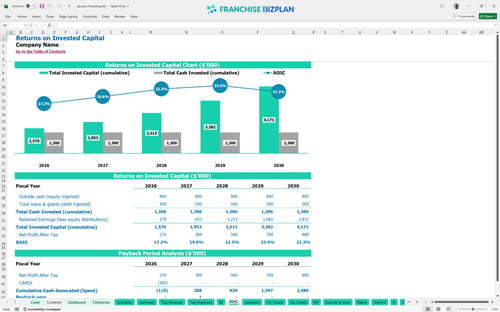
The model projects an Internal Rate of Return (IRR) of 10.34% and a Return on Equity (ROE) of 3.59. You can expect to recoup your initial investment within 2 years, which is strong for a service business with high equipment needs. This franchise investment ROI calculator template provides the concrete numbers needed for bank financing or partner pitches.
The unit reaches break-even in just 1 month, provided you hit the $1.375M Year 1 revenue target. The biggest driver for break-even is technician labor, as you start with 4.5 FTE staff costing over $280,000 annually. Still, the high average ticket for water and fire restoration jobs allows for a quick move into the black.
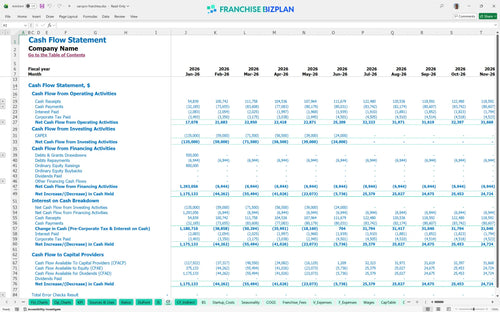
The lowest cash point occurs in June 2026 at $1,006,000 during the initial ramp-up. This suggests you need a substantial liquid reserve to handle the gap between paying technicians and receiving insurance-backed payouts, which often lag. Financial forecasting for insurance-based service businesses must account for these timing gaps to avoid technical insolvency.
In a high-revenue scenario, Year 1 sales exceeding $1.375M significantly boost the 10.34% IRR. Conversely, if water restoration jobs drop by 20%, the $1.129M Year 5 EBITDA target becomes much harder to hit without cutting the $95,000 GM salary. This franchise unit pro forma financial statement example lets you stress-test these variables in seconds.
Finance: update unit break-even and payback model by Friday.
This franchise unit financial model is fully customizable in Excel, with pre-filled formulas and editable assumptions that make it easy to adapt to a specific territory and operating scenario. You can adjust restoration material costs or technician headcounts to see exactly how they impact your bottom line. It is a flexible franchise business plan Excel template that handles the heavy lifting of math so you can focus on local market strategy.

Planning for a restoration business requires looking past the first few floods to ensure sustainable growth. This model provides detailed 5-year projections for revenue, costs, and cash flow tailored for a restoration franchise unit. With Year 1 revenue starting at $1,375,000 and scaling to $2,750,000 by Year 5, you can visualize the trajectory of a maturing service territory. Long-term franchise unit profitability analysis is built into every sheet.

We built in the specific financial obligations unique to this restoration brand to ensure your pro forma is realistic. The model captures the $100,000 initial fee plus the ongoing 7% royalty and 3% marketing fund contributions. This ensures you understand the real economics of operating the unit after the franchisor takes their cut. It makes franchise royalty fee calculation simple and transparent for any operator.

Launching a mobile restoration service involves heavy upfront spending on branded vehicles and specialized equipment. This tool helps you estimate the total restoration business startup costs and identifies the sales level required to cover fixed costs like your $8,000 monthly warehouse rent. Knowing how to calculate startup costs for a restoration franchise is the first step to avoiding early cash crunches.

The model incorporates built-in industry benchmarks for key operating metrics to help you sanity-check your numbers. You can compare your 8.5% material cost assumption or your technician labor spend against typical franchise ranges. This is a vital small business financial projection template for comparing your expected performance against established restoration standards. It helps you spot if your rent or labor is out of line before you sign a lease.


Simply purchase and download the financial model template, then access it instantly using Microsoft Excel or Google Sheets. No installation or technical expertise required-just open and start working.

Enter your business-specific numbers, including revenue projections, costs, and investment details. The pre-built formulas will automatically calculate financial insights, saving you time and effort.

Leverage the investor-ready format to confidently showcase your financial projections to banks, franchise representatives, or investors. Impress stakeholders with clear, data-driven insights and professional reports.

Leverage the investor-ready format to confidently present your projections to banks, franchise representatives, or investors.