


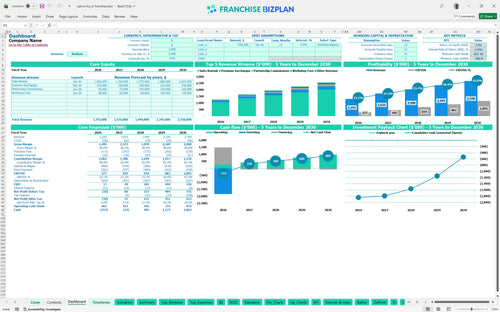
All-in-one Dashboard
Core inputs and core outputs



This salon suite business plan template provides a comprehensive, data-driven framework for evaluating the investment, operating costs, and long-term profit potential of a multi-tenant beauty suite location.
Core inputs and core outputs
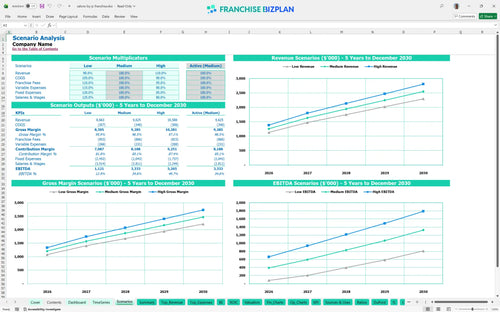
Three scenario analysis
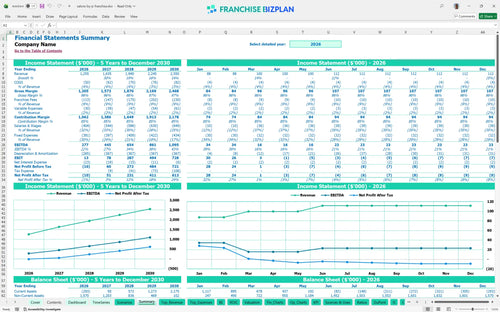
Presentation ready
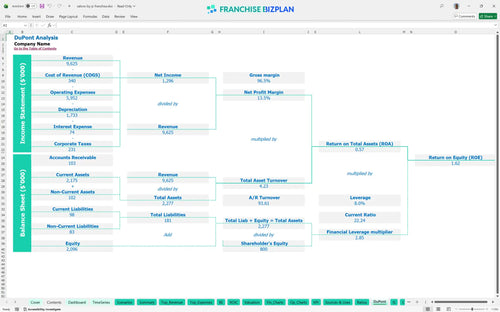
DuPont analysis
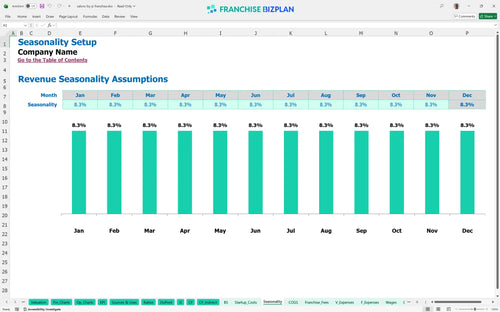
Researched revenue assumptions
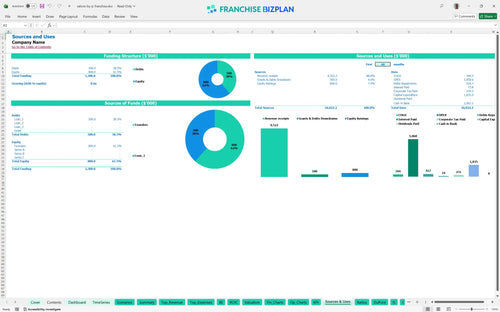
Lender-friendly financial outputs
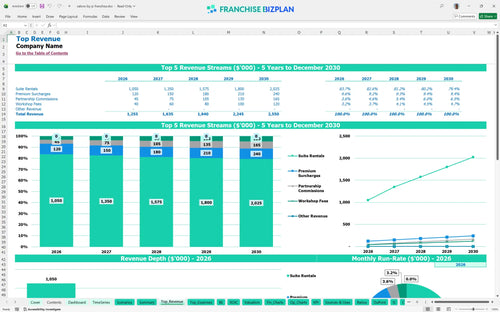
Revenue stream detailed view
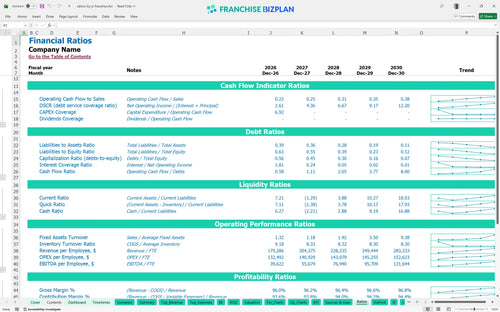
Performance metrics benchmark
We developed this salon suite franchise financial model using detailed market research to provide a realistic look at unit-level performance. The tool comes pre-populated with essential data, including a $1.25 million year-one revenue target and specific franchise operating expenses, all of which you can customize to your local market. Here is the quick math: with 35 luxury suites, your success depends on high tenant retention and disciplined management of fixed costs like the $22,000 monthly rent.
The unit shows strong initial performance with an EBITDA of $277,000 in the first year, scaling significantly as revenue grows to $2.55 million by year five. You will defintely see margins expand as you layer in $160,000 in annual premium surcharges and $110,000 in partnership commissions by 2030.
To launch this unit, you need to know how to calculate startup costs for a salon suite franchise, which total over $1.8 million in CAPEX alone. This includes a $60,000 franchise fee, $850,000 for leasehold improvements, and $550,000 for the luxury suite buildouts required to attract top-tier beauty professionals.
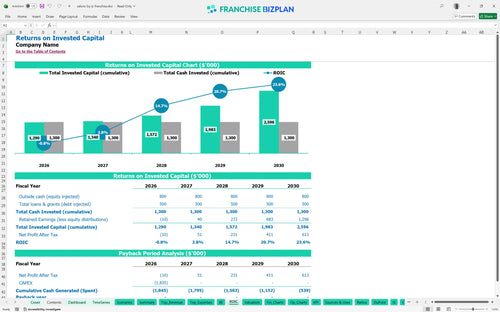
A beauty salon franchise return on investment analysis for this concept shows an IRR of 1.61% and a return on equity of 1.62. While the high initial investment means the payback period extends after year five, the mature-unit EBITDA of $1,095,000 provides a stable, long-term cash flow stream for multi-unit operators.
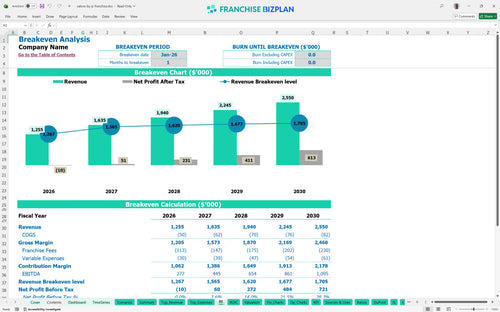
The model indicates a break-even date of January 2026, which is the first month of trading, assuming you hit your initial occupancy targets. The salon suite occupancy rate financial impact is the primary driver here; filling those 35 suites early is critical to covering the $32,150 in monthly fixed operating costs. High occupancy is the only lever that truly moves the needle in a fixed-rent model.
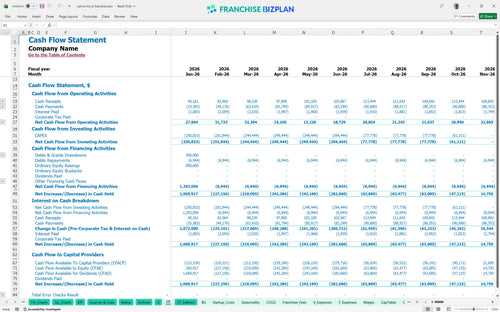
According to this salon suite franchise cash flow projection guide, your lowest cash point is -$382,000 in October 2026. This suggests you need a substantial working capital buffer to navigate the ramp-up phase and the timing of construction payments for the luxury suite buildouts.
When you learn how to create a pro forma for a salon franchise, you see that small shifts in rental income drastically change the year-one margin. This model allows you to compare low, medium, and high scenarios, showing how reaching the $120,000 annual workshop fee target can buffer against higher-than-expected utility or maintenance costs.
Finance: update unit break-even and payback model by Friday
This salon suite franchise financial model is built in Excel with fully editable assumptions, allowing you to adjust every driver from rental rates to utility costs. You can modify pre-filled formulas to test different occupancy levels or local market conditions, ensuring the tool fits your specific territory perfectly.

Plan for long-term growth with detailed franchise unit financial projections that span five years of operations. The model tracks the transition from initial suite build-out to a mature, high-occupancy facility, providing a clear view of your expected income statement, balance sheet, and cash flow evolution through 2030.

The model accurately captures ongoing franchise operating expenses, including the 7% royalty fee and 2% marketing fund contribution. By automating these calculations based on your gross revenue, you can see exactly how brand-level obligations impact your store-level EBITDA and bottom-line cash flow.

Estimating salon franchise startup costs is simplified with dedicated sections for leasehold improvements, equipment, and initial working capital. The integrated break-even analysis helps you determine the exact number of occupied suites or total revenue required to cover your monthly fixed costs like the $22,000 prime location rent.

Use best practices for salon franchise financial planning by comparing your projections against built-in industry standards for labor and occupancy. This feature helps you sanity-check your $105,000 general manager salary or your cleaning supply percentages to ensure your model remains realistic and bankable.


Simply purchase and download the financial model template, then access it instantly using Microsoft Excel or Google Sheets. No installation or technical expertise required-just open and start working.

Enter your business-specific numbers, including revenue projections, costs, and investment details. The pre-built formulas will automatically calculate financial insights, saving you time and effort.

Leverage the investor-ready format to confidently showcase your financial projections to banks, franchise representatives, or investors. Impress stakeholders with clear, data-driven insights and professional reports.

Leverage the investor-ready format to confidently present your projections to banks, franchise representatives, or investors.