


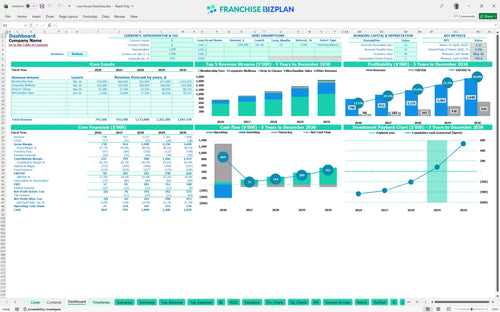
All-in-one Dashboard
Core inputs and core outputs



This boutique fitness center profit and loss statement provides a complete roadmap for tracking membership revenue, instructor payroll, and franchise royalties over a sixty-month horizon.
Core inputs and core outputs
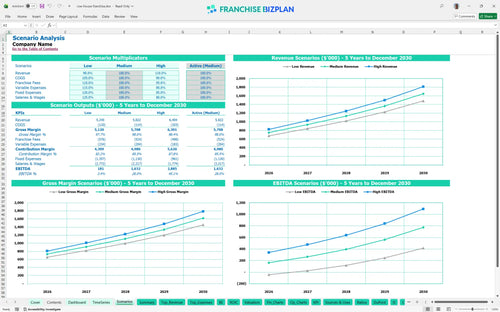
Three scenario analysis
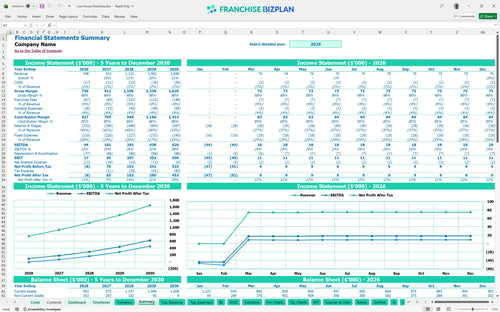
Presentation ready
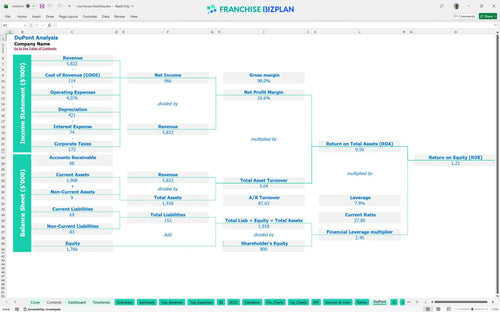
DuPont analysis
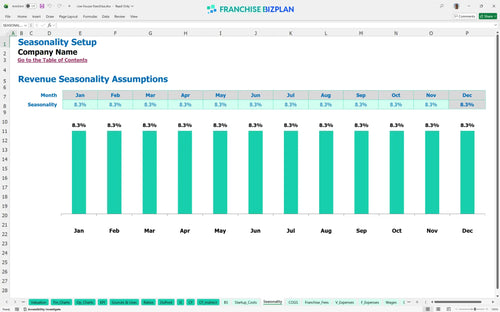
Researched revenue assumptions
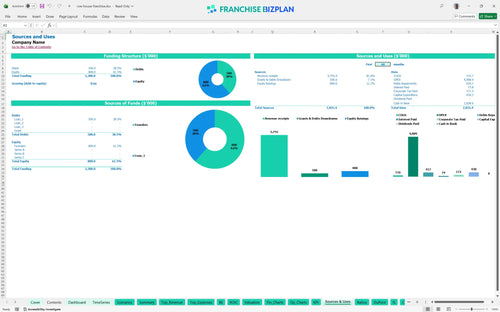
Lender-friendly financial outputs
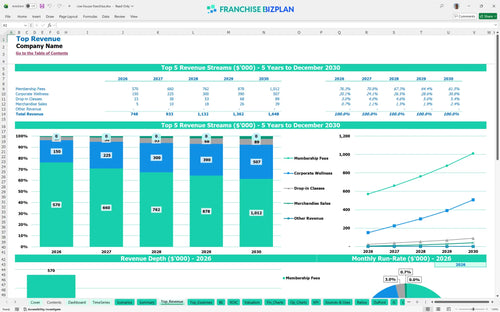
Revenue stream detailed view
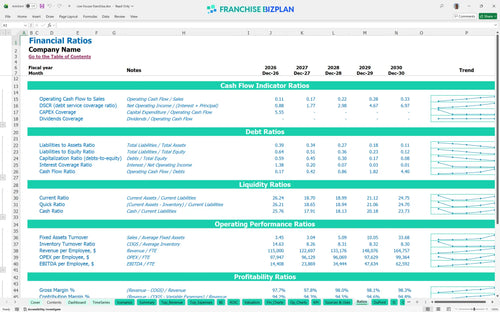
Performance metrics benchmark
We built this rowing studio financial model using detailed research to ensure every assumption reflects the reality of the boutique fitness market. Key drivers like the $380,000 initial membership revenue and $12,000 monthly rent are pre-populated and fully editable to match your specific location. Real-world data beats a best-guess every single time.
The studio is projected to be profitable in its first year, generating $94,000 in EBITDA and scaling significantly to $626,000 by Year 5. This growth is driven by a recurring revenue model where membership fees increase from $380,000 to $674,980 as the community matures. Margin expansion happens when your membership base grows faster than your class schedule.
Launching this unit requires a significant capital expenditure, including a $60,000 franchise fee and $200,000 for leasehold improvements. Total startup costs also include $52,800 for rowing machines and $45,000 for flooring and mirrors, totaling over $430,000 before working capital. Build-out is usually your biggest check, so watch those change orders.
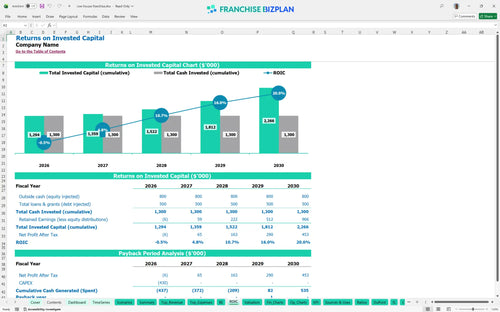
The model shows a 3.4% Internal Rate of Return (IRR) and a 1.21 Return on Equity (ROE) over the five-year forecast period. While you can expect a 4-year payback period, the enterprise value grows as annual revenue reaches $1,648,000. Patience is a virtue, but a four-year payback is a solid target for this asset class.
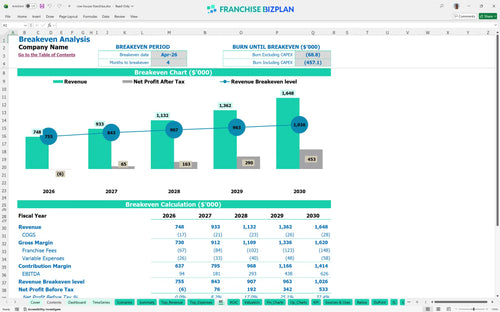
The unit hits its monthly break-even point in April 2026, just four months after the membership fees launch. This quick turn is possible if you hit your initial membership targets to cover the $12,000 monthly rent and $15,000+ monthly payroll for instructors and managers. Speed to break-even is the best insurance policy for your capital.
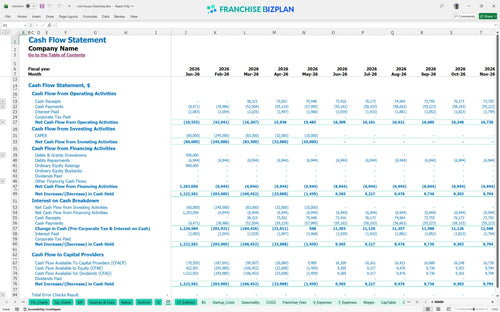
The lowest cash point is $798,000 in May 2026, so you defintely need to ensure your initial funding covers the gap between build-out and full membership ramp-up. Estimating monthly operating costs for a gym franchise is critical to avoid a liquidity crunch during the first six months of operation. Cash is oxygen, and you need to know exactly when the tank gets low.
Scaling a boutique fitness studio business model relies on hitting the High scenario, where revenue growth exceeds the 20% annual baseline. A Low scenario could see Year 1 EBITDA dip if corporate wellness contracts or merchandise sales underperform. Planning for the high case is fun, but surviving the low case is how you stay in business.
Finance: update unit break-even and payback model by Friday.
This fitness franchise financial model is built in Excel with fully editable assumptions, allowing you to tweak every driver from membership pricing to instructor wages. We provide the logic and pre-filled formulas, so you can adapt the template to your specific territory, local rent, and labor market without building from scratch. Financial modeling for group fitness businesses should be flexible, and this Excel template for boutique gym financial planning gives you total control over the numbers. It's your business; the numbers should reflect your specific market.

Success in the fitness industry requires looking beyond the grand opening to see how the unit scales over time. This boutique gym business plan template provides detailed 5-year financial projections for indoor rowing studio operations, showing revenue growth from $748,000 in Year 1 to over $1.6 million by Year 5. You can track long-term profitability and cash flow to ensure the model supports your lifestyle or multi-unit expansion goals. Five years is the standard horizon for a serious multi-unit operator.

We have integrated specific franchise unit financial projections that account for the 7% royalty and 2% brand marketing fund contributions required by the franchisor. By modeling these costs against your gross revenue, you get a clear picture of the store-level margin available after meeting all brand obligations. This ensures you aren't surprised by the monthly 'off-the-top' expenses that impact your bottom line. Royalties are the price of brand power, so track them accurately.

Our boutique fitness franchise investment calculator breaks down the total fitness studio startup costs, including the $60,000 franchise fee and $200,000 in leasehold improvements. The model includes a detailed break-even analysis to identify the exact month when your membership revenue covers both fixed and variable operating costs. Knowing your line in the sand is the difference between a hobby and a business.

This model includes franchise unit economic performance metrics and industry benchmarks to help you sanity-check your projections against typical boutique fitness standards. We look at labor costs for instructors and managers, plus occupancy costs like the $12,000 monthly rent, to ensure your franchise profitability analysis is grounded in reality. Don't fly blind when you can use proven industry data.


Simply purchase and download the financial model template, then access it instantly using Microsoft Excel or Google Sheets. No installation or technical expertise required-just open and start working.

Enter your business-specific numbers, including revenue projections, costs, and investment details. The pre-built formulas will automatically calculate financial insights, saving you time and effort.

Leverage the investor-ready format to confidently showcase your financial projections to banks, franchise representatives, or investors. Impress stakeholders with clear, data-driven insights and professional reports.

Leverage the investor-ready format to confidently present your projections to banks, franchise representatives, or investors.