


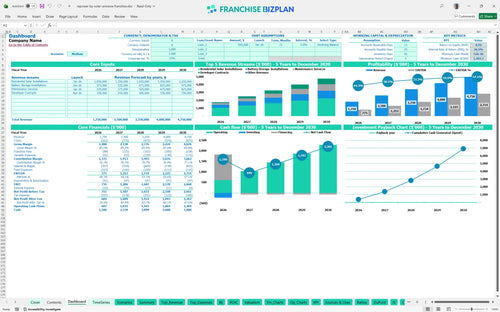
All-in-one Dashboard
Core inputs and core outputs



This comprehensive toolkit provides everything from multi-year revenue forecasting to detailed CAPEX (capital expenditure) schedules for a new solar installation territory.
Core inputs and core outputs
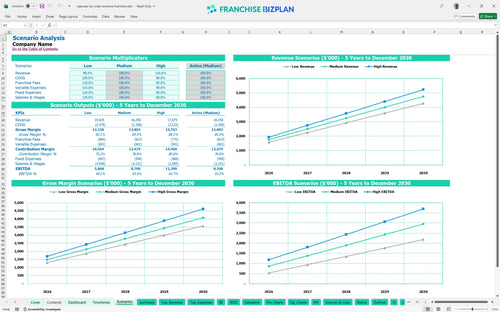
Three scenario analysis
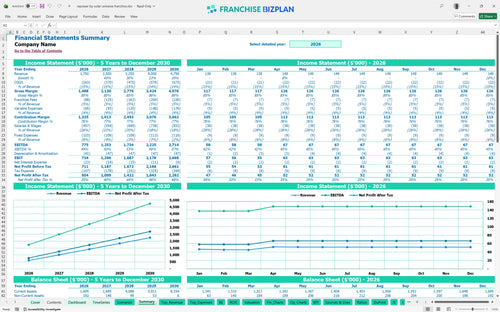
Presentation ready
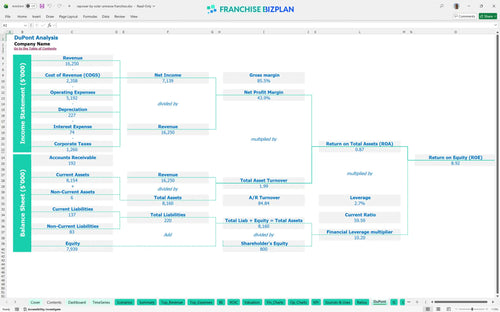
DuPont analysis
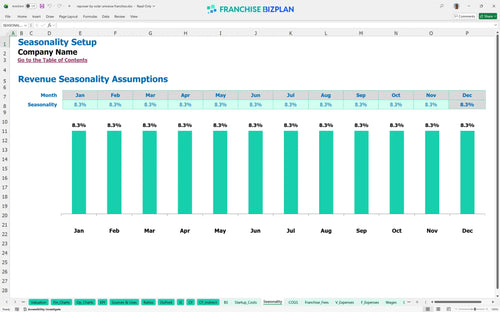
Researched revenue assumptions
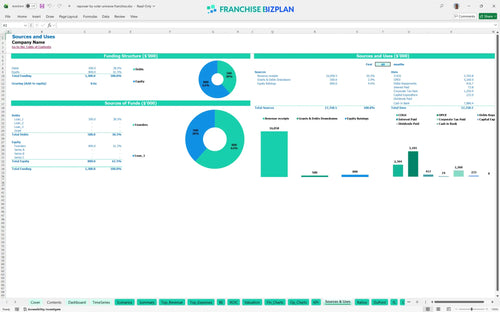
Lender-friendly financial outputs
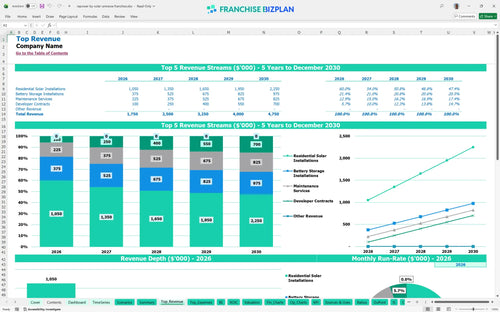
Revenue stream detailed view
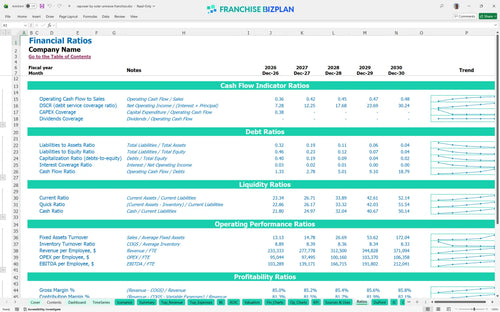
Performance metrics benchmark
We developed this solar energy franchise business plan using detailed research into unit-level performance and local market dynamics. Key assumptions like the $1,750,000 year-one revenue and the $775,000 EBITDA (earnings before interest, taxes, depreciation, and amortization) are pre-populated but remain fully editable for your specific territory. It's a practical tool for mapping out your energy concierge service and installation growth, and it will defintely save you dozens of hours in planning.
This unit turns a profit almost immediately, with Year 1 EBITDA projected at $775,000 and positive net income starting in January 2026. By using this franchise profitability analysis Excel, you can see how evaluating profitability of solar energy franchise opportunities requires balancing high equipment costs against strong residential demand.
Launching this solar installation unit requires $233,000 in upfront capital expenditure plus a significant cash buffer for operations. This startup cost breakdown for residential solar franchise units ensures you have enough liquidity for the $35,000 franchise fee, $80,000 in leasehold improvements, and $50,000 for service vehicles before you open your doors. Proper franchise capital expenditure planning prevents mid-launch cash crunches.
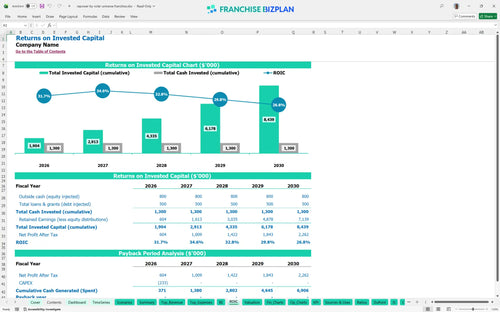
Investors can expect an internal rate of return (IRR) of 36.51%, though the high initial cash requirement means the full payback period occurs after year five. Estimating ROI (return on investment) for solar installation franchise business models requires looking at both the immediate cash flow and the long-term equity build-up as the unit matures.
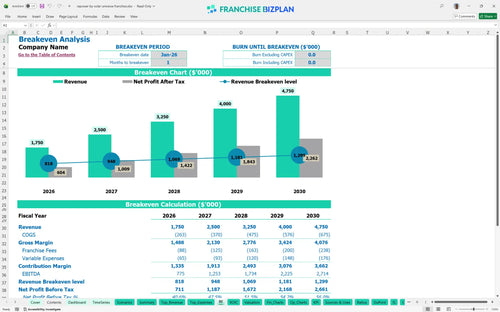
The monthly break-even point is reached in January 2026, which is your very first month of operation. This Excel template for solar business unit revenue projections shows that your franchise royalty fee calculation is a fixed percentage, so residential installation volume is the biggest lever you have to stay above that line. If your average ticket drops, that break-even date will defintely shift.
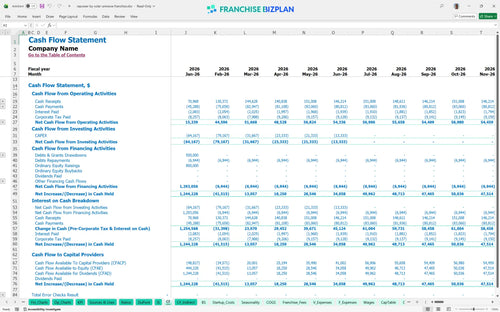
Your lowest cash balance hits $1,203,000 in February 2026, meaning you need a massive liquidity cushion to handle the timing gaps between equipment purchases and customer payments. Business unit cash flow forecasting is vital here because solar components and labor must be paid before you collect the full project fee, so that buffer keeps the lights on during the ramp-up phase.
Comparing Low vs Medium vs High scenarios shows how sensitive your returns are to market fluctuations and installation efficiency. This franchise financial forecasting spreadsheet for new owners demonstrates that while the Medium case is solid, the High case significantly accelerates your ROI and improves your Year 1 margin, while the Low case might extend your peak cash need. Honestly, seeing the downside case is just as important as the upside.
Finance: update unit break-even and payback model by Friday.
This solar franchise financial model is fully customizable in Excel, allowing you to tweak every assumption from installation volume to local labor rates. The pre-filled formulas handle the heavy lifting, so you can focus on testing different growth scenarios for your specific market without building a spreadsheet from scratch.

Plan for long-term success with renewable energy franchise financial projections that span five full years of operation. This financial model template for renewable energy franchise units tracks your journey from a single hub to a mature operation, providing a clear view of your balance sheet and cash flow as you scale.

This tool simplifies budgeting for solar franchise operational expenses and royalties by automating the 4% royalty and 1% marketing fee calculations. It serves as a comprehensive operating expense budget template, ensuring you account for every dollar owed to the franchisor before calculating your store-level margin.

Knowing how to calculate startup costs for a solar franchise is the first step toward a successful launch. This franchise startup cost template breaks down your total initial investment and identifies the exact sales volume you need to cover your monthly fixed and variable expenses, helping you manage early-stage risk.

This tool acts as a financial planning guide for new solar energy franchise owners by comparing your projected numbers against industry standards. Analyzing franchise unit financial performance and growth becomes much easier when you can see if your labor costs or rent are out of line with typical solar installation hubs.


Simply purchase and download the financial model template, then access it instantly using Microsoft Excel or Google Sheets. No installation or technical expertise required-just open and start working.

Enter your business-specific numbers, including revenue projections, costs, and investment details. The pre-built formulas will automatically calculate financial insights, saving you time and effort.

Leverage the investor-ready format to confidently showcase your financial projections to banks, franchise representatives, or investors. Impress stakeholders with clear, data-driven insights and professional reports.

Leverage the investor-ready format to confidently present your projections to banks, franchise representatives, or investors.