


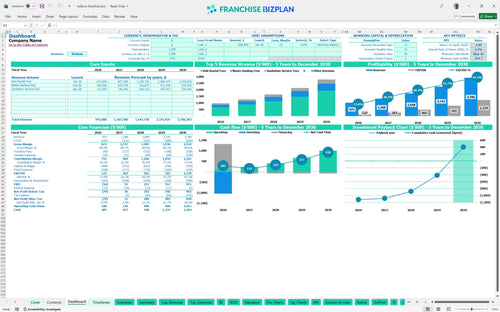
All-in-one Dashboard
Core inputs and core outputs



This waste management franchise business plan provides a comprehensive unit economics analysis for a specialized sanitation and disposal operation covering everything from fleet maintenance to landfill fees.
Core inputs and core outputs
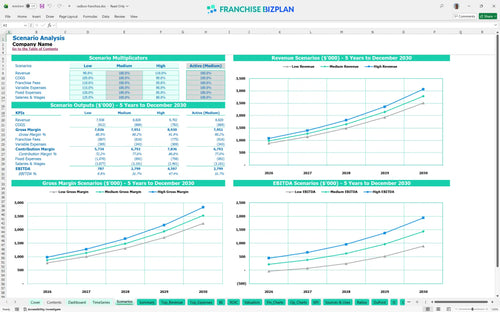
Three scenario analysis
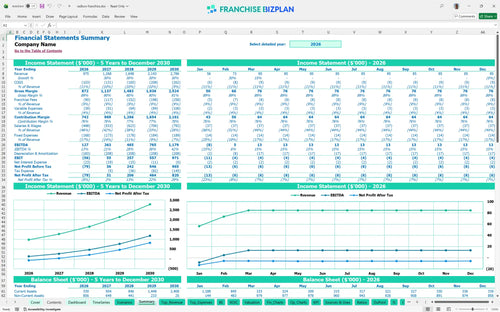
Presentation ready
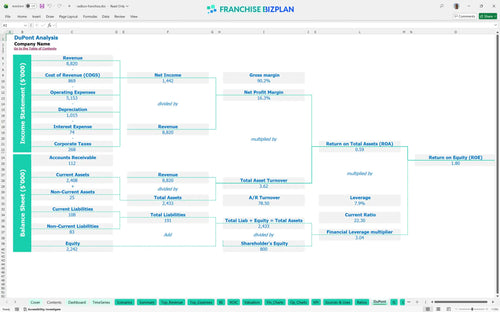
DuPont analysis
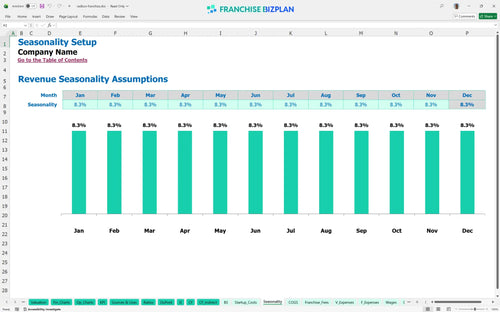
Researched revenue assumptions
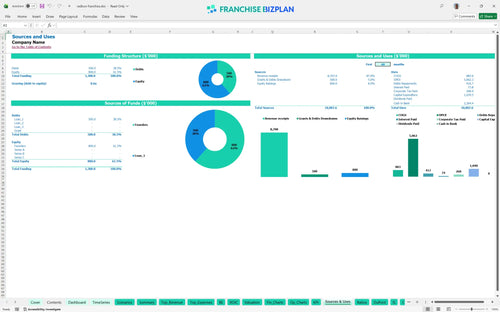
Lender-friendly financial outputs
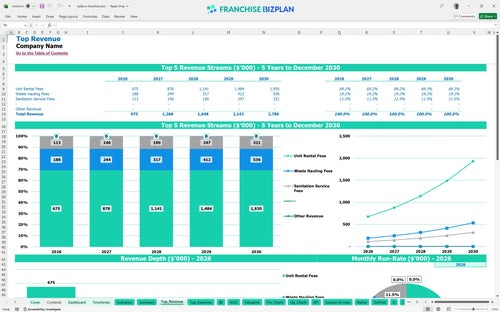
Revenue stream detailed view
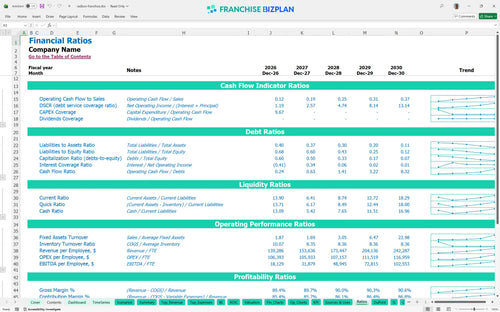
Performance metrics benchmark
We built this franchise unit financial model using our own research into the waste and sanitation sector. Key assumptions like the $975,000 year-one revenue and the 8% royalty structure are pre-populated and fully editable to match your specific territory. This model helps you see how unit rental fees and waste hauling fees drive your $127,000 first-year EBITDA. How to forecast recurring revenue for franchise units becomes much clearer when you see the monthly ramp-up of your container inventory.
The unit reaches profitability almost immediately, with a break-even date of January 2026. By year two, EBITDA grows to $263,000 as you scale your fleet and optimize landfill disposal fees, which start at 7.8% of revenue. Speed to profit is the name of the game here.
Launching this unit in the US requires significant upfront capital, primarily for specialized equipment. Total initial investment includes a $59,500 franchise fee and over $800,000 for trucks and patented inventory. You'll need a minimum cash position of $255,000 by May 2026 to handle the ramp-up. This startup budget template for specialized equipment franchise covers everything from yard improvements to logistics software. Big equipment needs a big plan for capital.
For a specialized equipment franchise, the payback period is 5 years. The internal rate of return (IRR) is 2.33%, with a return on equity (ROE) of 1.8. While the initial cash outlay is high, the scaling EBITDA suggests long-term value for multi-unit operators. Five years is a standard haul for full payback in this industry. A thorough ROI analysis shows that capital expenditure budgeting is the key to managing these heavy assets.
Monthly break-even depends on maintaining high utilization of the patented units. With fixed costs like storage yard rent at $6,000 and fleet insurance at $2,800, you need steady rental volume to cover the $15,000 plus in monthly overhead before labor. Volume is the lever that moves the needle. Your operational expense forecast must account for fuel and vehicle maintenance to keep the trucks moving.
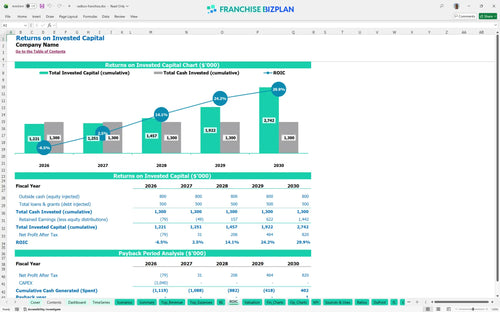
The lowest cash point occurs in May 2026 at $255,000. You need enough runway to cover the hiring of CDL drivers and an operations manager before the waste hauling fees fully ramp up. Defintely keep a buffer for vehicle maintenance, which starts at 1.8% of sales. Cash is king during the first six months of any dumpster rental franchise startup costs cycle.
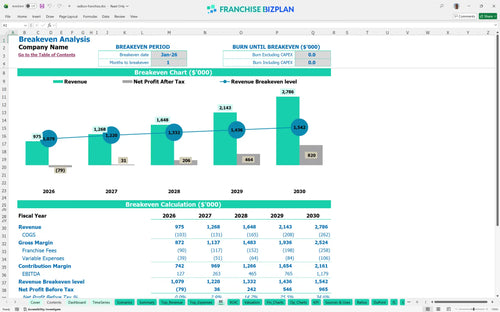
A high-growth scenario in a busy construction corridor could push Year 1 revenue past the $975,000 estimate. However, a low-volume scenario makes the 5-year payback period much harder to hit. The model allows you to toggle revenue and variable costs to see how peak cash needs shift. Plan for the worst, but execute for the best to ensure franchise investment feasibility.
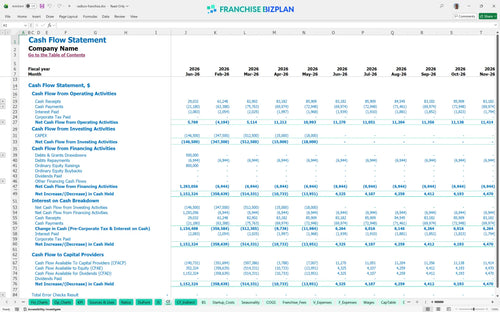
This franchise unit financial forecasting tool provides the clarity needed for creating a business plan for a waste management franchise. Estimating profitability for two-in-one dumpster rental business is easier when you have a financial planning guide for new franchise owners that maps out every truck and container. Use this data to secure your territory and start your fleet.
Finance: update unit break-even and payback model by Friday.
This franchise financial model template is fully customizable in Excel, with pre-filled formulas and editable assumptions that make it easy to adapt to a specific franchise concept, location, and operating scenario. Every formula is open for your local adjustments, ensuring the financial model template for waste and sanitation franchise fits your specific market needs.

Long-term planning is simpler with detailed 5-year revenue, cost, cash flow, and profit projections tailored for a franchise unit or small franchise chain. Five years of data turns a guess into a plan, especially when using this franchise unit financial projections template excel to map out growth.

The model captures franchise-specific financial obligations, including upfront franchise fees, royalty payments, and brand marketing fund contributions, so buyers can understand the real economics of operating the unit. Analyzing franchise royalty and operating fee structure is vital; don't let royalties surprise your bottom line.

Plan your startup costs and break-even analysis for dumpster and portable toilet franchise to help estimate total initial investment, monthly cost structure, and the sales level required to cover fixed and variable costs. Knowing your break-even is the first step to sleeping better, so use this franchise profitability calculator to find your number.

The model incorporates built-in franchise and industry benchmarks for key operating and financial metrics, helping users sanity-check assumptions and compare expected performance against typical ranges. This financial planning guide for new franchise owners ensures your labor and rent stay within healthy limits. Benchmarks keep your expectations grounded in reality.


Simply purchase and download the financial model template, then access it instantly using Microsoft Excel or Google Sheets. No installation or technical expertise required-just open and start working.

Enter your business-specific numbers, including revenue projections, costs, and investment details. The pre-built formulas will automatically calculate financial insights, saving you time and effort.

Leverage the investor-ready format to confidently showcase your financial projections to banks, franchise representatives, or investors. Impress stakeholders with clear, data-driven insights and professional reports.

Leverage the investor-ready format to confidently present your projections to banks, franchise representatives, or investors.