


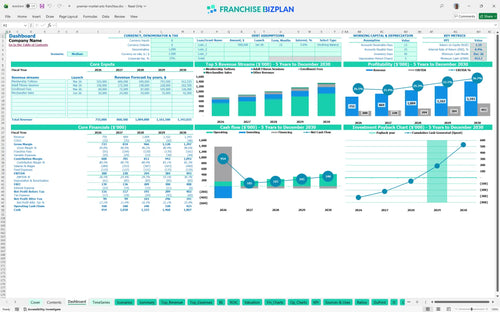
All-in-one Dashboard
Core inputs and core outputs



This comprehensive Excel template for franchise unit financial forecasting includes dynamic revenue drivers, detailed CAPEX schedules, and 5-year pro forma statements designed for martial arts operators.
Core inputs and core outputs
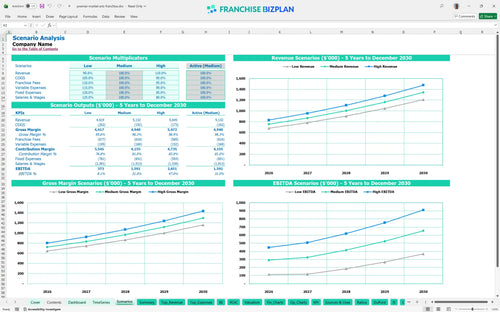
Three scenario analysis
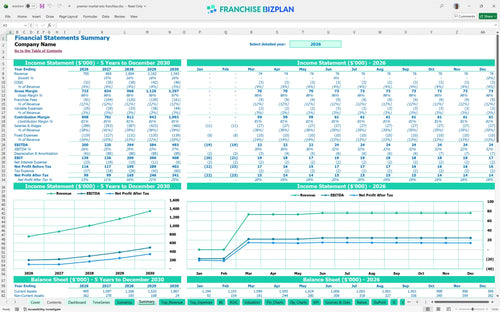
Presentation ready
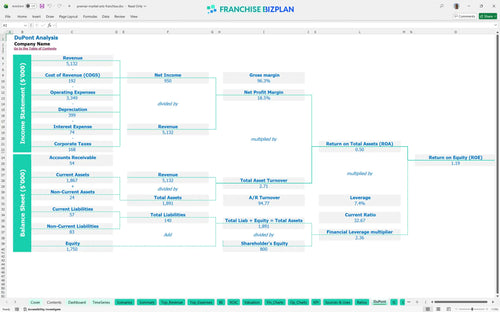
DuPont analysis
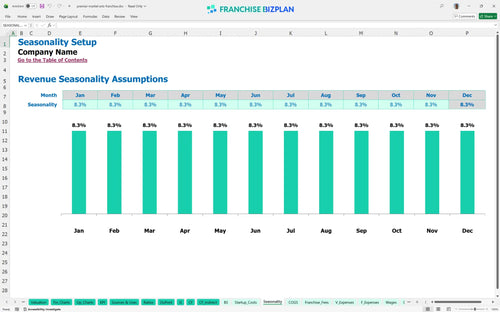
Researched revenue assumptions
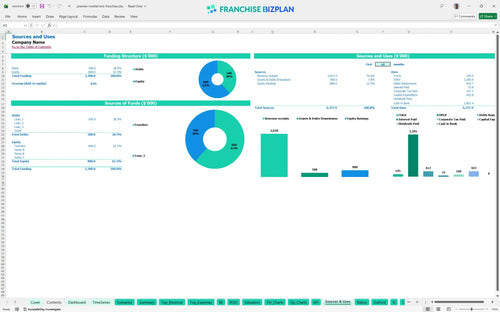
Lender-friendly financial outputs
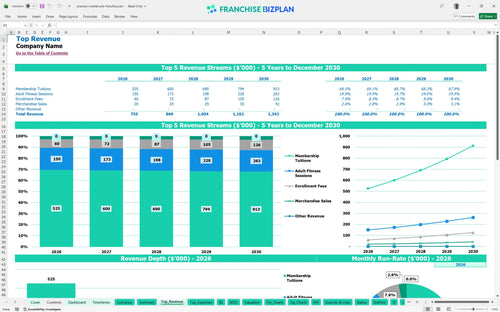
Revenue stream detailed view
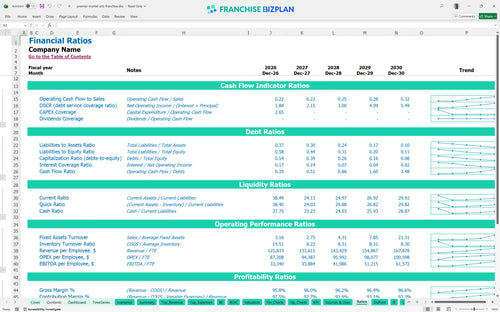
Performance metrics benchmark
We built this franchise unit financial model using detailed market research to ensure accuracy for prospective owners. The model comes pre-populated with researched data for revenue streams like Membership Tuitions and Adult Fitness Sessions, alongside fixed costs like the $6,500 monthly rent. You can defintely edit every field to reflect your specific site selection and local labor market conditions.
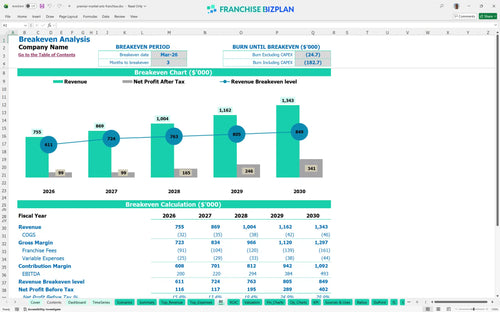
The unit is projected to reach its break-even date in March 2026, just 3 months after launch. With Year 1 EBITDA (Earnings Before Interest, Taxes, Depreciation, and Amortization) estimated at $200,000, the recurring revenue model from tuition and enrollment fees provides a fast path to positive cash flow. Profitability grows steadily, reaching $493,000 in annual EBITDA by Year 5 as the student base scales.
To launch this unit in the US, you will need approximately $422,800 in initial capital. This covers the $49,500 franchise fee, $185,000 for leasehold improvements, and $92,000 for specialized martial arts equipment. The model also accounts for $22,000 in reception furniture and $13,000 for POS (Point of Sale) systems to ensure the facility is fully operational from day one.
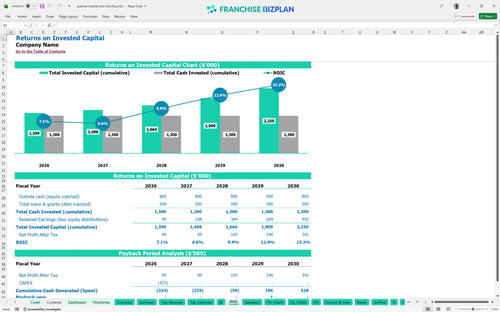
The franchise investment ROI shows a 4-year payback period with an Internal Rate of Return (IRR) of 4.44%. While the initial years focus on recouping the $422,800 investment, the Return on Equity (ROE) of 1.19 indicates a solid long-term value proposition. By Year 4, the unit generates $384,000 in EBITDA, significantly improving the overall investment multiple for the owner.
The unit hits break-even in month 3, driven primarily by the $350,000 in Year 1 membership tuitions. To cover the $6,500 monthly rent and $20,000+ in monthly payroll, you need a consistent volume of new enrollments and high-energy fitness sessions. Estimating monthly operating expenses for a fitness franchise is easier when you see that labor and rent are your two largest fixed hurdles.
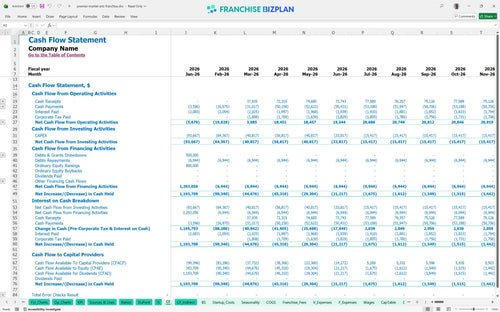
The lowest cash point is projected at $954,000 in December 2026, suggesting the model includes a significant capital cushion or financing. This franchise unit cash flow projection spreadsheet shows that while the unit breaks even quickly, maintaining a buffer is essential for the first 12 months of ramp-up. You should monitor the timing of your $185,000 leasehold spend to avoid liquidity gaps.
The best financial model for boutique fitness franchise must account for volatility. In a high-revenue scenario, increasing Year 1 sales above $755,000 accelerates the 4-year payback and boosts the 4.44% IRR. Conversely, a low scenario where membership growth lags would require tighter control over the $38,000 assistant instructor salaries and marketing spend to protect the bottom line.
This martial arts franchise financial model is built in Excel to give you total control over your unit projections. You can adjust pre-filled formulas and editable assumptions to match your specific territory, whether you are looking at a high-traffic retail spot or a smaller studio. It serves as a comprehensive franchise unit business plan template that adapts to your local market reality.

Planning for the long term is vital when evaluating a fitness franchise profitability analysis. This model provides 5-year revenue, cost, and cash flow projections, starting with Year 1 revenue of $755,000 and scaling to $1.34 million by Year 5. You can track how your martial arts studio income statement template evolves as your student base matures and recurring revenue stabilizes.

Operating a franchise involves specific financial obligations that can squeeze margins if not tracked. This model includes an operating expenses breakdown for the 7% royalty and 5% marketing fund contributions. By factoring in the $49,500 initial franchise fee, you can see the true cost of brand alignment and how it impacts your monthly cash flow.

Understanding how to calculate martial arts studio startup costs is the first step toward a successful launch. This tool tracks everything from $185,000 in leasehold improvements to $92,000 for martial arts equipment. The startup budget template for martial arts franchise helps you identify the exact sales volume needed to cover your $6,500 monthly rent and other fixed costs.

We have integrated industry-standard benchmarks to help you sanity-check your unit economics. From labor costs for your Head Instructor and Assistant Instructors to occupancy costs, these benchmarks ensure your financial feasibility study for martial arts business stays realistic. Comparing your $70,000 General Manager salary against industry norms helps you maintain a competitive but sustainable payroll.


Simply purchase and download the financial model template, then access it instantly using Microsoft Excel or Google Sheets. No installation or technical expertise required-just open and start working.

Enter your business-specific numbers, including revenue projections, costs, and investment details. The pre-built formulas will automatically calculate financial insights, saving you time and effort.

Leverage the investor-ready format to confidently showcase your financial projections to banks, franchise representatives, or investors. Impress stakeholders with clear, data-driven insights and professional reports.

Leverage the investor-ready format to confidently present your projections to banks, franchise representatives, or investors.