


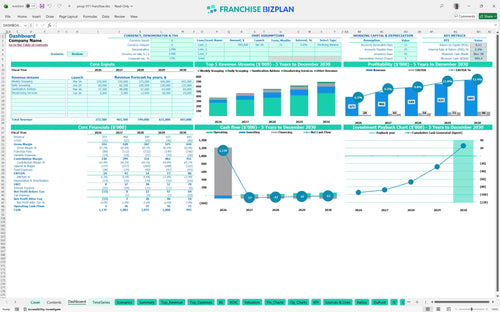
All-in-one Dashboard
Core inputs and core outputs



This comprehensive startup budget spreadsheet includes detailed revenue logs, payroll calculators, and CapEx schedules designed specifically for a high-volume pet waste removal operation.
Core inputs and core outputs
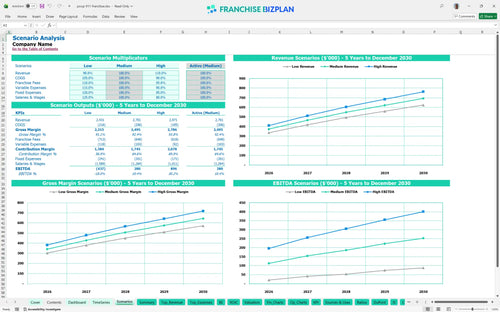
Three scenario analysis
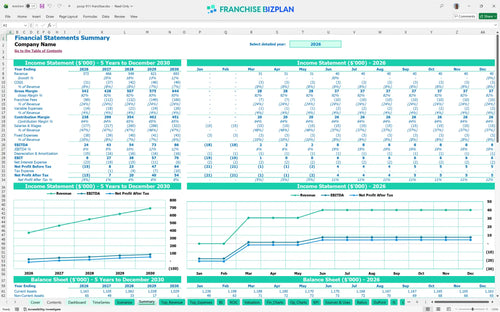
Presentation ready
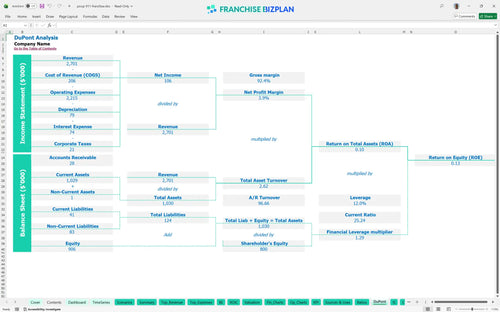
DuPont analysis
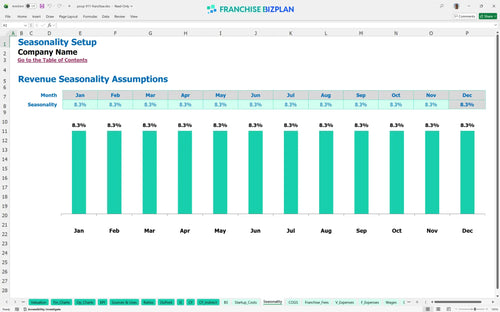
Researched revenue assumptions
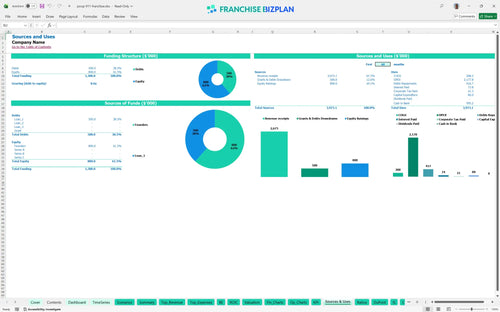
Lender-friendly financial outputs
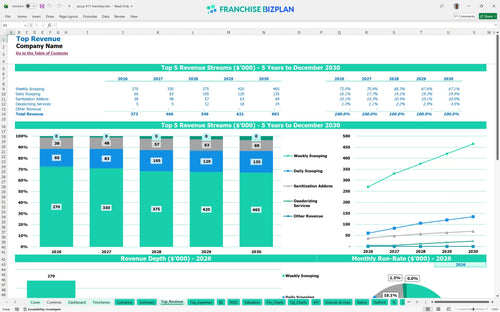
Revenue stream detailed view
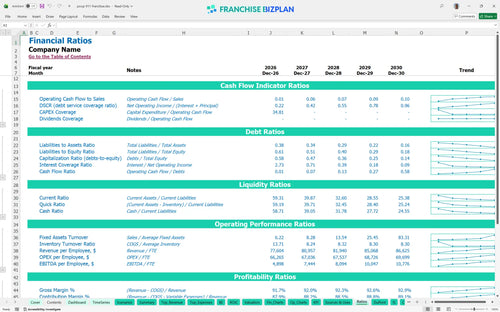
Performance metrics benchmark
We built this franchise unit financial model using our own research into the pet waste removal industry and service-based franchise operations. Key assumptions, including the $49,500 franchise fee and the 23% royalty structure, are pre-populated with researched data and are fully editable to match your Austin-area projections. The model reflects a year-one revenue target of $373,000 with a clear path to $86,000 in annual EBITDA by year five.
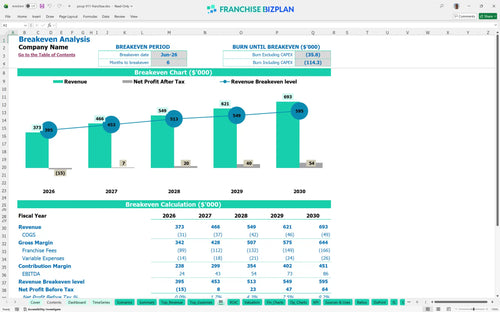
You can expect this unit to reach profitability quickly, with the model showing a break-even date of June 2026, just six months after launch. While year-one EBITDA starts at $24,000, it climbs to $86,000 by year five as you scale your recurring revenue business model. Profitability depends on maintaining high route density to offset the significant 23% royalty fee.
Launching this unit requires an initial investment covering the $49,500 franchise fee and roughly $30,500 in equipment and pre-opening costs. Your total startup cost breakdown for pet care service franchises includes branded vehicles and sanitation gear to ensure professional service from day one. You should also account for the $50,000 operations manager salary in your initial working capital reserves.
The model projects an Internal Rate of Return (IRR) of 2.22% and a Return on Equity (ROE) of 0.13 over the first five years. With a 5-year payback period, this is a long-term play focused on building a stable, recurring revenue stream in affluent corridors like West Lake Hills. The value lies in the high retention of residential service contracts rather than immediate massive cash returns.
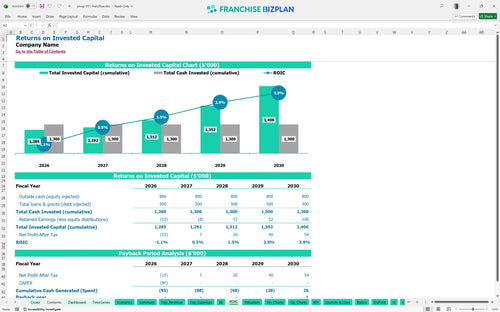
Determining the break-even point for a mobile franchise unit depends heavily on managing the 23% royalty burden and fixed vehicle leases. You need to hit your June 2026 targets by securing enough weekly scooping contracts to cover the $3,150 in monthly fixed operating expenses. Volume is the primary driver here, as fixed costs like insurance and software remain constant regardless of how many yards you scoop.
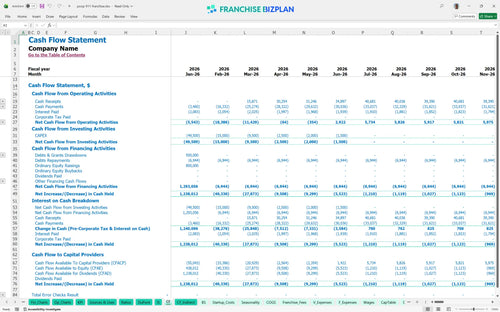
Your lowest cash point is projected for December 2030 at $995,000, assuming significant reinvestment or specific cash handling. Still, the six-month ramp-up to break-even means you defintely need enough working capital to cover the initial $50,000 operations manager salary before the customer base matures. Protecting cash flow requires tight control over vehicle maintenance and fuel spend, which are your primary variable costs.
Estimating profitability for residential service businesses requires looking at high and low cases where revenue fluctuates by 10-20%. A high-performance scenario significantly improves the 2.22% IRR, while a low-revenue year could extend the 5-year payback period and strain the $24,000 year-one EBITDA. The model allows you to see how a 1% shift in disposal fees or fuel costs impacts your year-five $86,000 EBITDA target.
This franchise unit financial model template provides a dynamic Excel environment where you can adjust every variable to fit your specific territory. It uses pre-filled logic for a recurring revenue business model, allowing you to tweak service frequencies and labor costs without breaking the sheet. Use this tool to move from a generic business plan financial forecast to a territory-specific operating plan.

Planning for a pet waste removal franchise requires looking beyond the first year to understand how route density impacts the bottom line. This model tracks revenue scaling from $373,000 in year one to $693,000 by year five, providing a clear view of long-term cash flow and net profit. It helps you visualize the transition from a startup phase to a mature, multi-vehicle operation.

Managing a 23% royalty and a 1% marketing fund is critical for maintaining store-level margin in this service-based franchise. The model automatically calculates these obligations against your weekly and daily scooping revenue so you always know your true contribution margin after brand costs. This level of precision is essential for budgeting tools for new franchise owners who need to see the impact of high royalties on take-home pay.

This tool simplifies calculating ROI for home-service franchise opportunities by mapping out every dollar spent before day one. It includes the $49,500 franchise fee and equipment costs, helping you determine the exact break-even point for a mobile franchise unit. By identifying the $80,000+ needed for launch, you can secure the right amount of financing without over-leveraging.

Use built-in benchmarks to verify if your $24,000 crew member salaries and disposal fee percentages align with industry standards for residential service businesses. These guardrails help you avoid unrealistic projections and ensure your financial planning guide for new franchise operators is grounded in reality. Comparing your fuel costs and vehicle maintenance to typical ranges prevents margin leaks during the ramp-up phase.


Simply purchase and download the financial model template, then access it instantly using Microsoft Excel or Google Sheets. No installation or technical expertise required-just open and start working.

Enter your business-specific numbers, including revenue projections, costs, and investment details. The pre-built formulas will automatically calculate financial insights, saving you time and effort.

Leverage the investor-ready format to confidently showcase your financial projections to banks, franchise representatives, or investors. Impress stakeholders with clear, data-driven insights and professional reports.

Leverage the investor-ready format to confidently present your projections to banks, franchise representatives, or investors.