


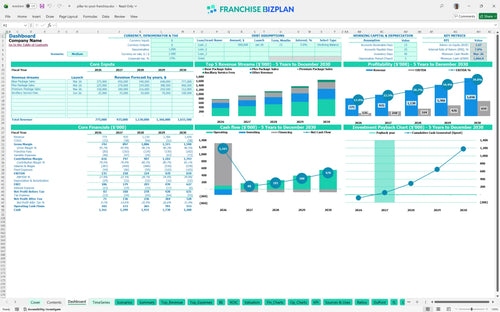
All-in-one Dashboard
Core inputs and core outputs



This franchise unit operational expense spreadsheet provides a plug-and-play framework to forecast your home inspection business with professional precision. One-liner: Stop building spreadsheets and start building your inspection empire.
Core inputs and core outputs
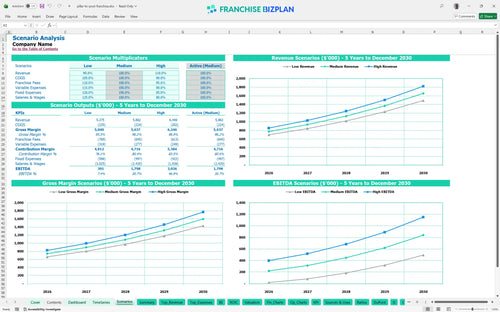
Three scenario analysis
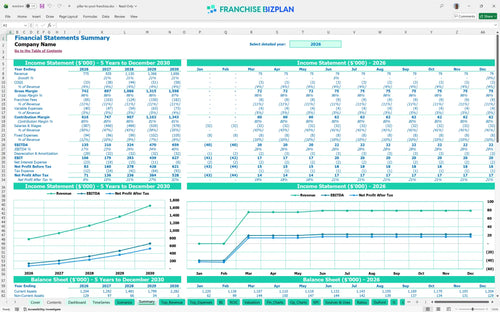
Presentation ready
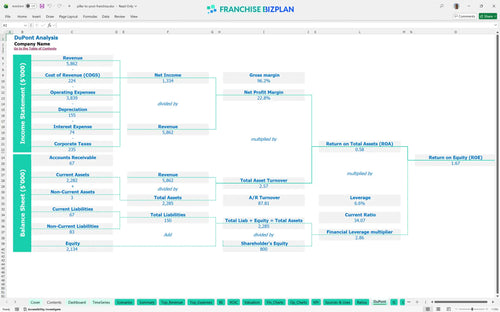
DuPont analysis
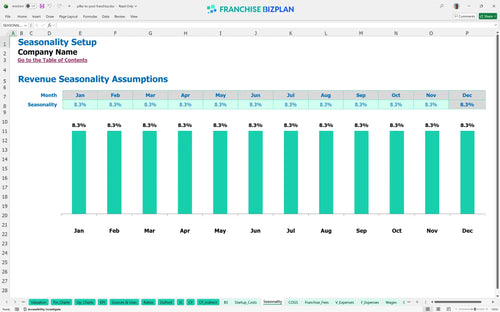
Researched revenue assumptions
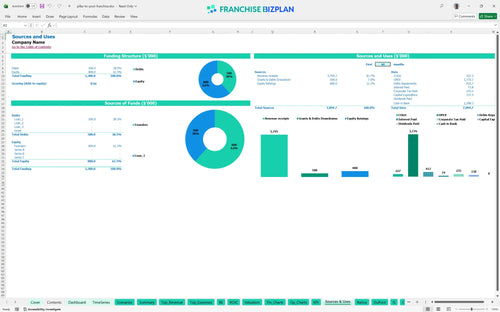
Lender-friendly financial outputs
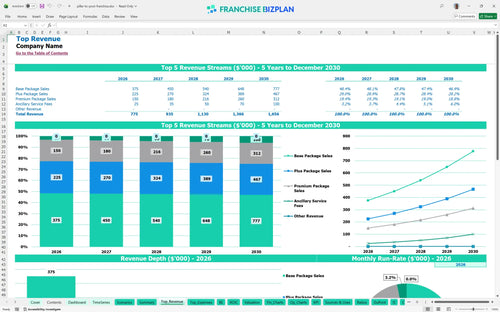
Revenue stream detailed view
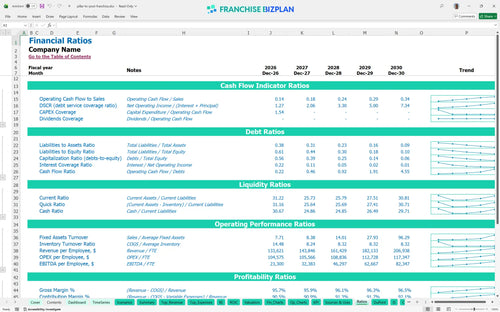
Performance metrics benchmark
We built this home inspection business plan template using our own research to ensure it reflects actual market conditions. Key assumptions like your $775,000 year-one revenue target and the $58,500 initial fee are pre-populated and fully editable to fit your specific goals. This model gives you the data-driven confidence to move from prospect to operator.
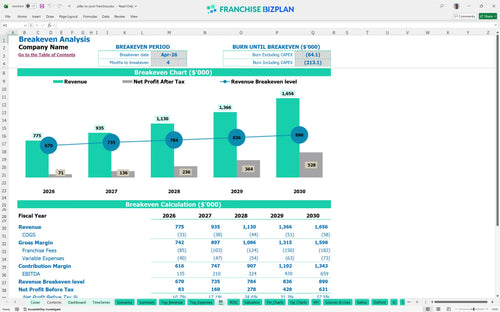
Your unit hits the ground running with a break-even date in April 2026, just four months after launching. By the end of year one, you are looking at $135,000 in EBITDA, which grows significantly as you scale your team of certified inspectors. One-liner: Profitability comes fast if you manage your inspector's daily routes tightly.
You will need roughly $157,500 in upfront capital to get the doors open and the vans on the road. This covers your initial fees, office setup, and the high-tech gear like infrared scanners needed to meet brand standards. Honestly, having a small cash buffer is smart since your lowest cash point hits in March 2026. One-liner: Analyzing startup expenses for local franchise units prevents mid-launch funding panics.
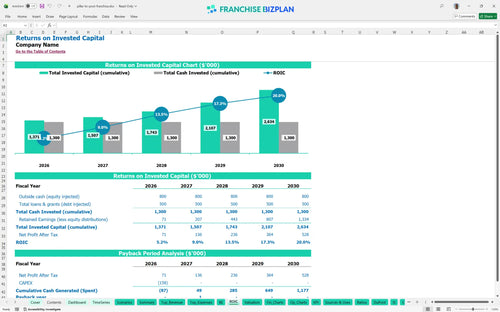
The ROI analysis for franchises shows a solid 2-year payback period on your initial investment. With an IRR of 7.77% and a Return on Equity of 1.67, the model demonstrates a stable path for a service-based business. By year five, EBITDA reaches $659,000, which defintely makes the initial effort worth it. One-liner: A two-year payback is the gold standard for service franchises.
Calculating break-even point for service-based franchises depends heavily on your fixed monthly costs, which total about $7,800 for rent, insurance, and utilities. You need to clear this plus your 11% total franchise fees and labor costs each month. The model shows you hit this milestone in month 4. One-liner: Every inspection after month four starts putting real money in your pocket.
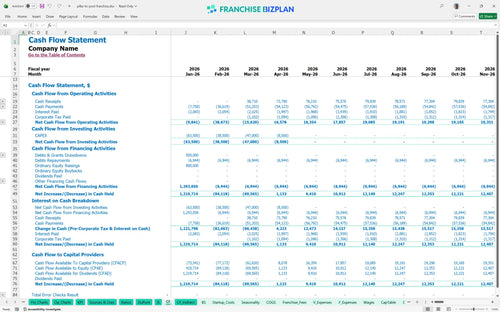
Your lowest cash point is $1,066 in March 2026. This is tight, so you need to watch your spending during the first 90 days of ramp-up. We recommend keeping a small line of credit or extra working capital just in case your first few months of package sales start slower than forecasted. One-liner: Cash is oxygen, and March 2026 is your thinnest air.
Estimating revenue for a new home inspection franchise requires looking at different volumes. If you hit the high case with more Premium Package sales, your year-1 margin jumps significantly. However, a low case where inspections per week drop by 20% will push your payback period past the 2-year mark and increase your peak cash need. One-liner: Best practices for franchise profit and loss forecasting mean planning for the rain, not just the sun.
This home inspection franchise financial model lives in Excel, so you can tweak every line to match your specific territory. Whether you are adjusting the number of inspections per week or changing local labor rates, the pre-filled formulas handle the heavy lifting for you. It is a fully flexible tool designed to help you stress-test your business assumptions before you sign a lease. One-liner: Your local market isn't a template, and your model shouldn't be either.

You need to see the big picture before committing to a multi-year franchise agreement. This tool provides detailed 5-year financial projections for franchise owners, showing how revenue scales from $775,000 in year one to over $1.6 million by year five. It maps out your cash flow and profit margins so you can plan for future equipment upgrades or additional vehicles. One-liner: Growth is a marathon, and this 5-year map keeps you on the right path.

Operating under a big brand means paying for the system, so you have to account for every dollar. This model bakes in the 7% franchise royalty fees and 4% marketing fund contributions automatically based on your sales volume. It ensures you see exactly how much cash stays in your pocket after the franchisor takes their cut each month. One-liner: Don't let corporate fees surprise your bottom line at the end of the quarter.

Knowing how to calculate startup costs for a home inspection franchise is the first step to avoiding a cash crunch. We include everything from the $58,500 franchise fee to the $35,000 inspection vehicle and $12,000 for infrared scanners. The franchise startup costs calculator shows you exactly when your monthly revenue covers these initial outlays and ongoing overhead. One-liner: Knowing your total nut upfront is the only way to sleep at night.

Don't guess on your margins when you can use proven data. The model uses real-world data, like inspection supplies running around 3.5% of sales, to keep your franchise unit profitability analysis grounded. Comparing your expected performance against these benchmarks helps you spot if your labor costs or fuel expenses are drifting too far from the norm. One-liner: Benchmarks are the guardrails that keep your business from driving off a cliff.


Simply purchase and download the financial model template, then access it instantly using Microsoft Excel or Google Sheets. No installation or technical expertise required-just open and start working.

Enter your business-specific numbers, including revenue projections, costs, and investment details. The pre-built formulas will automatically calculate financial insights, saving you time and effort.

Leverage the investor-ready format to confidently showcase your financial projections to banks, franchise representatives, or investors. Impress stakeholders with clear, data-driven insights and professional reports.

Leverage the investor-ready format to confidently present your projections to banks, franchise representatives, or investors.