


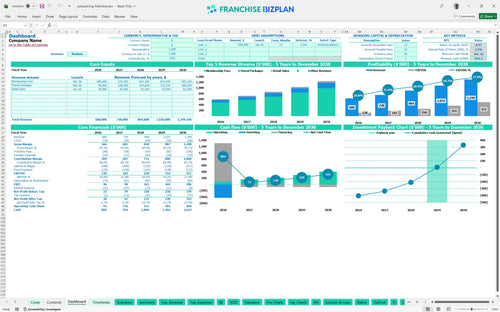
All-in-one Dashboard
Core inputs and core outputs



This Excel financial template for new franchise owners includes everything from a capital expenditure budget to 5-year franchise unit profitability and revenue projections.
Core inputs and core outputs
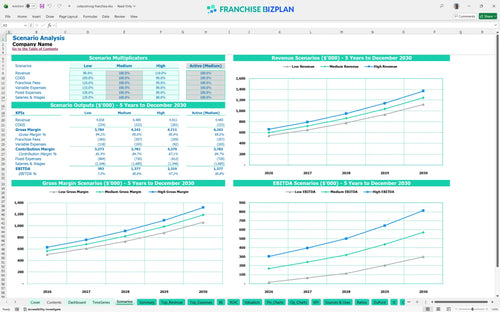
Three scenario analysis
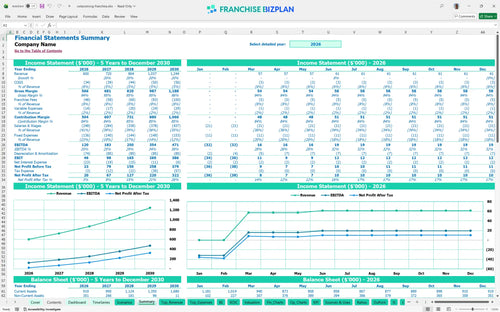
Presentation ready
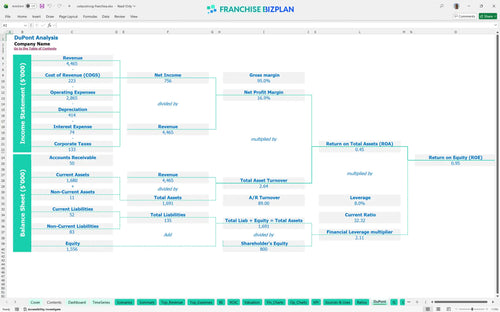
DuPont analysis
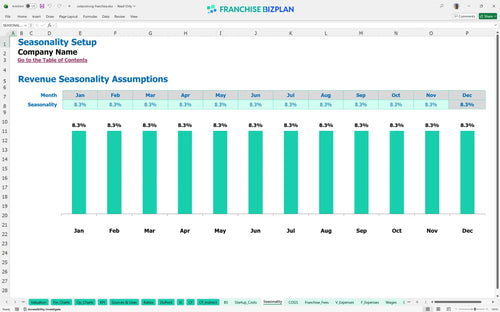
Researched revenue assumptions
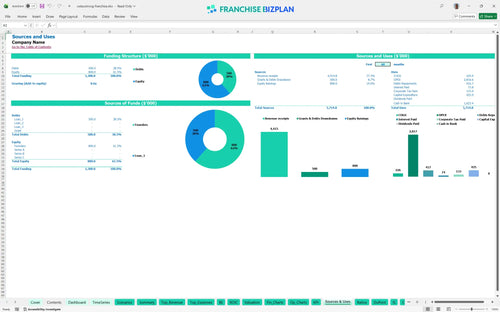
Lender-friendly financial outputs
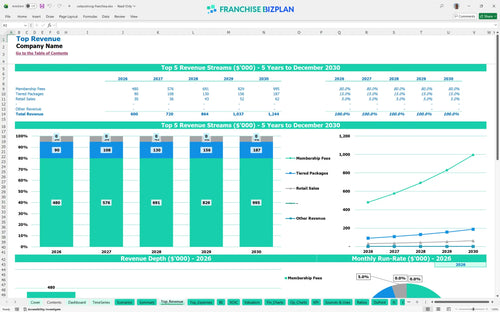
Revenue stream detailed view
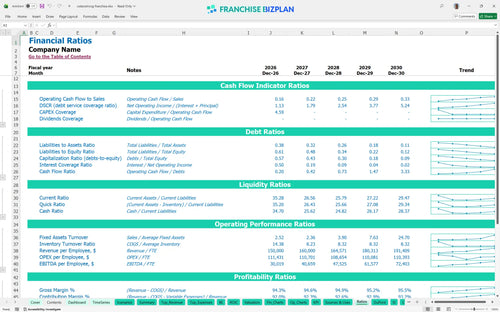
Performance metrics benchmark
We built this franchise unit financial model using our own research into the boutique wellness sector to ensure your planning is data-driven. Key assumptions, including the $600,000 year-one revenue and $425,000 total startup cost, are pre-populated and fully editable to match your specific territory. You can adjust the 7% royalty and 1% marketing fee to see exactly how they affect your $120,000 year-one EBITDA projection.
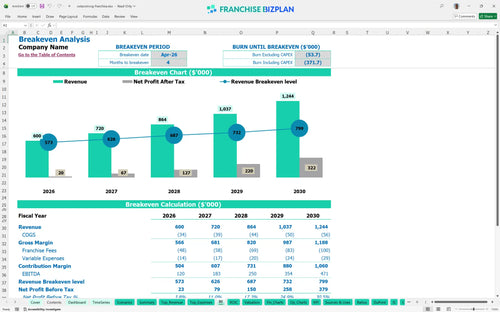
This wellness franchise profitability analysis shows the unit reaching break-even by April 2026, just four months after launching. With year-one EBITDA projected at $120,000, the model tracks how membership fees and tiered packages scale to drive a $471,000 EBITDA by year five. Here's the quick math: revenue grows at 20% annually while fixed costs stay lean.
The total initial investment for this franchise unit business plan is approximately $425,000 to get the doors open. This capital expenditure budget covers the $35,000 franchise fee, $180,000 for specialized skeletal strength equipment, and $120,000 for leasehold improvements. Honestly, the build-out and equipment represent the bulk of your risk before the first member signs up.
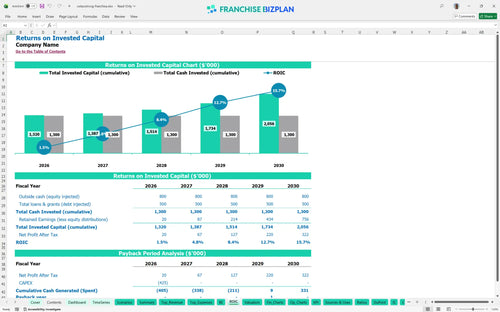
For this franchise unit investment and return on investment spreadsheet, the payback period is 4 years. While the franchise ROI calculation shows an IRR of 3.12%, the ROE of 0.95 indicates a steady return as revenue grows from $600,000 to $1.24 million over the five-year forecast. What this estimate hides is the potential for higher returns through multi-unit scaling.
Financial forecasting for boutique fitness centers shows a monthly break-even date of April 2026. The primary driver for reaching this is membership volume, which must cover the $7,500 monthly rent and the fixed payroll for the general manager and front desk staff. Operating expense forecast management is the difference between a cash-flow positive store and a monthly loss.
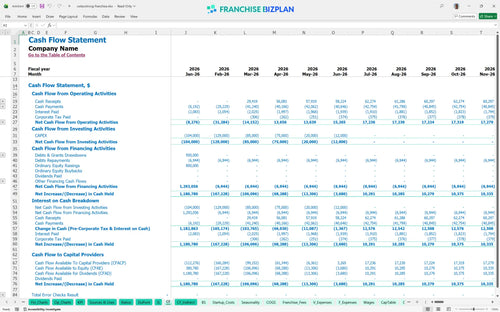
The lowest cash point occurs in June 2026, with a minimum cash balance of $822,000. This indicates that best practices for franchise unit cash flow forecasting require a significant capital buffer to navigate the initial ramp-up phase. If opening takes 90+ days longer than planned, working capital pressure rises quickly.
Analyzing recurring revenue models for fitness franchises requires looking at high and low cases to map your risks. A 10% drop in membership fees defintely delays payback, while a high-growth scenario improves the year-1 EBITDA margin and reduces the peak cash need significantly. Success depends less on headline sales and more on repeat demand and local density.
This franchise financial model template is built in Excel with open formulas, allowing you to tweak every variable for your specific territory. You can adjust membership growth rates or local rent prices to see how they impact your bottom line instantly. Every 1-point margin leak matters fast in a single-unit model.

Planning for a wellness startup requires looking beyond the first year of operation, so our franchise financial projection spreadsheet provides a full 5-year outlook. It shows revenue scaling from $600,000 in year one to over $1.2 million by year five. This long-term view helps you manage the transition from a single-unit owner to a multi-unit operator.

Estimating royalty and marketing fees in franchise model setups is critical for protecting your store-level margin from day one. We include the 7% royalty and 1% marketing fee as recurring expenses, ensuring you see the true net cash flow after the franchisor takes their cut. Plus, it tracks the initial $35,000 fee to ensure your ROI math is accurate.

Knowing how to calculate startup costs for a wellness franchise is the first step toward a successful launch. This break-even analysis tool maps out your $425,000 initial investment, including equipment and leasehold improvements, to find the exact sales volume you need. Fitness franchise startup costs can escalate, but this model keeps your budget on track.

We use unit economics modeling to compare your projected performance against boutique fitness standards to ensure your plan is realistic. This helps you verify if your $7,500 monthly rent or your staffing levels for certified coaches align with profitable industry norms. Still, local density and manager productivity will be the real drivers of your success.


Simply purchase and download the financial model template, then access it instantly using Microsoft Excel or Google Sheets. No installation or technical expertise required-just open and start working.

Enter your business-specific numbers, including revenue projections, costs, and investment details. The pre-built formulas will automatically calculate financial insights, saving you time and effort.

Leverage the investor-ready format to confidently showcase your financial projections to banks, franchise representatives, or investors. Impress stakeholders with clear, data-driven insights and professional reports.

Leverage the investor-ready format to confidently present your projections to banks, franchise representatives, or investors.