


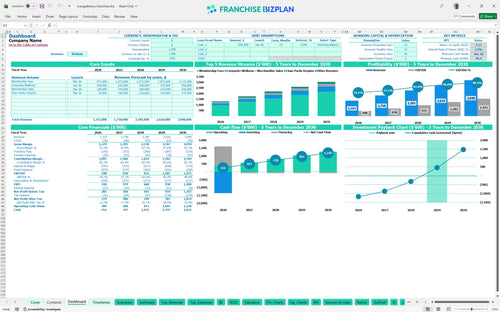
All-in-one Dashboard
Core inputs and core outputs



The franchise unit financial performance spreadsheet includes dynamic revenue modeling, detailed CAPEX tracking, and a full 60-month P&L statement.
Core inputs and core outputs
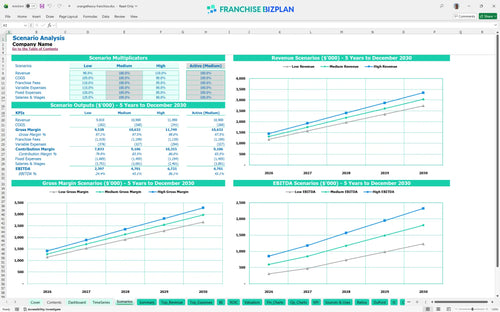
Three scenario analysis
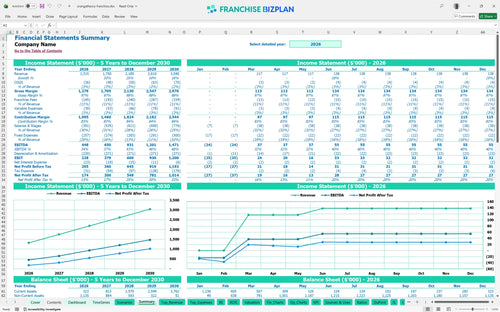
Presentation ready
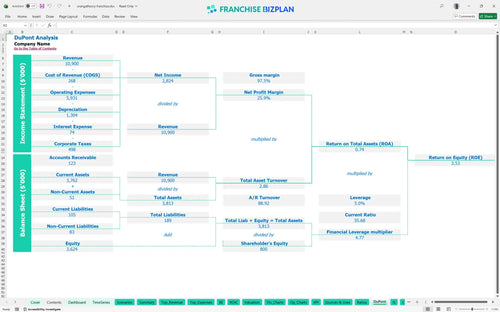
DuPont analysis
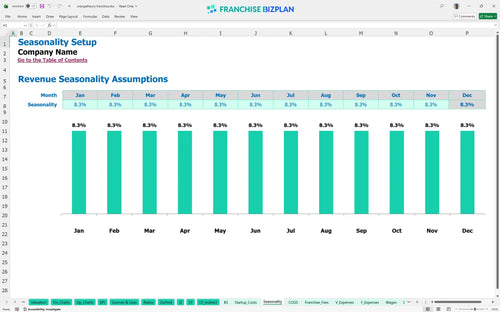
Researched revenue assumptions
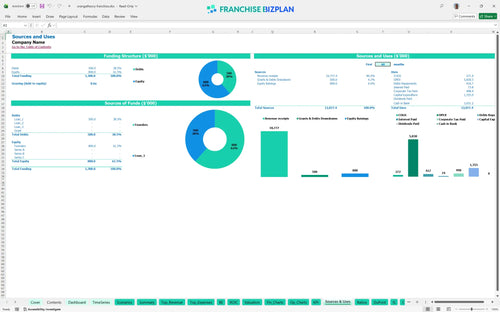
Lender-friendly financial outputs
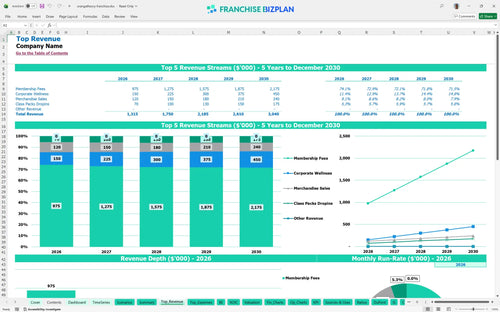
Revenue stream detailed view
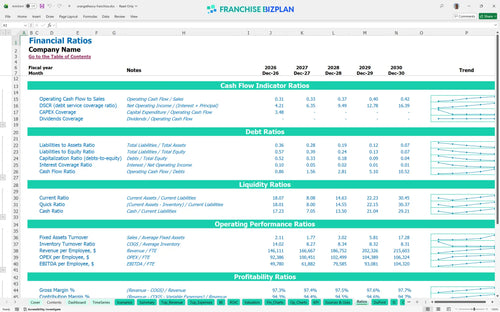
Performance metrics benchmark
We developed this fitness franchise financial model using deep research into the boutique gym sector to ensure your projections are grounded in reality. Key assumptions like the $1.31 million year-one revenue target and $15,000 monthly rent are pre-populated but fully editable to match your specific territory. This model gives you a professional-grade fitness studio profitability analysis without having to build it from scratch.
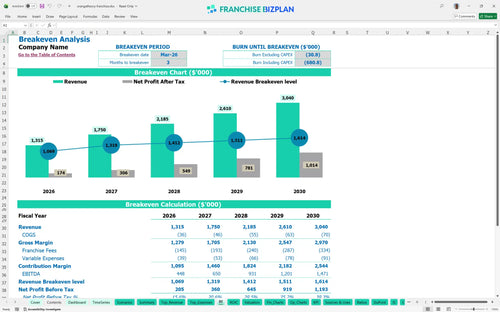
This franchise unit is projected to reach its break-even point in March 2026, just three months after launching. With a year-one EBITDA of $448,000, the model shows a strong profitability trajectory as membership fees and corporate wellness contracts scale up. Here is the quick math: your net profit grows as you move from $650,000 in memberships in year one to $1.45 million in year five.
You will need a significant initial investment to launch this unit, with the largest chunk going toward the $600,000 leasehold improvements. Total capital needs include the $50,000 franchise fee and $500,000 for fitness equipment, plus a cash buffer to handle the lowest cash point of $49,000 in June 2026. Estimating profitability for fitness studio franchises requires accounting for every dollar spent before the first class starts.
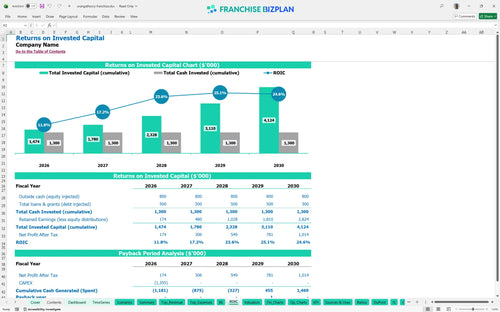
Investors can expect an Internal Rate of Return (IRR) of 3.87% and a Return on Equity (ROE) of 3.53% based on these projections. The payback period is estimated at 4 years, which is standard for a high-CAPEX boutique fitness center. While the IRR seems modest, the year-five EBITDA of $1.47 million suggests significant value creation for a multi-unit operator over time.
Calculating the break-even point for gym franchises depends heavily on your membership volume and the $15,000 monthly rent. You need to hit your revenue targets by month three to stay on track and avoid burning through your $49,000 cash floor. The biggest lever here is the membership fee revenue, which accounts for nearly half of your year-one income.
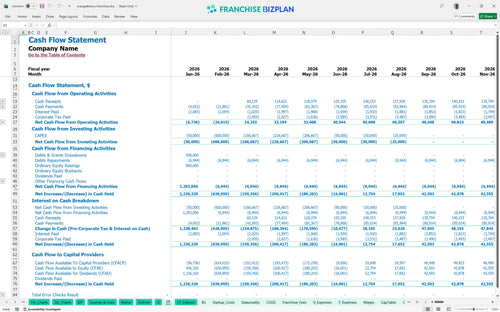
Your lowest cash point hits in June 2026 at $49,000, so you have a tight window during the initial ramp-up. You need to manage your $1.1 million in startup costs carefully to ensure you don't run out of fuel before the recurring membership revenue kicks in. Still, the quick three-month path to operational break-even helps protect your runway significantly.
Using an Excel template for boutique gym financial projections lets you see how a 10% drop in membership affects your year-one $448,000 EBITDA. A high-performance scenario where you maximize corporate wellness and class packs can push you toward the $3 million revenue mark faster. Scenarios help you understand if you can still pay the 8% royalty if local demand softens.
Finance: update unit break-even and payback model by Friday.
This fitness franchise financial model is built in Excel to give you total control over your assumptions. You can adjust every formula and pre-filled input, from membership pricing to local staffing needs, making it easy to see how different operating scenarios affect your bottom line. It is defintely the most flexible way to stress-test your boutique gym business plan before signing a lease.

Planning for a single unit or a small chain requires a long-term view of cash flow and capital expenditure. This model delivers detailed 5-year revenue and profit projections, showing how a studio can scale from $1.31 million in year one to over $3 million by year five. You get a clear look at the balance sheet and long-term profitability analysis needed to satisfy lenders and partners.

Operating within a brand system means managing specific financial obligations that eat into your store-level margin. The model tracks the $50,000 initial franchise fee, the 8% royalty, and the 3% marketing fund contribution automatically based on your revenue forecasts. This ensures you understand the real economics of the brand after the franchisor takes their cut of the top line.

Calculating fitness franchise startup costs accurately is the difference between a smooth opening and a cash crunch. This tool helps you estimate the total initial investment, including $600,000 for leasehold improvements and $500,000 for cardio and strength equipment. You will see exactly what sales volume is required to cover your $15,000 monthly rent and other fixed costs.

We include industry-standard benchmarks for boutique fitness centers so you can sanity-check your numbers. If your labor costs for fitness coaches or front desk staff drift too far from the model, you will know it is time to adjust your staffing plan. It helps you compare your expected performance against typical gross margin ranges for high-intensity interval training studios.


Simply purchase and download the financial model template, then access it instantly using Microsoft Excel or Google Sheets. No installation or technical expertise required-just open and start working.

Enter your business-specific numbers, including revenue projections, costs, and investment details. The pre-built formulas will automatically calculate financial insights, saving you time and effort.

Leverage the investor-ready format to confidently showcase your financial projections to banks, franchise representatives, or investors. Impress stakeholders with clear, data-driven insights and professional reports.

Leverage the investor-ready format to confidently present your projections to banks, franchise representatives, or investors.