


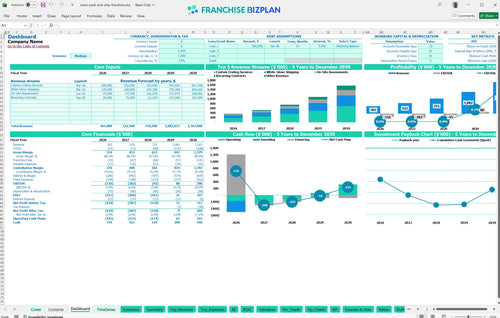
All-in-one Dashboard
Core inputs and core outputs



This tool provides a complete financial feasibility study for packing and crating franchise operations, covering everything from white-glove logistics revenue to specialized warehouse overhead.
Core inputs and core outputs
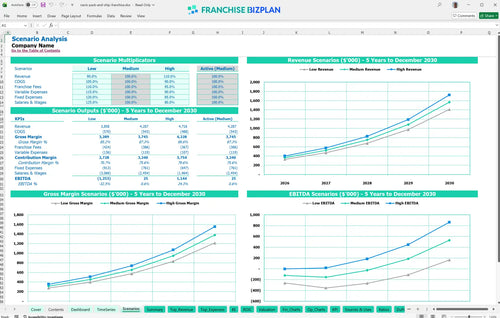
Three scenario analysis
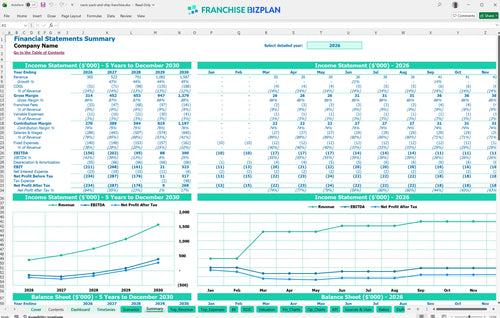
Presentation ready
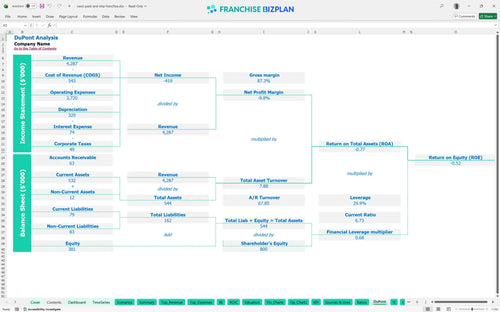
DuPont analysis
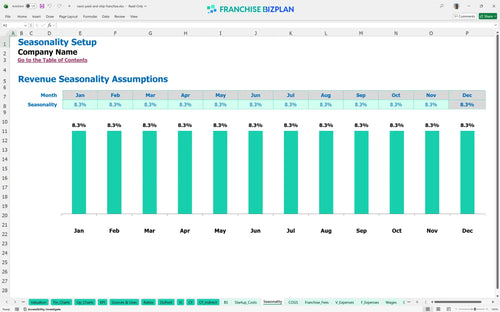
Researched revenue assumptions
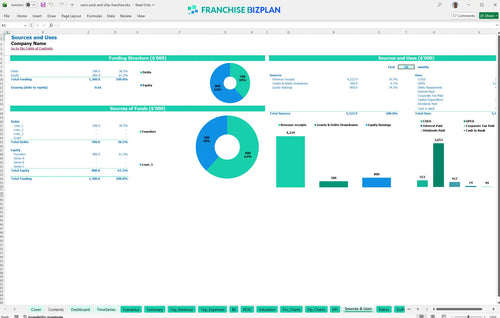
Lender-friendly financial outputs
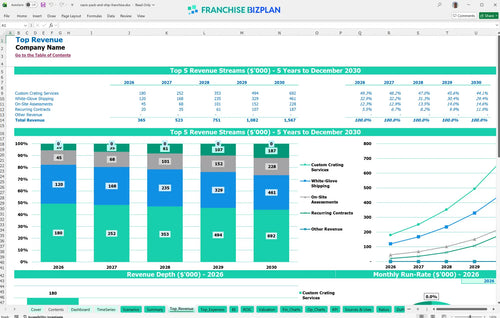
Revenue stream detailed view
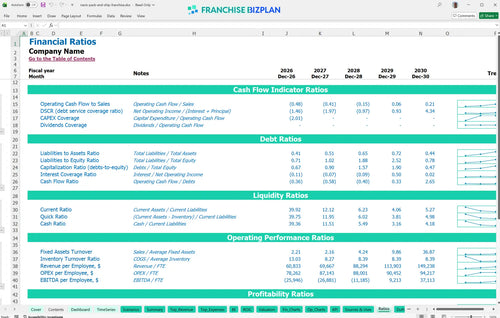
Performance metrics benchmark
We built this franchise unit financial model using our own research on high-value logistics units, including specific inputs for custom crating and white-glove shipping. Key assumptions like the $35,000 franchise fee and the $120,000 build-out are pre-populated and fully editable to match your specific territory. With Year 5 revenue projected at $1,567,000 and Year 1 starting at $365,000, this tool helps you map the path from startup to scale.
The unit reaches positive EBITDA in Year 4, hitting $88,000 after three years of initial losses during the ramp-up phase. True net profitability requires scaling Custom Crating Services past the $300,000 annual mark while keeping material costs below 9%. This franchise profitability analysis Excel tool shows that the business model for high-value logistics and shipping services relies heavily on Year 4 and Year 5 performance.
You need a total initial investment of approximately $332,000 in capital expenditures plus a significant cash buffer to cover early operating losses. This financial model template for white-glove logistics business covers the $35,000 franchise fee and essential gear like the $40,000 delivery vehicle. Capital expenditure planning is critical here because the equipment and build-out costs hit your cash position long before the first crate is built.
This is a long-term play with an IRR of -1.84% over the first five years, as payback occurs after the five-year window. While Year 5 EBITDA hits $390,000, the early heavy lifting in CAPEX and staffing delays the franchise investment ROI. Estimating revenue and expenses for a new franchise location accurately is the only way to set realistic expectations for your equity partners.
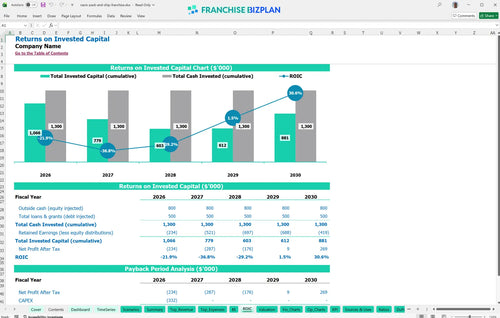
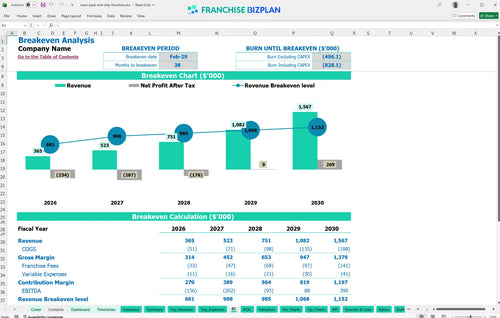
Monthly break-even occurs in February 2029, roughly 38 months after your launch date. The biggest hurdle is the fixed cost load, specifically the $8,500 rent and the $265,000 plus annual payroll for specialists and managers. To be fair, reaching break-even depends on your ability to drive enough volume to cover these high fixed costs in the Scottsdale Airpark corridor.
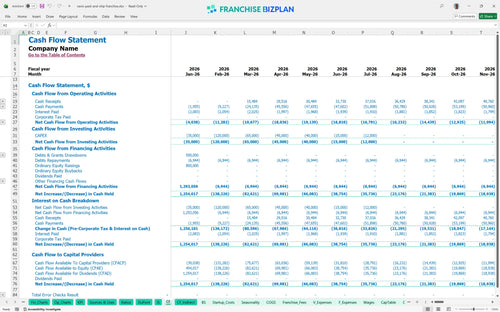
The lowest cash point hits $208,000 in December 2029, meaning you need deep pockets to weather the multi-year ramp-up period. Defintely maintain a high cash reserve because the business model for high-value logistics and shipping services has high fixed overhead that does not stop for slow months. Use the cash flow projection template for small business startup to monitor your monthly burn against your remaining capital.
Small shifts in volume change everything; a 10% revenue drop in a low-performance case pushes break-even out by another year. The high-performance case leverages the fixed warehouse rent to drop more of that $1.5 million Year 5 revenue straight to the bottom line. This is the best financial planning tool for new franchise operators to see how different market conditions affect their survival.
This franchise financial model template is built in Excel, allowing you to tweak every variable from crating material costs to local labor rates. It uses pre-filled formulas so you can test different scenarios for your specific territory without breaking the math or needing a degree in finance. Honestly, having a tool that lets you adjust the knobs on your profit and loss statement template for franchise owners is the only way to plan for real-world volatility.

Plan your shipping and logistics franchise business plan with a full 5-year outlook on revenue and cash flow. We map out the transition from early-stage custom crating to high-volume recurring contracts, showing exactly how the balance sheet evolves as you scale from $365,000 in Year 1 to over $1.5 million by Year 5. Small business financial forecasting is about seeing the cliff before you drive over it, and this 5-year view provides that visibility.

Understanding franchise royalty fees and overhead costs is vital for maintaining store-level margins in a high-touch service model. This model automatically calculates the 6% royalty and 3% marketing fund contributions against your projected sales, so you see the net impact on your bottom line. It defintely helps to know exactly how much of every dollar stays in your pocket after the franchisor takes their cut. Every point of margin matters when you are scaling a specialized logistics unit.

Use the franchise unit startup cost calculator to estimate your total initial investment, including the $120,000 for leasehold improvements and $65,000 for crating equipment. We help you find the exact sales volume needed to cover your $8,500 monthly warehouse rent and other fixed franchise operating expenses. Knowing how to calculate startup costs for a shipping franchise is the first step toward avoiding a mid-ramp capital crunch.

We include industry-standard unit economics analysis to ensure your packing and crating business financial projection stays grounded in reality. Compare your 9.5% material costs and labor allocations against typical logistics benchmarks to identify potential margin leaks before they become permanent drains on your cash. This franchise business plan financial spreadsheet is designed to keep your assumptions honest and your bank account intact.


Simply purchase and download the financial model template, then access it instantly using Microsoft Excel or Google Sheets. No installation or technical expertise required-just open and start working.

Enter your business-specific numbers, including revenue projections, costs, and investment details. The pre-built formulas will automatically calculate financial insights, saving you time and effort.

Leverage the investor-ready format to confidently showcase your financial projections to banks, franchise representatives, or investors. Impress stakeholders with clear, data-driven insights and professional reports.

Leverage the investor-ready format to confidently present your projections to banks, franchise representatives, or investors.