


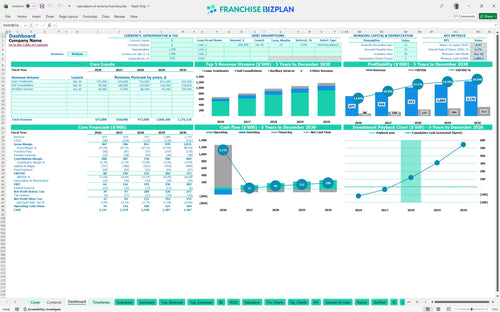
All-in-one Dashboard
Core inputs and core outputs



This comprehensive Excel template provides a data-driven framework for estimating annual revenue for organic lawn care business and managing unit-level performance.
Core inputs and core outputs
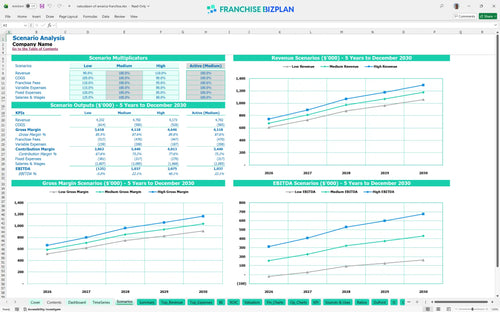
Three scenario analysis
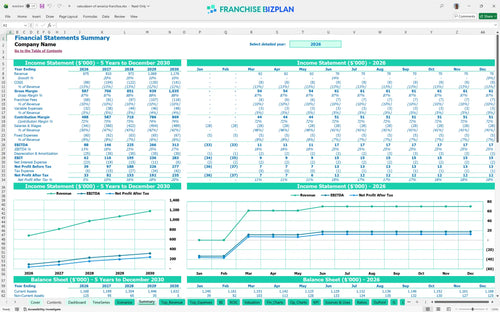
Presentation ready
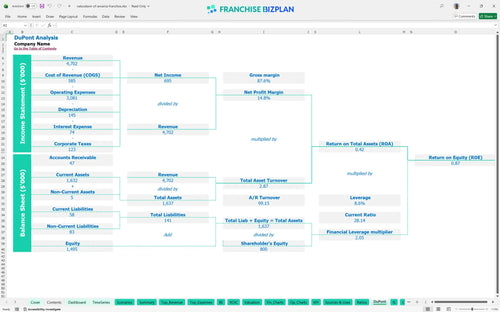
DuPont analysis
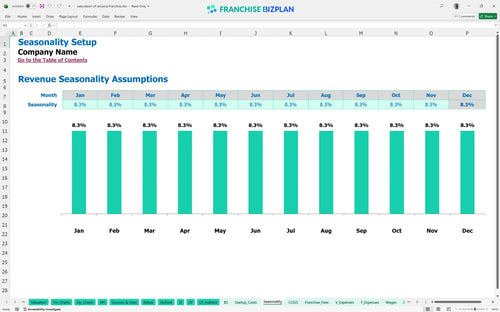
Researched revenue assumptions
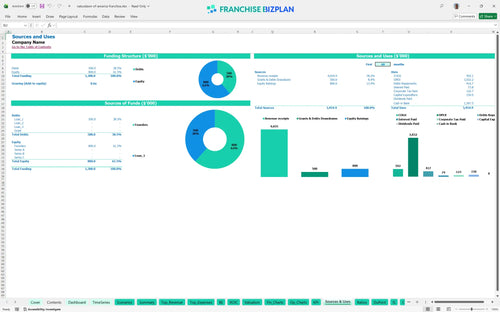
Lender-friendly financial outputs
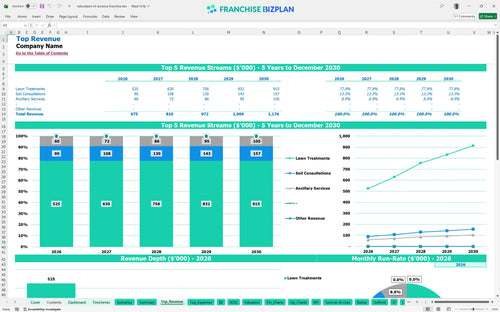
Revenue stream detailed view
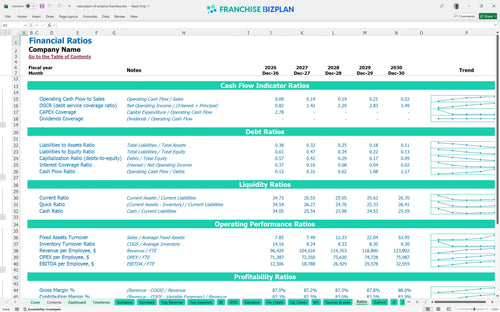
Performance metrics benchmark
This franchise unit financial model was built using detailed research into the organic lawn care sector. The assumptions for revenue streams, like lawn treatments and soil consultations, plus expenses like the 9% royalty and technician wages, are pre-populated and fully editable. In Year 1, the model projects revenue of $675,000 with an EBITDA of $88,000, giving you a solid starting point for your own analysis.
The unit reaches profitability within the first year, showing a positive EBITDA of $88,000 by the end of Year 1. This trajectory is driven by the recurring revenue model of seasonal lawn treatments and ancillary services that keep cash flowing after the initial four-month ramp-up. You will defintely need to maintain high service quality to keep retention strong as you scale toward Year 2 sales of $810,000.
Launching this unit requires a total initial investment of approximately $150,000 in capital expenditures. This covers the $39,500 franchise fee, a $45,000 service truck, and $22,000 for specialized equipment like spreaders and aerators. You also need to account for a significant cash buffer, as the model shows a minimum cash requirement of $1,081,000 to handle the full ramp-up and operational needs through mid-2026.
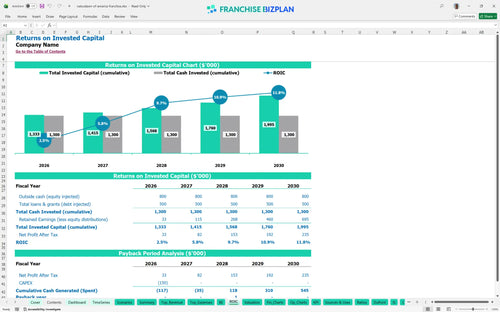
For a service-based franchise, the return on investment calculation shows a 3-year payback period on the initial capital. The internal rate of return (IRR) is estimated at 5.7%, with a return on equity (ROE) of 0.87. These metrics reflect a stable, long-term investment profile where value is built through the compounding effect of recurring lawn care contracts over the 5-year forecast period.
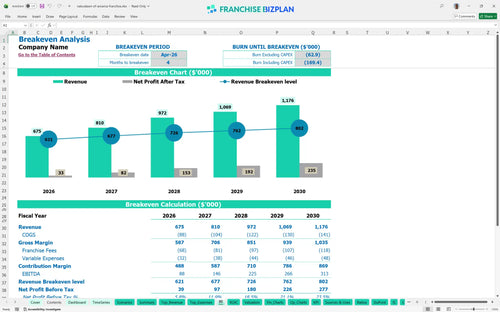
The unit is projected to hit its monthly break-even point in April 2026, just four months after launching operations. This quick turnaround depends heavily on the volume of lawn treatment contracts secured during the spring push. Since fixed costs like the $1,800 monthly office rent and $68,000 manager salary are constant, increasing the average ticket through ancillary services is the fastest way to cover overhead.
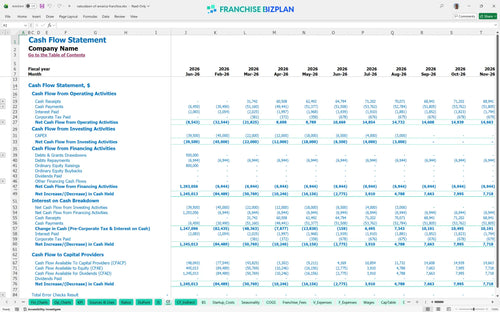
The lowest cash point occurs in June 2026, where the model indicates a need for $1,081,000 in liquidity to ensure smooth operations. You will need roughly six months of runway to navigate the initial hiring of 3.5 full-time equivalent technicians and the purchase of equipment. Still, having a cash buffer is smart to manage the timing gaps between service delivery and payment processing.
The model compares Low, Medium, and High scenarios to show how a 10% shift in revenue or labor costs impacts your bottom line. In the High case, exceeding the $675,000 Year 1 revenue target significantly boosts the $88,000 EBITDA, while the Low case might delay the 3-year payback. Focusing on local marketing and customer acquisition in high-growth residential corridors is the best way to hit the High-case projections.
Finance: update unit break-even and payback model by Friday
This franchise unit financial model is built in Excel to give you total control over your numbers. You can adjust pre-filled formulas and editable assumptions to match your specific territory, whether you are looking at local labor rates or specific rent costs for your warehouse. It is a flexible tool designed to handle everything from a single-unit startup to a small multi-unit expansion.

Planning for the long term is the only way to ensure your lawn care franchise business plan holds up under pressure. This model provides a detailed 5-year outlook on revenue, costs, and cash flow, allowing you to see how your margins evolve as you scale. You get a clear view of your projected balance sheet and long-term profitability to share with lenders or partners.

Operating a franchise means managing specific financial obligations like the 9% royalty and 1% brand marketing fund. This model tracks these recurring costs automatically based on your sales volume so you can see the impact on your bottom line. It also accounts for the initial franchise fee, ensuring your startup financial plan for lawn maintenance franchise is accurate from day one.

Knowing how to calculate franchise startup costs for lawn care is vital for securing financing. The model breaks down your total initial investment, including equipment like spreaders and trucks, and maps it against your monthly fixed and variable costs. You will see exactly what sales volume is required to hit your break-even point and start generating a surplus.

We have integrated industry-standard benchmarks to help you sanity-check your operating expense budget. You can compare your labor costs and gross margins against typical service-based franchise ranges to ensure your projections are realistic. This helps you identify if your staffing levels or material costs are out of sync with successful operators in the field.


Simply purchase and download the financial model template, then access it instantly using Microsoft Excel or Google Sheets. No installation or technical expertise required-just open and start working.

Enter your business-specific numbers, including revenue projections, costs, and investment details. The pre-built formulas will automatically calculate financial insights, saving you time and effort.

Leverage the investor-ready format to confidently showcase your financial projections to banks, franchise representatives, or investors. Impress stakeholders with clear, data-driven insights and professional reports.

Leverage the investor-ready format to confidently present your projections to banks, franchise representatives, or investors.