


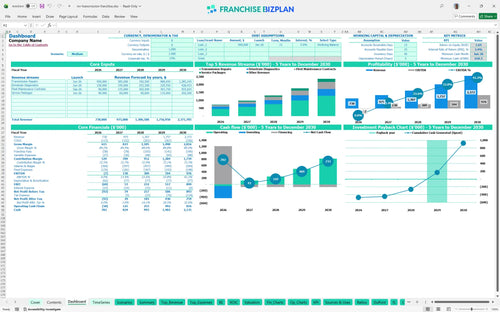
All-in-one Dashboard
Core inputs and core outputs



This Excel financial model template for automotive franchises provides a complete toolkit for analyzing startup costs, five-year profitability, and multi-scenario cash flow needs.
Core inputs and core outputs
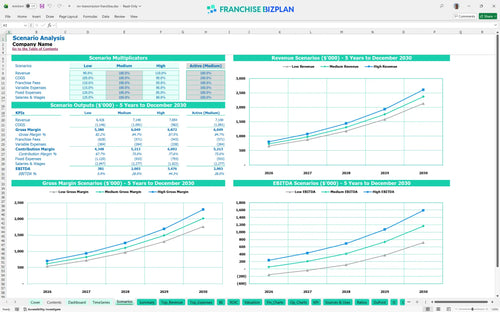
Three scenario analysis
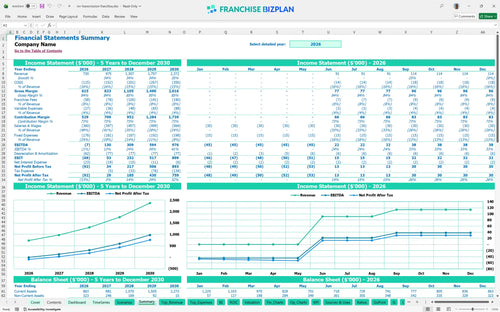
Presentation ready
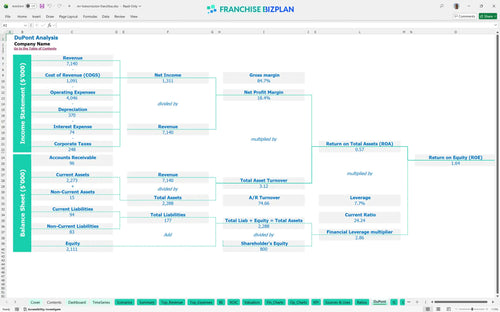
DuPont analysis
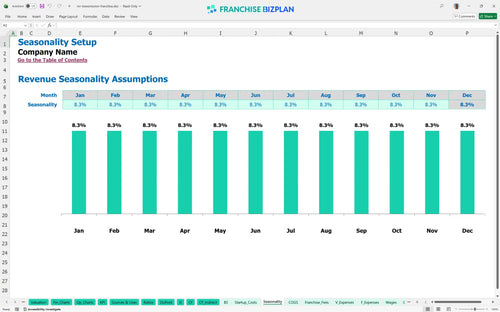
Researched revenue assumptions
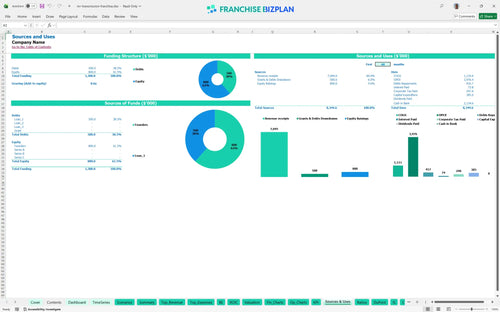
Lender-friendly financial outputs
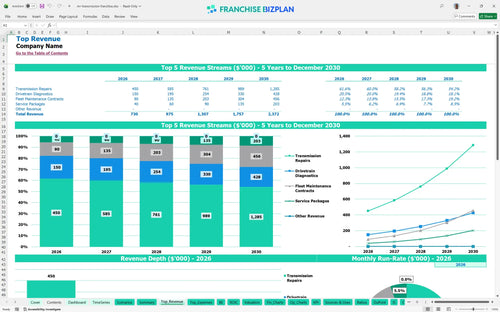
Revenue stream detailed view
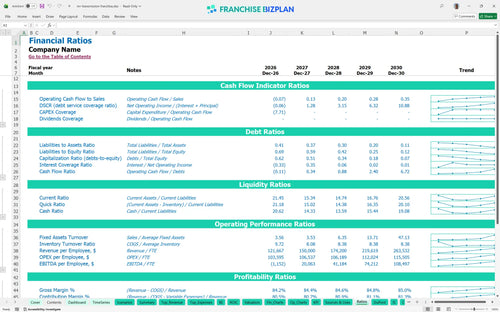
Performance metrics benchmark
We built this automotive franchise unit financial model using our own research into the drivetrain repair sector. Key assumptions for transmission repairs, drivetrain diagnostics, and fleet maintenance are pre-populated with researched data and are fully editable. The model shows a clear path from a Year 1 EBITDA of -$7,000 to a robust $976,000 by Year 5.
The unit is projected to reach profitability in Year 2, generating $130,000 in EBITDA after the initial ramp-up. By Year 3, net profit climbs significantly as revenue from fleet maintenance contracts and service packages scales to $1.3 million. Here's the quick math: Year 1 is about survival, but Year 2 is where the transmission repair shop profitability defintely kicks in.
You will need to prepare a financial plan for a new franchise location that accounts for roughly $385,000 in major startup assets. This includes the $45,000 franchise fee, $120,000 for leasehold improvements, and $90,000 for hoists and lifts. Plus, you need to account for the $650,000 minimum cash point to cover the early months. Capital expenditure budget planning is non-negotiable for specialized shops.
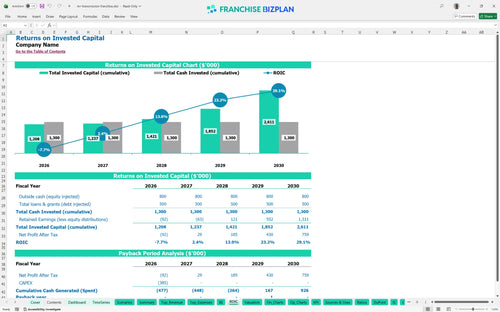
The internal rate of return (IRR) for this unit is 3.36%, with a total return on equity (ROE) of 1.64. Investors can expect a 4-year payback period as the unit matures and revenue hits the $2.3 million mark. Still, the profit margin analysis for auto repair franchise unit shows that the real value lies in the $976,000 EBITDA potential by Year 5. This ROI calculation assumes you hit your fleet maintenance targets.
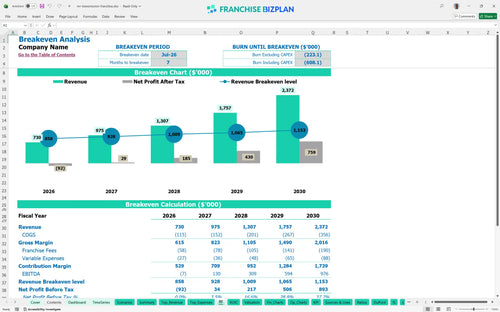
The unit hits its break-even date in July 2026, just 7 months after launching the primary service lines. Break-even depends heavily on managing the specialized labor costs, which include a $72,000 manager salary and master technicians. If you can keep your automotive parts COGS (cost of goods sold) at the projected 14%, you stabilize much faster. Analyzing operational overhead for mechanical repair franchises is the best way to protect your runway.
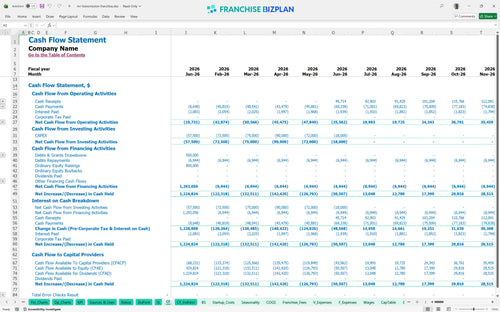
The lowest cash point occurs in June 2026, with a minimum cash balance of $650,000 required to navigate the build-out and initial hiring. You need enough runway to cover the $14,000 monthly fixed expenses before the revenue from transmission repairs fully ramps up. Honestly, the first six months are the most dangerous for your liquidity. Financial forecasting tools for auto service centers are essential for monitoring this gap.
The model allows for a franchise feasibility study by comparing Low, Medium, and High revenue scenarios. A 10% drop in revenue in the Low case can delay your 4-year payback by an additional 18 months and significantly increase your peak cash need. Conversely, hitting the High case through aggressive local marketing execution can push Year 1 EBITDA into positive territory. Scenarios help you prepare for the volatility of the auto repair market.
Finance: update unit break-even and payback model by Friday.
This franchise financial model template is an Excel-based tool built for real-world operators. It features editable assumptions and pre-filled formulas, allowing you to adjust revenue drivers and labor costs to fit your specific territory. You can swap out local rent or tax rates in seconds to see how they impact your bottom line. Precision in your automotive franchise unit financial model starts with flexible inputs.

Plan your growth with detailed franchise unit financial projections that span sixty months of operation. This tool tracks everything from initial ramp-up to mature-store performance, helping you visualize the jump from $730,000 in Year 1 to $2.37 million by Year 5. It is a vital part of any auto repair shop business plan for securing bank financing. Long-term success requires seeing the road five years ahead.

Managing the ongoing cost of the brand is simple with dedicated inputs for the 7% royalty and 1% marketing fund contributions. The model automatically calculates these fees against your monthly sales, so you always know your true store-level margin. It also accounts for the $45,000 upfront fee in your initial capital outlay. Knowing your brand obligations prevents cash flow surprises later.

Use the franchise startup cost calculator to map out every dollar needed before you open the doors. The model breaks down fixed costs like the $8,000 monthly rent and variable costs like the 2.5% payment processing fees. This helps you determine exactly what daily volume you need to stop burning cash. A clear break-even analysis is the difference between guessing and growing.

We have integrated automotive franchise unit economic performance model benchmarks to help you sanity-check your numbers. You can compare your parts costs, which should trend toward 13.2%, against industry standards to ensure you aren't overpaying suppliers. It also helps in estimating labor costs for specialized transmission shops to keep your payroll competitive but lean. Benchmarks keep your financial plan grounded in reality.


Simply purchase and download the financial model template, then access it instantly using Microsoft Excel or Google Sheets. No installation or technical expertise required-just open and start working.

Enter your business-specific numbers, including revenue projections, costs, and investment details. The pre-built formulas will automatically calculate financial insights, saving you time and effort.

Leverage the investor-ready format to confidently showcase your financial projections to banks, franchise representatives, or investors. Impress stakeholders with clear, data-driven insights and professional reports.

Leverage the investor-ready format to confidently present your projections to banks, franchise representatives, or investors.