


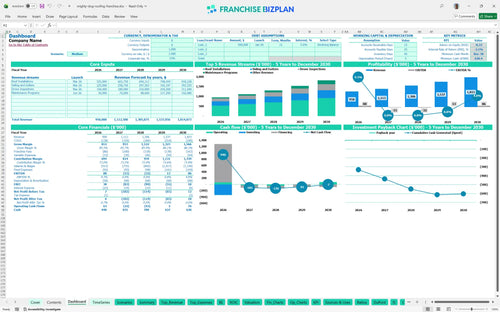
All-in-one Dashboard
Core inputs and core outputs



This Excel template for franchise unit financial projections provides a ready-to-use framework for analyzing the full lifecycle of a home service business.
Core inputs and core outputs
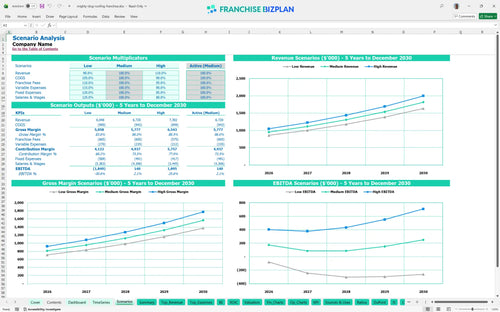
Three scenario analysis
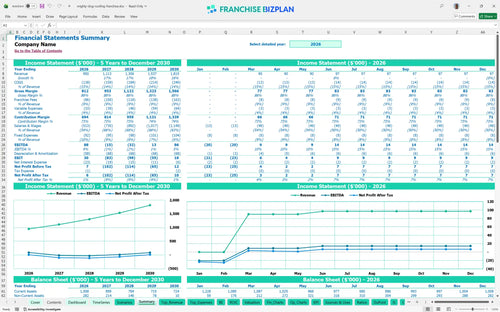
Presentation ready
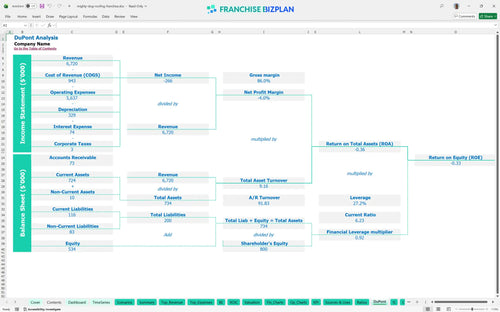
DuPont analysis
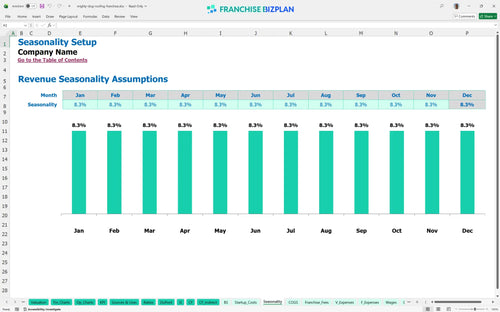
Researched revenue assumptions
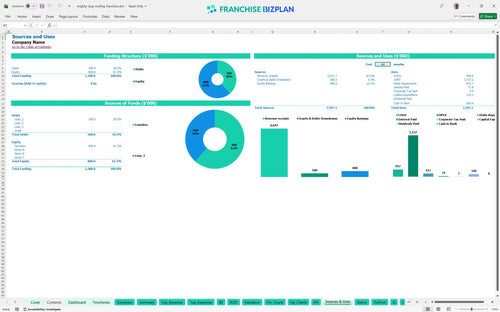
Lender-friendly financial outputs
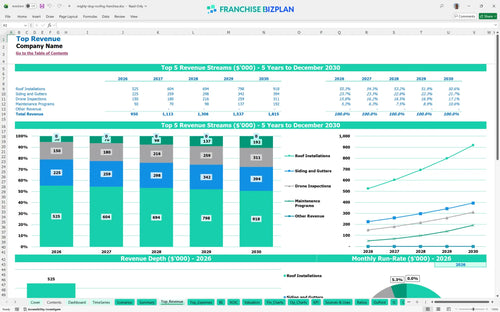
Revenue stream detailed view
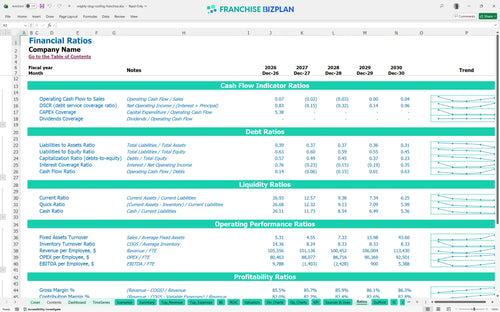
Performance metrics benchmark
We built this financial model for new franchise owners using deep research into the exterior services sector. Key assumptions like the $120,000 service truck investment and the 6% royalty are pre-populated but fully editable to fit your market. With a projected $1.8M top line by year five, this tool helps you navigate the complex home service business financial forecasting landscape. Honestly, the drone technology and maintenance programs are what drive the long-term value here.
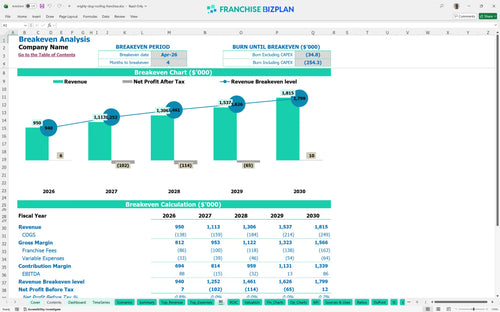
The unit hits operational break-even in April 2026, just four months after launch. Estimating profitability for home exterior service franchises shows a Year 1 EBITDA of $88,000, though net profitability after all debt and capital costs takes longer. Profitability is a function of crew efficiency and lead quality.
You will need an initial investment of $339,500 to cover the franchise fee, trucks, and tech. You'll defintely want to keep a cash buffer, as the minimum cash point hits $620,000 by 2030 due to cumulative operational needs and scaling labor. Capital allocation is about more than just buying trucks.
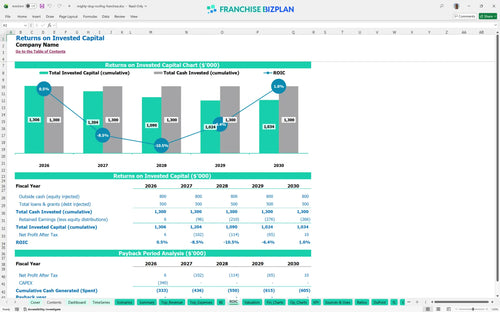
This franchise investment ROI analysis shows an IRR of -3.1% over the initial five-year period, with payback occurring after the fifth year. While the Year 5 revenue of $1.8M is strong, the heavy upfront CAPEX and mid-term labor scaling costs mean this is a long-term equity play. ROI is the ultimate scoreboard for your investment.
To cover your $7,700 in monthly fixed costs plus royalties, you need to reach the break-even point by month 4. This franchise operational cost spreadsheet shows that your primary driver is the volume of roof installations, which must hit $350,000 in Year 1. Speed to break-even dictates your stress levels for year one.
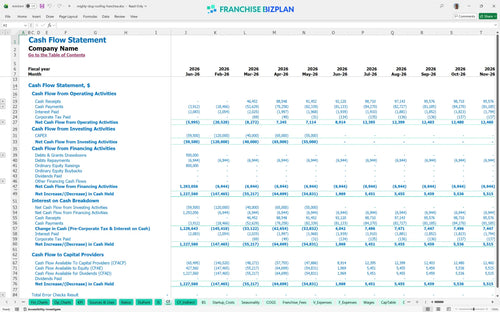
The startup budget template for service-based franchises identifies a minimum cash point of $620,000 by late 2030. You need at least 6 months of runway to manage the 'Project Hero' and crew expansion costs before the maintenance revenue matures. This is one of the best financial tools for managing a franchise unit because it highlights these timing gaps. A cash buffer is the cheapest insurance you can buy.
Analyzing ROI for roofing and exterior service businesses requires looking at the 'what-ifs.' A 10% drop in revenue or a rise in material costs can push the payback period further out, while hitting the high-growth scenario improves the Year 5 EBITDA of $86,000. Scenarios turn a static plan into a dynamic strategy. Finance: update unit break-even and payback model by Friday.
This franchise financial model template allows you to swap out every assumption to match your specific territory. Whether you are adjusting the $4,500 monthly warehouse lease or changing the 12% roofing material cost, the pre-filled formulas update instantly. This tool makes it easy to see how local labor rates or different rent prices impact your bottom line before you sign a lease. Every 1-point margin leak matters fast in a single-unit model.

Building a roofing franchise business plan requires looking past the first storm season. This franchise business plan financial spreadsheet projects revenue from $950,000 in year one up to $1,815,000 by year five, accounting for the ramp-up of maintenance programs and drone inspections. It tracks cash flow through the lean middle years where EBITDA dips before recovering as the brand matures. How to forecast revenue for a residential roofing franchise becomes simple when you map out the growth of your roofing and siding crews over time. Timing gaps between opening and maturity can sink an unprepared owner.

A deep franchise disclosure document analysis is only useful if you can model the impact of the franchise royalty and fee structure on your cash flow. This tool calculates the 6% royalty and 3% marketing fee automatically against your projected sales, ensuring you see the $85,500 annual hit at the $950k revenue mark. Understanding franchise royalty fees and ongoing costs is critical because these are a tax on top-line revenue, not profit. Still, seeing these numbers upfront prevents surprises during your first year of operation.

Use this franchise startup cost calculator to map out the $339,500 needed for equipment, trucks, and tech. The model identifies a quick 4-month path to operational break-even by April 2026, provided you hit the $350,000 mark for roof installations in the first year. How to calculate startup costs for a roofing franchise involves more than just the fee; you must account for the $120,000 truck fleet and $30,000 initial marketing push. Cash is king, but break-even is the kingdom.

This franchise unit profit and loss template includes unit economics for service franchises to help you sanity-check your numbers against industry standards. We've baked in a 12% roofing material cost and 2.5% subcontractor fee as starting points for your analysis. Comparing your $85,000 GM salary and warehouse costs against these benchmarks ensures your overhead doesn't bloat before the revenue catches up. Benchmarks are the guardrails for your gut feelings.


Simply purchase and download the financial model template, then access it instantly using Microsoft Excel or Google Sheets. No installation or technical expertise required-just open and start working.

Enter your business-specific numbers, including revenue projections, costs, and investment details. The pre-built formulas will automatically calculate financial insights, saving you time and effort.

Leverage the investor-ready format to confidently showcase your financial projections to banks, franchise representatives, or investors. Impress stakeholders with clear, data-driven insights and professional reports.

Leverage the investor-ready format to confidently present your projections to banks, franchise representatives, or investors.