


All-in-one Dashboard
Core inputs and core outputs



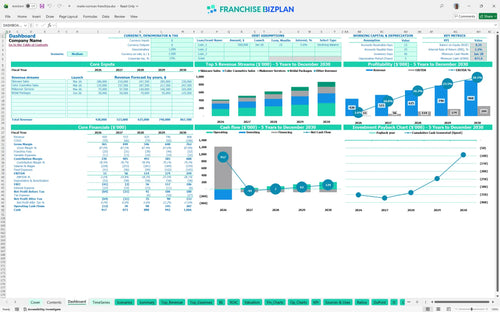
This product provides a comprehensive Excel-based financial model designed to forecast revenue, expenses, and investment returns for a single beauty franchise unit over five years.
Core inputs and core outputs
Three scenario analysis
Presentation ready
DuPont analysis
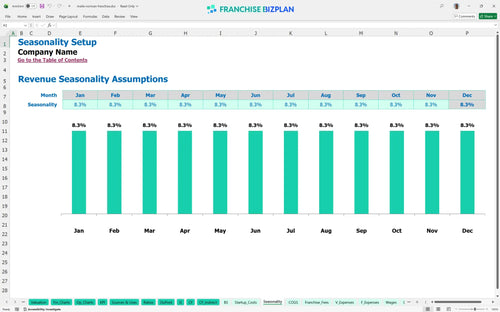
Researched revenue assumptions
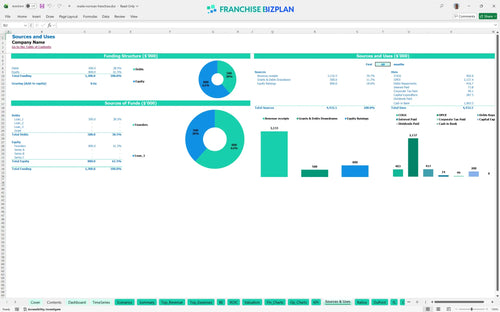
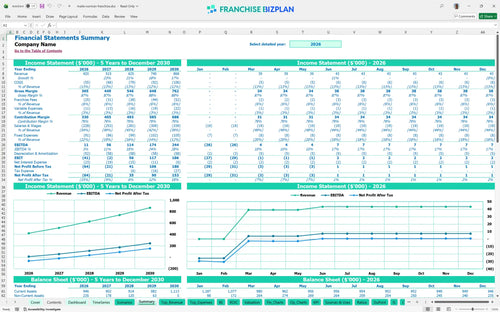
Lender-friendly financial outputs
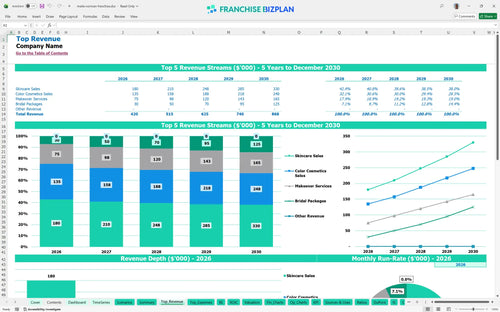
Revenue stream detailed view
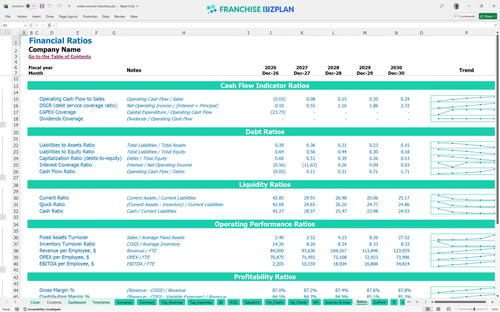
Performance metrics benchmark
We built this beauty franchise business plan model using deep research into retail store operating expenses and unit economics. Key assumptions like the 5% royalty and 1% marketing fee are pre-populated, showing a path from $420,000 in year one revenue to $868,000 by year five. This tool helps you evaluate the startup capital requirements for beauty studio franchises with precision and confidence.
The studio reaches positive EBITDA in its first year with $11,000 in earnings, which defintely scales as revenue grows. By year three, the retail franchise profitability analysis shows EBITDA climbing to $114,000 as you optimize labor and service mix. Estimating annual revenue for a boutique beauty studio is easier when you see the jump from $420,000 in year one to $868,000 in year five.
You will need approximately $287,500 to launch this unit, covering everything from the franchise fee to initial inventory. This model helps you understand how to calculate startup costs for a beauty franchise by breaking down every major check you need to write. The startup capital requirements for beauty studio franchises include significant allocations for leasehold improvements and retail fixtures.
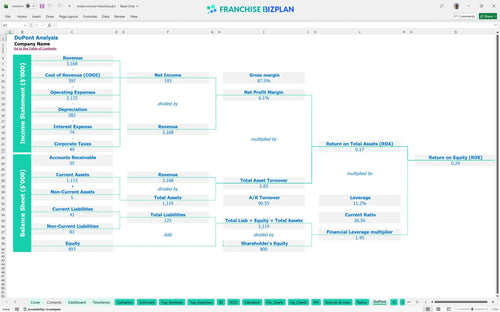
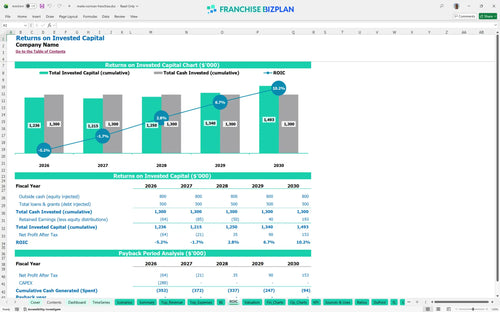
The model shows an Internal Rate of Return (IRR) of 1.15% and a Return on Equity (ROE) of 0.24. While evaluating profitability of a beauty product franchise, note that the full payback of the initial investment occurs after year five. This franchise investment ROI reflects the steady, long-term nature of building a loyal client base in a premium retail corridor.
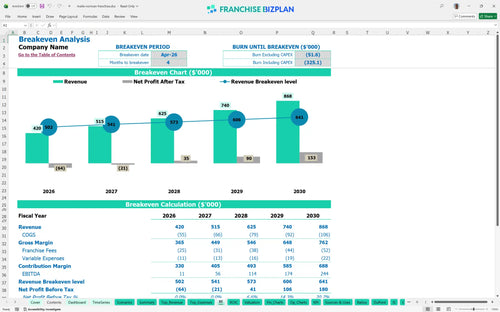
The studio hits its break-even date in April 2026, just four months after opening. Reaching this point quickly depends on your ability to drive traffic to the King Street location and manage the 11% product inventory cost. These financial planning tools for new franchise owners allow you to see how small changes in average ticket size impact your timeline.
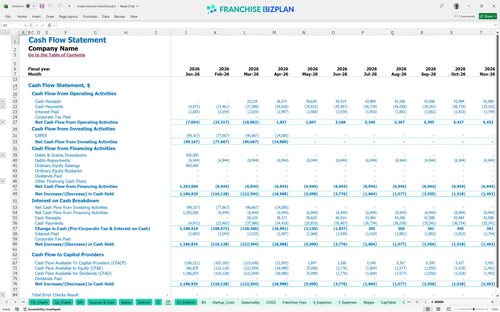
The lowest cash point is projected at $871,000 in January 2028, suggesting a significant capital cushion is maintained throughout the ramp-up. This retail franchise cash flow projection template ensures you aren't caught off guard by the timing of inventory refills or tax payments. Monitoring your cash runway is vital during the first 24 months of operation.
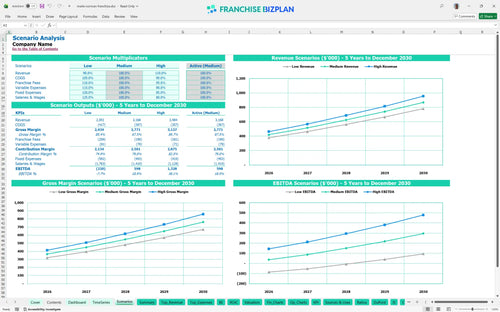
This franchise unit economic forecast allows you to toggle between Low, Medium, and High growth scenarios to see the impact on your $244,000 year-five EBITDA. Changes in local demand or staffing efficiency will shift your peak cash needs and overall margin. Franchise financial forecasting for small business owners must include these 'what-if' scenarios to prepare for market shifts.
This franchise financial model template is a flexible tool built in Excel to help you model any territory or studio size. It features pre-filled formulas and editable assumptions, allowing you to swap out local rent, labor rates, and product mix to see how they impact your bottom line. Use this franchise P&L statement template to run different operating scenarios before you sign a lease.

Long-term planning is essential for any retail franchise owner looking to scale from one unit to many. This small business financial projection template provides a detailed 5-year view of your revenue, costs, and cash flow. It is an Excel financial model for retail franchise owners that maps out the path from your grand opening to a mature, high-volume studio.

Operating a franchise means managing specific financial obligations like royalties and brand fund contributions. This model captures these costs automatically, including the 5% royalty and 1% marketing fee, so you know exactly how much cash stays in the business. It functions as a profit and loss template for retail franchise locations that accounts for every franchisor-mandated expense.

Knowing your 'all-in' cost is the first step to a successful launch. This franchise startup cost calculator helps you estimate the total initial investment and the monthly sales volume needed to cover your fixed costs. It is the best way to learn how to build a financial model for a franchise store that prioritizes margin and contribution over simple top-line growth.

This model includes built-in beauty industry business metrics to help you sanity-check your numbers against typical performance ranges. You can compare your expected labor costs and gross margins to industry standards to ensure your plan is realistic. These benchmarks act as a guardrail for your projections, keeping your unit economics grounded in real-world retail data.


Simply purchase and download the financial model template, then access it instantly using Microsoft Excel or Google Sheets. No installation or technical expertise required-just open and start working.

Enter your business-specific numbers, including revenue projections, costs, and investment details. The pre-built formulas will automatically calculate financial insights, saving you time and effort.

Leverage the investor-ready format to confidently showcase your financial projections to banks, franchise representatives, or investors. Impress stakeholders with clear, data-driven insights and professional reports.

Leverage the investor-ready format to confidently present your projections to banks, franchise representatives, or investors.