


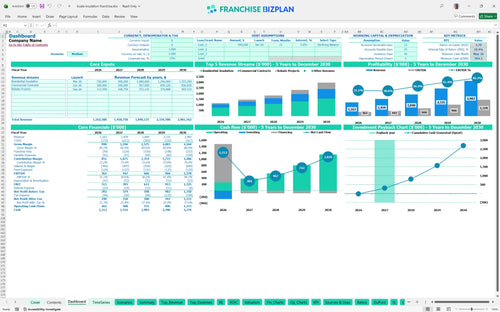
All-in-one Dashboard
Core inputs and core outputs



This template provides a complete roadmap for forecasting revenue, managing labor, and calculating the total investment needed for a new insulation unit.
Core inputs and core outputs
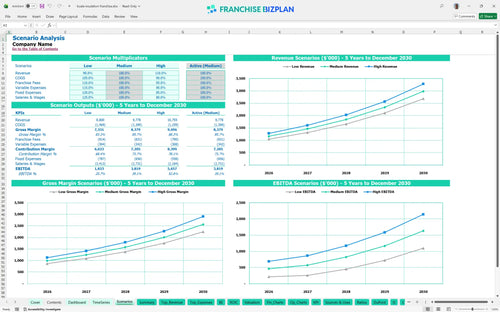
Three scenario analysis
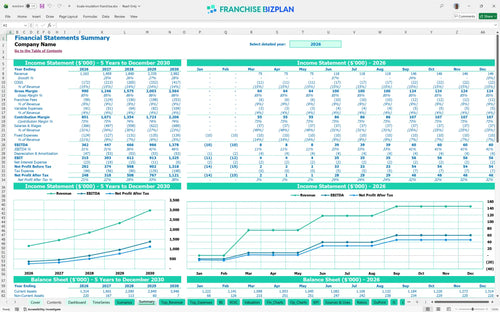
Presentation ready
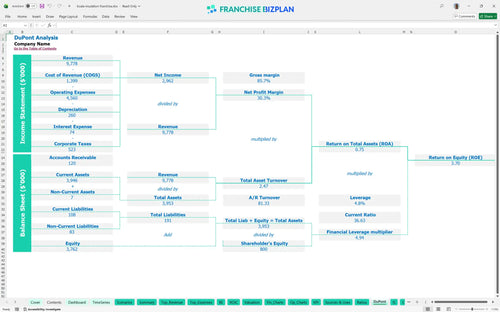
DuPont analysis
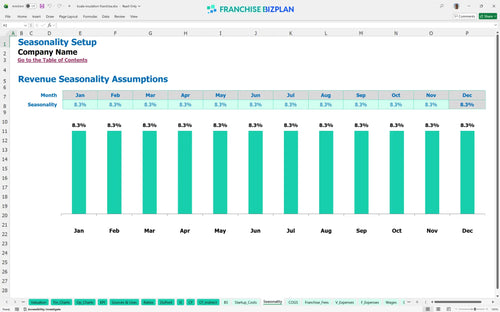
Researched revenue assumptions
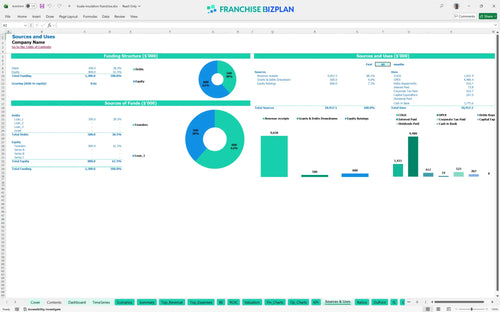
Lender-friendly financial outputs
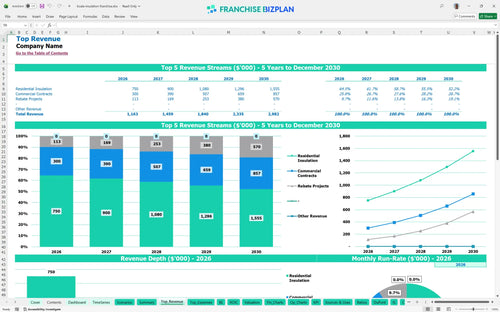
Revenue stream detailed view
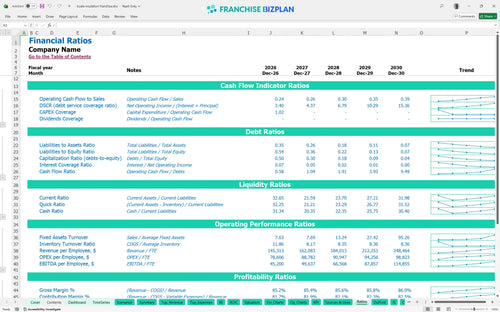
Performance metrics benchmark
We built this financial model using detailed research into the insulation sector to help you navigate the startup phase. The pre-populated data includes $1.16M in year-one revenue and a 31% EBITDA margin, all of which you can edit to fit your specific territory. This tool ensures your capital expenditure forecasting is accurate before you sign a lease or buy your first blowing machine.
This franchise unit is projected to reach profitability within its first year, specifically hitting an EBITDA of $362,000 by the end of year one. After accounting for the 6.5% royalty, 2% marketing fee, and materials costs starting at 13%, the model shows net profit climbing steadily as you scale toward $2.98M in annual revenue by year five.
To launch this unit in the US, you will need approximately $267,000 in initial capital to cover the core startup requirements. This investment includes the $49,500 franchise fee, $90,000 for service vehicles, and $60,000 for specialized blowing machines. The model also accounts for $35,000 in headquarters improvements and an initial cash buffer to handle early operating expenses.
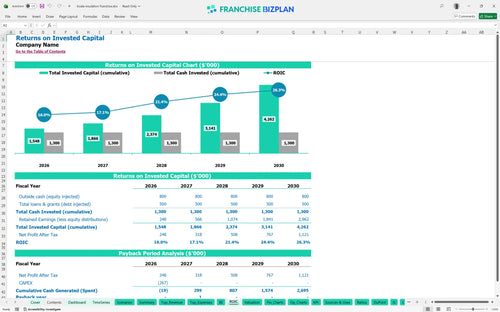
Investors can expect an Internal Rate of Return (IRR) of 10.44% with a relatively quick payback period of 2 years. The model shows a Return on Equity (ROE) of 3.7, reflecting a stable growth path for a home service business. With EBITDA growing from $362k in year one to $1.37M in year five, the long-term cash yield is strong for multi-unit operators.
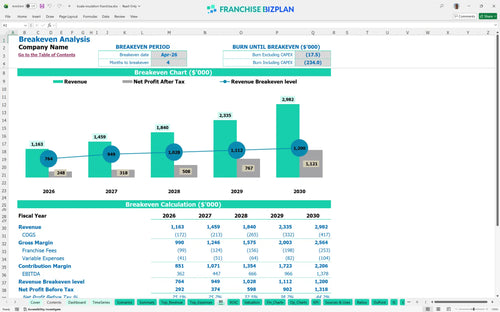
The unit reaches its monthly break-even point in April 2026, just 4 months after the initial launch phase. This quick transition is driven by the high average ticket of residential insulation projects and a lean fixed cost structure of $9,300 per month. Maintaining a tight grip on labor and material costs during the first 120 days is the most critical factor for hitting this date.
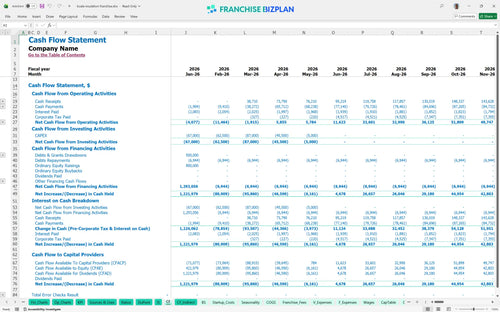
The lowest cash point for the operation occurs in May 2026, with a minimum cash balance of $992,000 projected after all initial CAPEX and ramp-up losses. You will defintely need to monitor the gap between paying for materials and receiving rebate project payments. The model suggests maintaining a healthy buffer to manage the timing of these larger commercial and rebate receivables.
In a High scenario where residential demand exceeds projections by 20%, year-one EBITDA margins can push past 35% due to fixed-cost leverage. Conversely, a Low scenario with slower sales ramp-up might delay the break-even point by 3-4 months and increase the peak cash need. The model allows you to toggle these variables to see how labor productivity and material waste impact your bottom line.
This insulation franchise financial model is built entirely in Excel, giving you total control over every variable. You can adjust pre-filled formulas and editable assumptions to match your specific territory, whether you are looking at Denver or a different US market. It is designed to be a flexible home service business financial plan that adapts as your local demand or labor costs shift.

Success in home services requires looking past the first season, so this model provides a full 5-year revenue projections outlook. You can track how your unit economics evolve from the initial launch to a mature operation with multiple crews. It maps out long-term profitability analysis, ensuring you see the impact of scaling from one to five technicians over time.

The model handles the heavy lifting of calculating your ongoing obligations to the brand. It factors in the 6.5% royalty fee and the 2.0% marketing fund contribution automatically based on your monthly sales. This ensures your franchise unit profitability analysis accounts for every dollar leaving the business before you even look at your local rent or payroll.

Launching an insulation business involves significant upfront capital, and this franchise startup cost template tracks it all. From the $49,500 initial fee to the $90,000 for service vehicles, you will see exactly how much cash you need to get to day one. The break-even analysis then shows the exact month when your residential and commercial revenue finally covers your monthly burn.

We have integrated industry-standard benchmarks so you can sanity-check your operating expenses against other home service operators. If your insulation material costs are trending higher than the 13% target, the model helps you identify the leak. It is an insulation business investment calculator that uses real-world data to keep your projections grounded in reality.


Simply purchase and download the financial model template, then access it instantly using Microsoft Excel or Google Sheets. No installation or technical expertise required-just open and start working.

Enter your business-specific numbers, including revenue projections, costs, and investment details. The pre-built formulas will automatically calculate financial insights, saving you time and effort.

Leverage the investor-ready format to confidently showcase your financial projections to banks, franchise representatives, or investors. Impress stakeholders with clear, data-driven insights and professional reports.

Leverage the investor-ready format to confidently present your projections to banks, franchise representatives, or investors.