


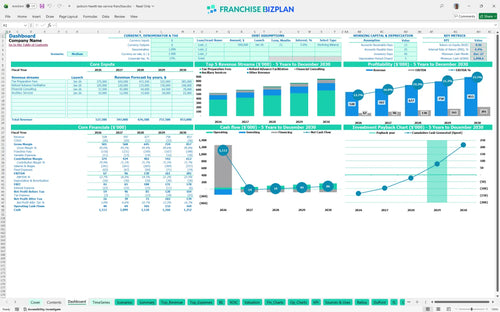
All-in-one Dashboard
Core inputs and core outputs



This tax preparation business plan includes a full Excel-based financial engine with pre-populated data for revenue, labor, and franchise-specific fees.
Core inputs and core outputs
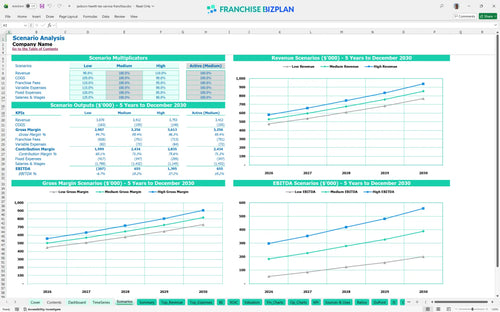
Three scenario analysis
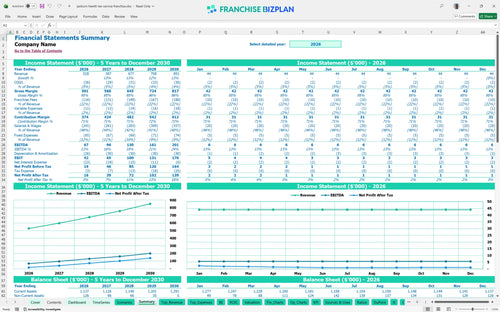
Presentation ready
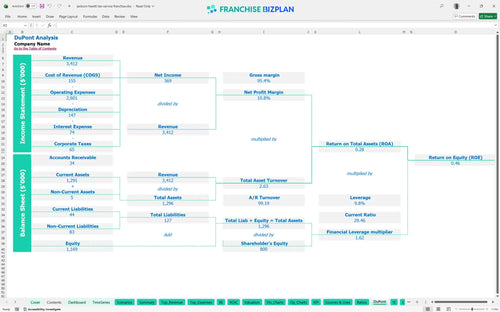
DuPont analysis
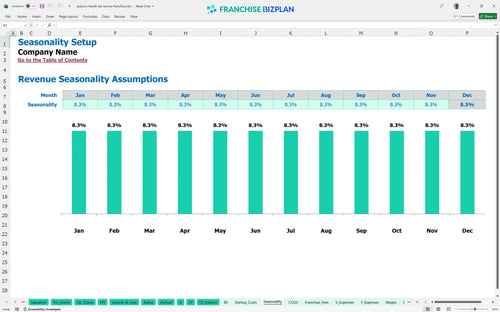
Researched revenue assumptions
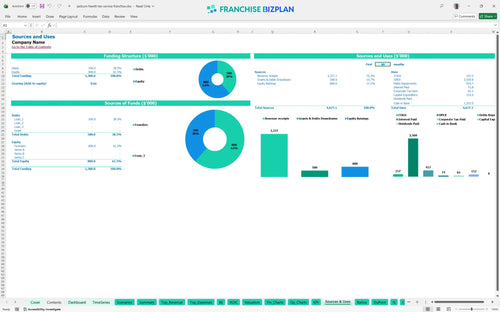
Lender-friendly financial outputs
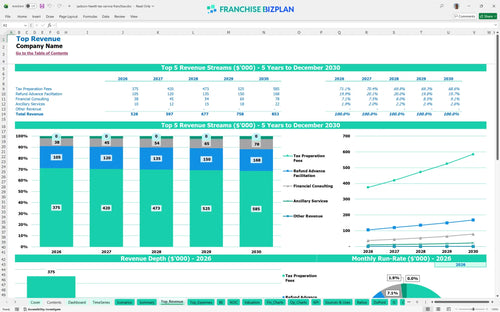
Revenue stream detailed view
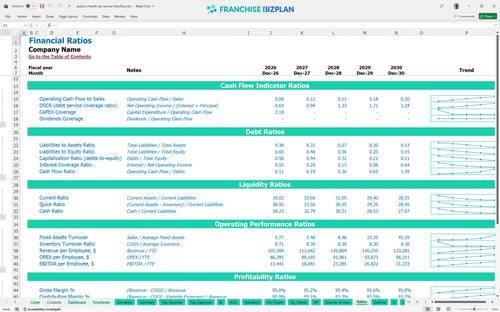
Performance metrics benchmark
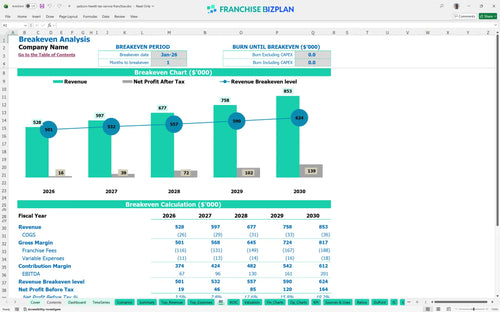
We built this franchise unit financial model using our own research. Key assumptions, including the $528,000 year-one revenue and the 15% royalty fee, are pre-populated with researched data and are fully editable to match your specific territory. This financial feasibility study for a new tax franchise unit shows the office hits breakeven almost immediately in January 2026, which is typical for seasonal launches. Speed to profit is the name of the game here.
You will need approximately $152,000 in upfront capital to cover the requirements in this franchise startup cost template. This includes the $50,000 initial fee and $25,000 for critical IT and tax software setup to handle high-volume filing. Capital is fuel; don't run out before the first tax season. Here is how to calculate startup costs for a tax preparation franchise using the model:
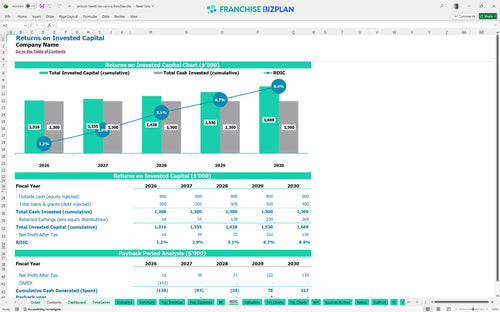
The model defintely shows a 4-year payback period with an internal rate of return (IRR) of 4.41%. While the IRR is modest, estimating profitability for a local tax preparation office reveals a return on equity (ROE) of 0.46, indicating solid performance for a retail service investment. Returns are steady but require long-term focus.
Monthly break-even depends on covering $5,450 in fixed costs, including $3,500 for a retail storefront lease analysis. Because royalties and marketing take 22% of revenue, analyzing operational costs for a retail tax storefront shows that volume and throughput during the 90-day peak season are your primary success drivers. Volume is the only way to beat a 22% royalty burden.
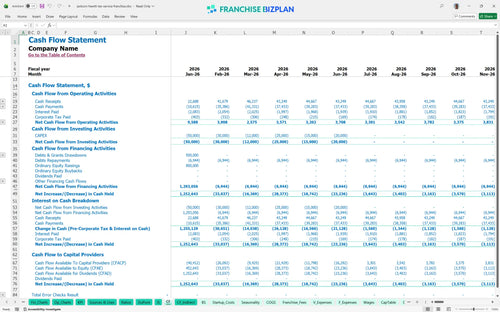
The lowest cash point occurs in December 2027, with a minimum cash balance of $1,099,000 projected if initial funding is robust. Budgeting tools for independent tax service operators are essential here, as you must manage the 'off-season' months carefully so fixed costs like rent don't erode your tax-season gains. Cash is king during the quiet summer months.
Financial forecasting for franchises requires looking at Low, Medium, and High cases. A 10% drop in revenue significantly delays payback, while the High case improves year-1 EBITDA beyond the $67,000 baseline by maximizing local marketing execution. High-case performance is about local execution, not luck. Financial projections for seasonal tax preparation businesses must account for these swings.
This Excel financial model template for retail tax services provides the roadmap for a $528,000 year-one operation. Revenue modeling for year-round financial consulting services balances the high 22% franchise royalty fees against a low-inventory service model to provide a clear view of store-level margin. Data-driven decisions beat gut feelings every time.
Finance: update unit break-even and payback model by Friday.
This tax franchise financial model is a flexible Excel tool designed for rapid scenario testing. You can adjust every assumption, from seasonal staffing levels to local rent, ensuring the projections match your specific territory and market conditions. Every cell is open for your local data.

Long-term planning is vital for a seasonal business, and this franchise unit financial forecasting spreadsheet provides a detailed 5-year outlook. It maps out revenue, expenses, and cash flow, helping you see how the unit matures from the first tax season through year five. Plan for the fifth year, not just the first.

Franchise royalty fees and marketing fund contributions are significant 'off-the-top' costs that impact your bottom line. This model tracks the 15% royalty and 7% marketing fee to show your true store-level margin after all brand obligations are met. Royalties are a reality, not a suggestion.

Launching a retail tax office requires upfront capital for build-out and technology, making a tax service franchise investment a high-stakes move. This tool calculates your total investment and identifies the exact volume of tax returns needed to cover your fixed monthly overhead. Knowing your number changes your confidence.

Use built-in data to verify if your franchise operational expenses, such as labor and rent, align with industry standards. Comparing your projections against typical tax preparation margins helps ensure your business plan is realistic and fundable. Don't guess when you can benchmark.


Simply purchase and download the financial model template, then access it instantly using Microsoft Excel or Google Sheets. No installation or technical expertise required-just open and start working.

Enter your business-specific numbers, including revenue projections, costs, and investment details. The pre-built formulas will automatically calculate financial insights, saving you time and effort.

Leverage the investor-ready format to confidently showcase your financial projections to banks, franchise representatives, or investors. Impress stakeholders with clear, data-driven insights and professional reports.

Leverage the investor-ready format to confidently present your projections to banks, franchise representatives, or investors.