


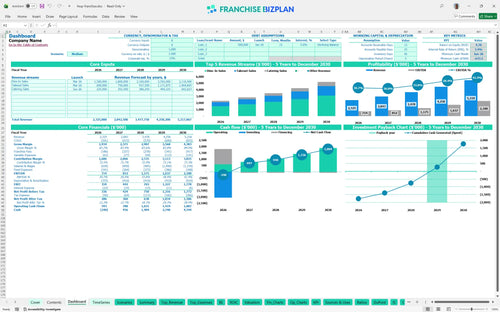
All-in-one Dashboard
Core inputs and core outputs



This comprehensive toolkit includes a franchise unit P&L spreadsheet, cash flow projections, and a capital expenditure budget to guide your investment from site selection to grand opening.
Core inputs and core outputs
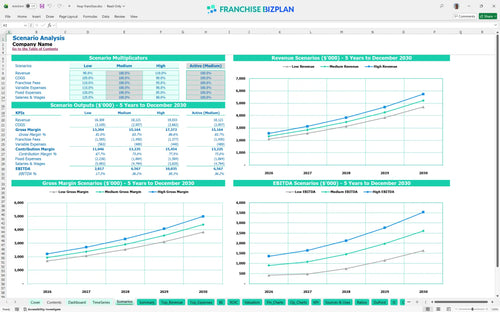
Three scenario analysis
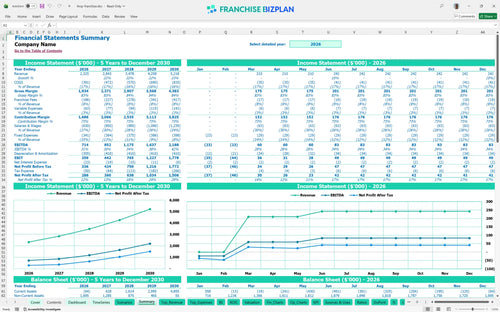
Presentation ready
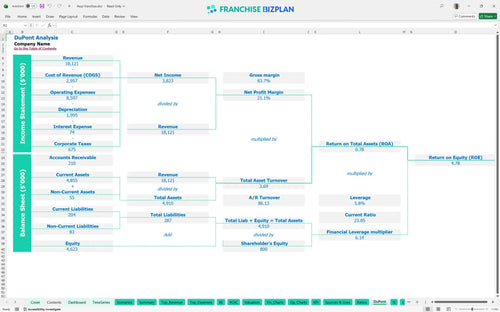
DuPont analysis
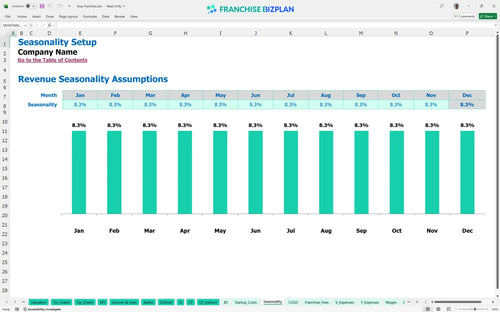
Researched revenue assumptions
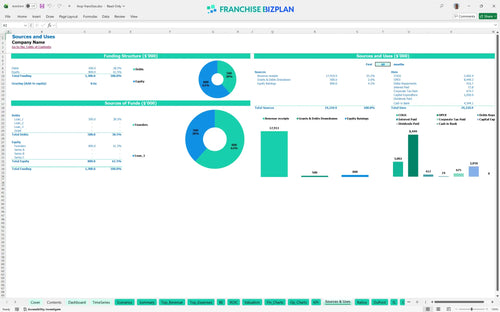
Lender-friendly financial outputs
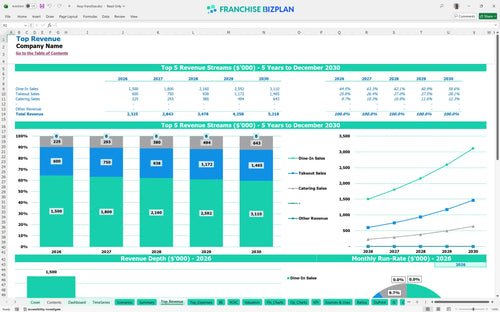
Revenue stream detailed view
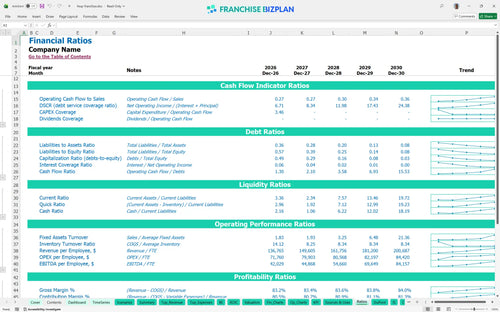
Performance metrics benchmark
We built this financial model for a 24-hour restaurant franchise unit using detailed research into high-volume casual dining operations. The pre-populated data covers everything from $1.45M in combined equipment and leasehold costs to the 8% total brand fee burden, all of which you can edit to match your specific location. Honestly, seeing the $714,000 Year 1 EBITDA projection helps you understand the potential scale of this model if you manage labor and food costs tightly.
This 24-hour restaurant unit is projected to hit profitability quickly, with a break-even date in March 2026, just three months after launching. While Year 1 EBITDA starts at $714,000, the model shows significant margin expansion as revenue climbs toward $5.2M by Year 5. Margin expansion is defintely the name of the game here as you scale. Here's the quick math: as sales grow 124% over five years, EBITDA grows over 200% due to fixed-cost leverage.
To learn how to calculate startup costs for a restaurant franchise, you must look at both the $2.05M initial CAPEX and the operating liquidity needed. The major costs include $850,000 for leasehold improvements and $450,000 for kitchen equipment, plus the $300,000 initial franchise fee. You need more than just the keys to the door to survive the first six months of operations. Still, the total investment must also account for the cash trough during the ramp-up period.
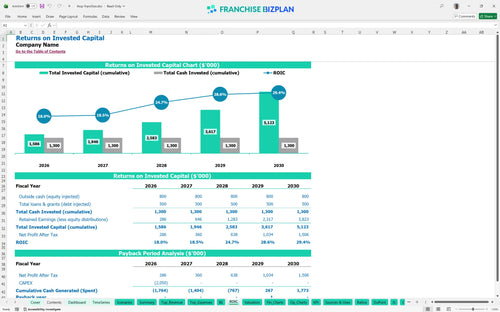
When analyzing restaurant franchise investment returns, this model shows an Internal Rate of Return (IRR) of 3.42% and a Return on Equity (ROE) of 4.78%. The payback period is estimated at 4 years, which is a standard climb for a full-service restaurant with a $2M+ build-out. What this estimate hides is the potential for higher returns if you can outperform the 15% food cost target. Plus, the Year 5 EBITDA of $2.18M suggests a strong exit valuation.
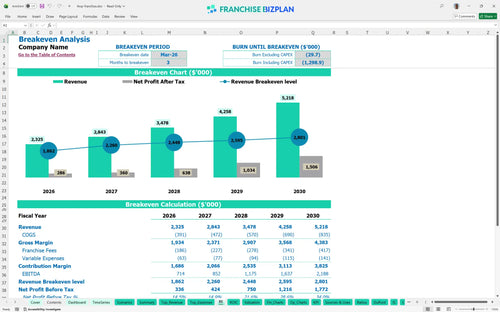
Calculating break-even point for a new restaurant location requires balancing the $20,000 monthly rent against the 4.5% royalty and 3.5% marketing fees. The unit is expected to reach this milestone in March 2026, driven primarily by the high volume of dine-in and takeout sales. Speed to volume is your best friend in a high-overhead model like this. If guest counts lag by 10%, your break-even timeline could easily slide by several months.
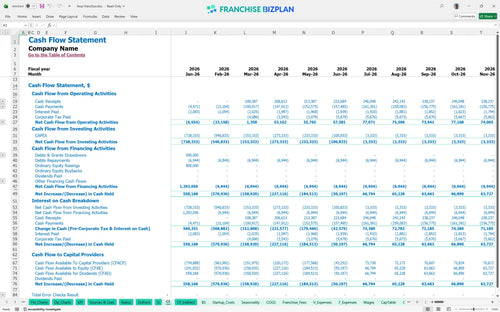
The restaurant franchise cash flow projection spreadsheet identifies June 2026 as the lowest cash point, with a minimum cash balance of -$634,000. This means you need a significant working capital reserve beyond the initial construction costs to cover the early months. Cash is oxygen, and June 2026 looks a bit thin without proper financing in place. To be fair, this trough is common in high-CAPEX models before the catering and kiosk revenue streams fully mature.
Budgeting for high-volume quick service restaurant kiosks is a key factor in the high-case scenario, where Year 5 revenue hits $5.2M. In a low-case scenario, where labor costs exceed the forecast or the $120,000 kiosk investment doesn't drive the expected throughput, the 4-year payback could stretch to 6 years. Kiosks are the secret sauce for maintaining margins as minimum wages rise. The model allows you to toggle these variables to see the impact on your peak cash need.
This franchise financial model template is built in Excel with fully editable assumptions and pre-filled formulas, allowing you to adjust every variable from guest counts to hourly wages. You can easily modify the logic to fit your specific territory, local rent prices, or labor market conditions without needing to rebuild the math from scratch.

Planning for a long-term horizon is essential when managing a restaurant franchise business plan, and this model provides a detailed 60-month outlook. It maps out the transition from the initial opening phase to a mature, high-volume operation, showing you exactly how revenue and EBITDA scale over five years. Five years is a lifetime in food service, so you need to see the long game.

The model accurately tracks the franchise royalty fee structure, including the 4.5% royalty and 3.5% marketing fund contributions that come right off the top. By automating these calculations, you can see how brand-level obligations impact your store-level margin before you ever commit to a lease. Royalties never sleep, and this tool ensures they are never a surprise.

Use this as your primary restaurant startup cost calculator to estimate the total capital needed for leasehold improvements, kitchen equipment, and initial inventory. The model includes a break-even analysis that identifies the exact sales volume required to cover your $20,000 monthly rent and fixed overhead. Know your number before you sign that long-term lease agreement.

We have integrated realistic restaurant unit economics into the model, including labor cost benchmarks for 24-hour operations and standard food cost percentages. This allows you to sanity-check your projections against industry standards for high-volume casual dining, ensuring your staffing levels for cooks and servers are within a profitable range. Benchmarks keep you honest when the excitement of a new unit takes over.


Simply purchase and download the financial model template, then access it instantly using Microsoft Excel or Google Sheets. No installation or technical expertise required-just open and start working.

Enter your business-specific numbers, including revenue projections, costs, and investment details. The pre-built formulas will automatically calculate financial insights, saving you time and effort.

Leverage the investor-ready format to confidently showcase your financial projections to banks, franchise representatives, or investors. Impress stakeholders with clear, data-driven insights and professional reports.

Leverage the investor-ready format to confidently present your projections to banks, franchise representatives, or investors.