


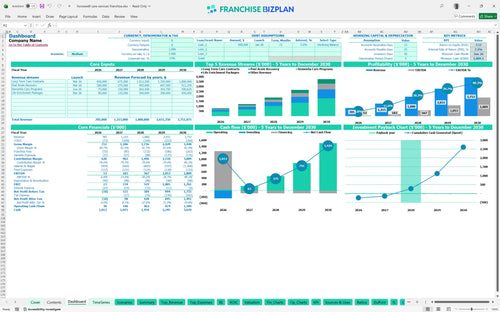
All-in-one Dashboard
Core inputs and core outputs



This comprehensive Excel-based tool provides a complete financial framework for planning, launching, and scaling a premium home care unit with detailed 5-year projections and automated franchise-specific calculations.
Core inputs and core outputs
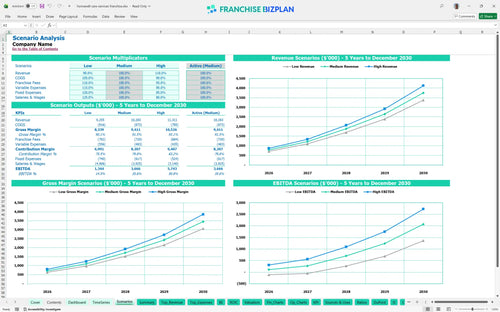
Three scenario analysis
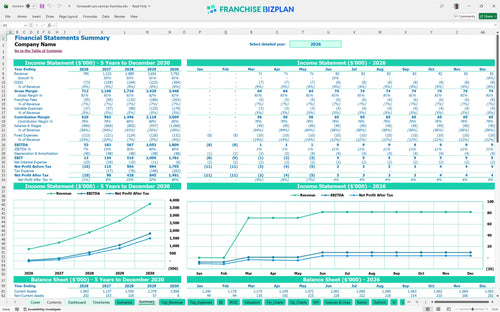
Presentation ready
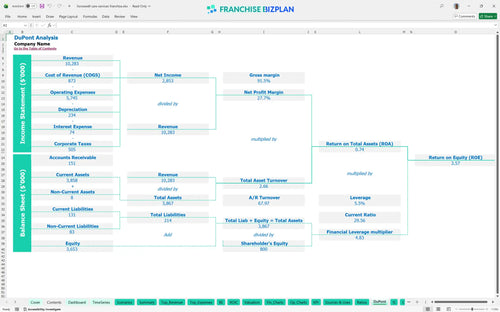
DuPont analysis
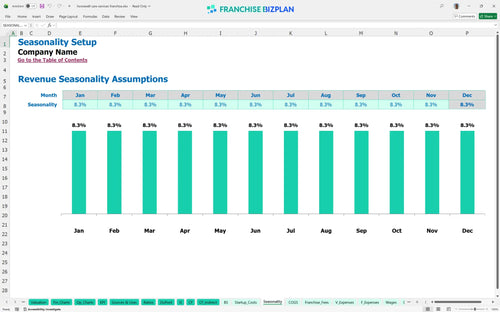
Researched revenue assumptions
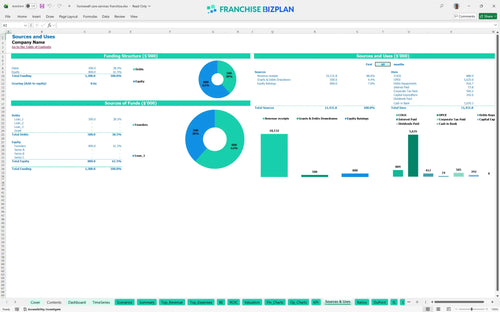
Lender-friendly financial outputs
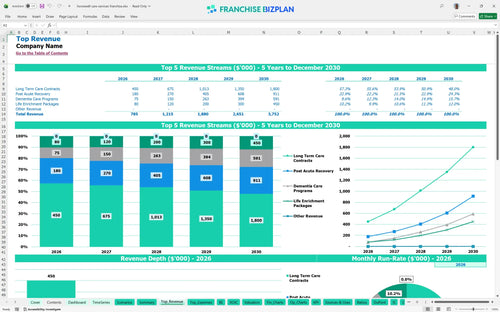
Revenue stream detailed view
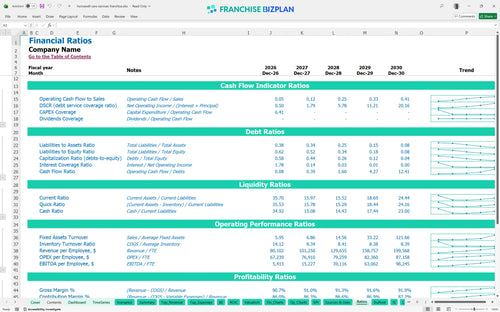
Performance metrics benchmark
We built this home care franchise financial model using our own research into the senior care sector and boutique wellness operations. Key assumptions, including the $785,000 year-one revenue target and the $244,000 in initial capital expenditures, are pre-populated with researched data but remain fully editable. This tool is designed to help you navigate the specific economics of a high-end care territory with confidence.
The unit shows a positive profitability trajectory, reaching an EBITDA of $53,000 in its first year and scaling to $1,809,000 by year five. This growth is driven by expanding your caregiver team from 6 to 14 full-time equivalents to meet demand for long-term care contracts. Profitability defintely depends on maintaining a strong mix of private pay clients and specialized dementia care programs. Efficiency is the name of the game here.
To launch this unit, you need to allocate capital across several key categories, starting with the $49,500 franchise fee and $75,000 for a flagship office fit-out. The total initial investment also covers $45,000 for company vehicles and $18,000 for IT systems and software. Here's the quick math: you need enough liquidity to cover these hard costs plus a significant cash buffer for the first few months of operations.
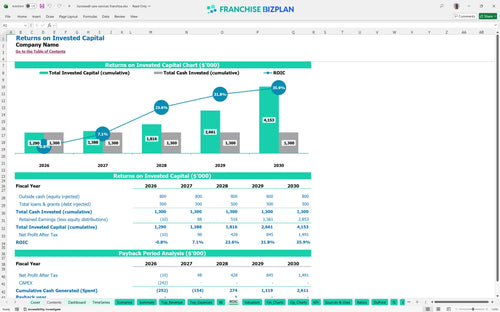
The model projects an internal rate of return (IRR) of 7.17% and a return on equity (ROE) of 3.57%, which reflects a stable, long-term investment profile. You can expect a payback period of 3 years, meaning your initial investment is fully recouped by the end of 2028. While the initial margins are thin, the cash flow becomes very attractive as you hit the $3.7 million revenue mark in year five.
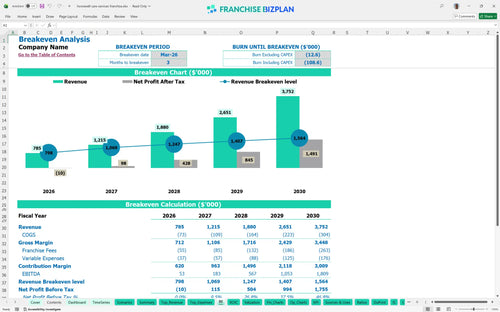
You reach the break-even point in March 2026, just three months after launching your service lines. This quick ramp-up assumes you successfully activate referral pipelines from local hospitals for post-acute recovery contracts. The primary lever for staying above break-even is caregiver productivity and maintaining a steady volume of life enrichment package sales to cover the $5,500 monthly rent.
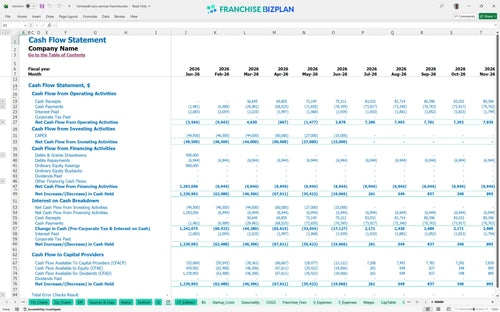
The lowest cash point is $1,009,000 in June 2026, which accounts for the initial startup burn and the timing of your first large contracts. You need to plan for at least six months of runway to handle the gap between paying caregivers and receiving private pay or insurance reimbursements. Still, the model shows a strong recovery once the recurring revenue from long-term contracts stabilizes.
The high-case scenario significantly improves your year-one margin by increasing the volume of premium concierge services and dementia care programs. If you hit the high case, your year-five revenue could exceed the $3.7 million baseline through better caregiver retention and higher average tickets. Conversely, the low case highlights the risk of slow recruitment, which can delay your break-even date by several months.
Finance: update unit break-even and payback model by Friday.
This home care franchise financial model is built in Excel to give you total control over your territory's specific numbers. You can adjust every pre-filled formula and assumption to reflect your local labor market, office rent in Maricopa County, or specific service pricing. It is a flexible tool designed to turn a complex business plan into a clear roadmap for growth.

Planning for a long-term horizon is the only way to see the true potential of a senior care franchise startup costs investment. This model provides a detailed 60-month view of your revenue, cash flow, and profit margins as you scale from your first few clients to a mature operation. It helps you visualize how the business evolves from a small office to a high-volume wellness hub.

Operating a franchise means managing specific financial obligations like the 5% royalty and 2% marketing fund contributions. This model automatically calculates these franchise royalty fees based on your projected gross sales, so you see the net impact on your store-level EBITDA. It ensures you never overlook the cost of brand support and system access when calculating your take-home pay.

Success starts with knowing exactly how much capital you need to get the doors open and keep them open until you reach a break-even analysis point. The model breaks down everything from the $49,500 initial fee to the $75,000 office fit-out and $45,000 for company vehicles. You will see exactly when your monthly revenue covers your fixed and variable costs.

We included industry-standard benchmarks for operating expenses like caregiver labor and office overhead to help you sanity-check your projections. If your projected medical supply costs or travel mileage percentages drift too far from the norm, the model helps you identify those outliers. This keeps your business plan grounded in the reality of the US home care market.


Simply purchase and download the financial model template, then access it instantly using Microsoft Excel or Google Sheets. No installation or technical expertise required-just open and start working.

Enter your business-specific numbers, including revenue projections, costs, and investment details. The pre-built formulas will automatically calculate financial insights, saving you time and effort.

Leverage the investor-ready format to confidently showcase your financial projections to banks, franchise representatives, or investors. Impress stakeholders with clear, data-driven insights and professional reports.

Leverage the investor-ready format to confidently present your projections to banks, franchise representatives, or investors.