


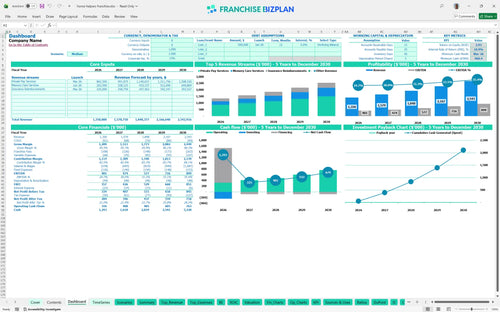
All-in-one Dashboard
Core inputs and core outputs



This franchise unit profitability analysis provides a turnkey Excel spreadsheet for franchise unit financial forecasting, covering everything from initial CAPEX to five-year EBITDA growth.
Core inputs and core outputs
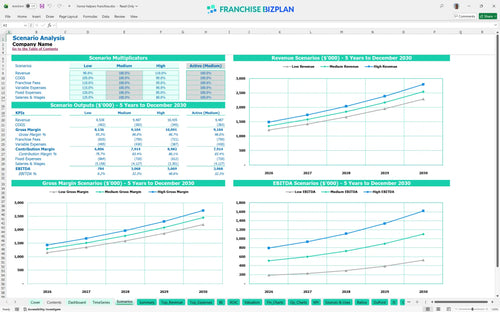
Three scenario analysis
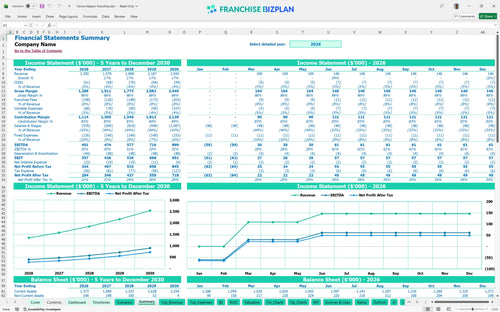
Presentation ready
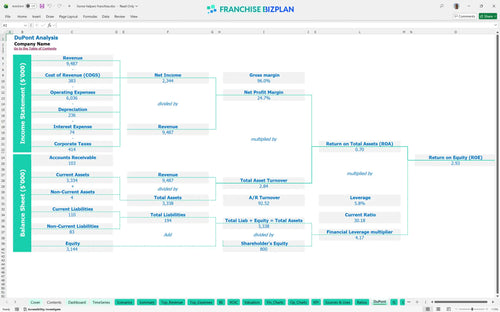
DuPont analysis
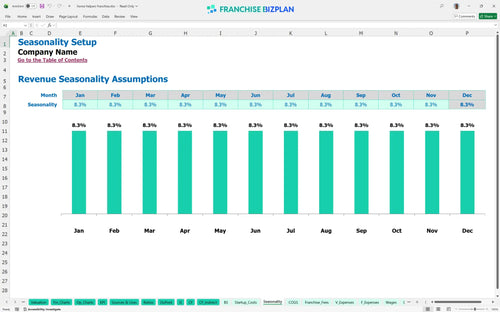
Researched revenue assumptions
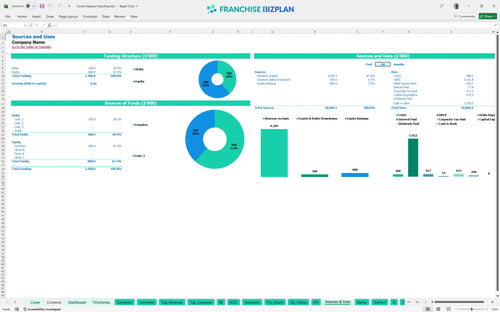
Lender-friendly financial outputs
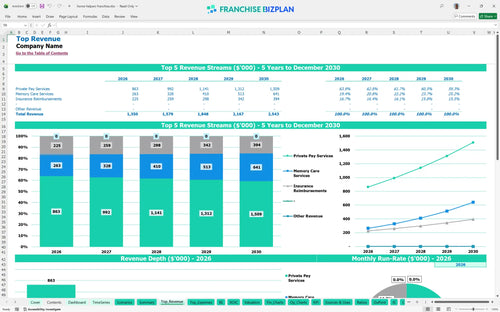
Revenue stream detailed view
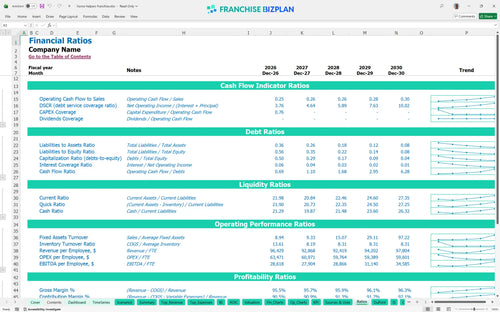
Performance metrics benchmark
We built this home care business model using our own research into boutique senior care operations to give you a head start. The model comes pre-loaded with $1.35M in year-one revenue and specific staffing costs for roles like a $68,000 General Manager and $28,000 Home Care Aides. Every number is fully editable, so you can adjust for your specific market conditions while keeping the structural integrity of the researched data.
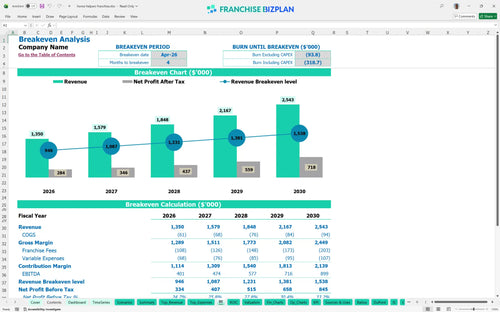
You can expect this unit to hit its break-even point by April 2026, just four months after launch. By year one, the model projects an EBITDA of $401,000, which grows to $899,000 by year five as you scale your memory care and private pay services. Scale is the primary driver of your long-term EBITDA growth.
Launching this unit requires a total initial investment of $239,900 to cover the franchise fee, office build-out, and essential equipment. You will also need to account for a minimum cash requirement of $960,000 by March 2026 to handle the ramp-up phase safely. Cash is king during the first six months of a boutique launch.
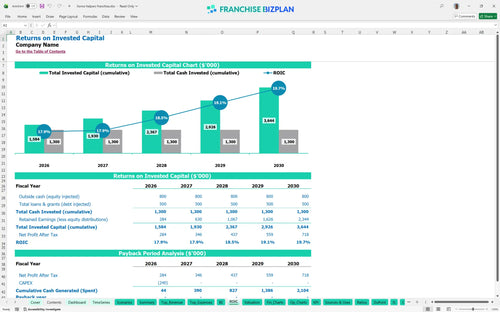
This model shows an Internal Rate of Return (IRR) of 10.94% and a Return on Equity (ROE) of 2.93. While the unit generates strong annual EBITDA, the high initial cash requirement means the full payback period extends beyond the first five years of operation. Patience is required as the high initial cash buffer pushes out the full payback.
The unit reaches break-even in month four, provided you hit the $1.35M year-one revenue target. The biggest driver for this is the volume of Private Pay Services, which starts at $575,000 annually and carries the fixed $7,000 monthly rent and $220,000 management salaries. Volume in private pay services is the lever that moves the needle fastest.
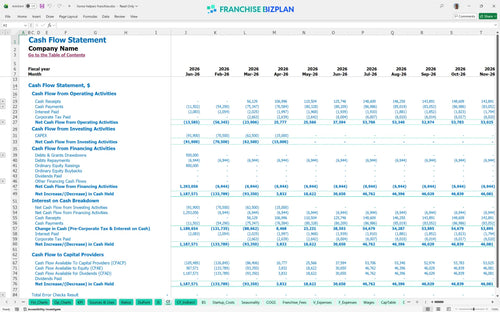
Your lowest cash point occurs in March 2026, where you need $960,000 on hand to cover the initial setup and early operating losses. This operational expenses spreadsheet hides the potential for insurance reimbursement delays, so keeping a 10% buffer is a smart move. A healthy cash buffer is your best defense against slow insurance payouts.
Moving from a medium to a high-growth scenario significantly boosts your year-one margin by spreading the fixed management payroll over a larger revenue base. If memory care services ramp up faster than the June 2026 start date, your peak cash need will drop, and your IRR will defintely improve. Scenario planning turns what-ifs into actionable operational targets.
Finance: update unit break-even and payback model by Friday
This home care franchise financial model is built in Excel so you can tweak every variable to fit your specific territory. Whether you are adjusting caregiver wages or local rent, the pre-filled formulas handle the heavy lifting while you focus on the strategy. It is defintely the fastest way to move from a generic plan to a localized roadmap.

Planning for a senior care business financial plan requires looking past the first twelve months to see how scale impacts your bottom line. This model tracks your trajectory from $1.35M in year one up to $2.54M by year five, accounting for the compounding effect of recurring private pay clients. Long-term success in this space is about managing the transition from a startup to a mature, multi-caregiver operation.

A franchise royalty fee analysis is vital because these costs come off the top before you pay a single caregiver. With a 6% royalty and 2% marketing fee, you need to know exactly how much cash leaves the business every month as you scale. This franchise investment calculator automates those calculations so you can see the impact of brand-level costs on your unit economics in real time.

Knowing how to calculate startup costs for a home care franchise is the first step to avoiding a liquidity crunch. This franchise startup cost template breaks down your $239,900 initial capital needs, from the $49,900 franchise fee to the $60,000 in leasehold improvements. It then maps out the path to your month-four break-even point so you know exactly when the bleeding stops.

We have baked in healthcare franchise ROI benchmarks to ensure your home care business financial projections stay grounded in reality. By comparing your 3.5% personal care supply costs and $7,000 monthly rent against industry norms, you can spot where your model might be too optimistic or where you have room to optimize. It is a sanity check that keeps your projections defensible for lenders.


Simply purchase and download the financial model template, then access it instantly using Microsoft Excel or Google Sheets. No installation or technical expertise required-just open and start working.

Enter your business-specific numbers, including revenue projections, costs, and investment details. The pre-built formulas will automatically calculate financial insights, saving you time and effort.

Leverage the investor-ready format to confidently showcase your financial projections to banks, franchise representatives, or investors. Impress stakeholders with clear, data-driven insights and professional reports.

Leverage the investor-ready format to confidently present your projections to banks, franchise representatives, or investors.