


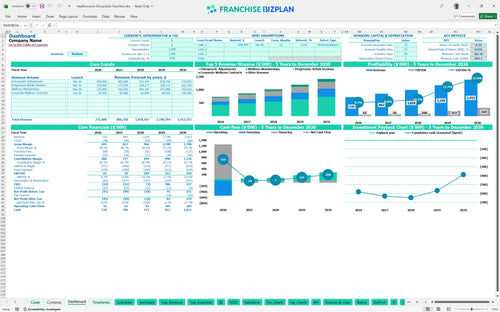
All-in-one Dashboard
Core inputs and core outputs



This comprehensive financial tool includes five-year projections, detailed startup cost breakdowns, and automated royalty calculations designed specifically for a boutique chiropractic clinic operation.
Core inputs and core outputs
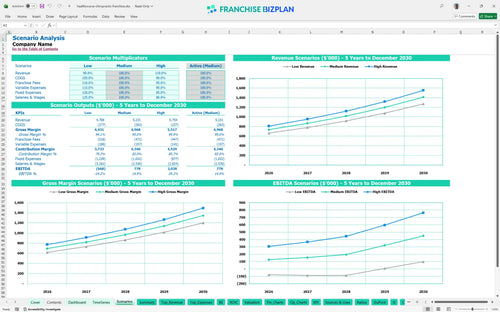
Three scenario analysis
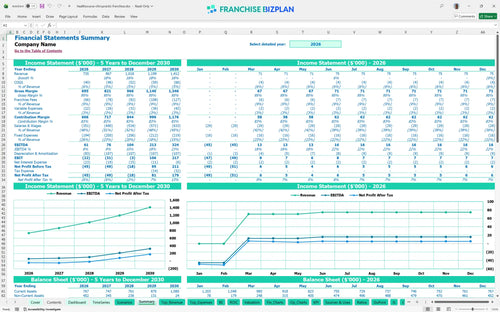
Presentation ready
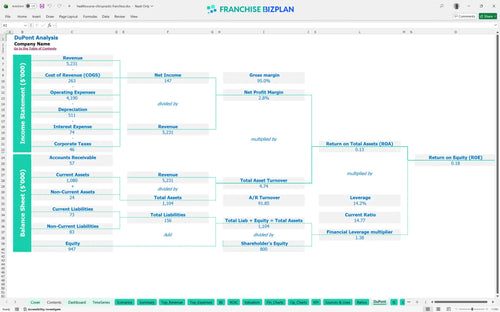
DuPont analysis
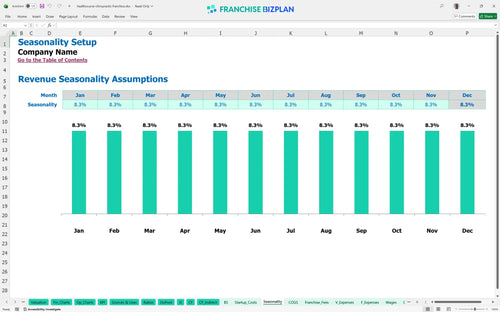
Researched revenue assumptions
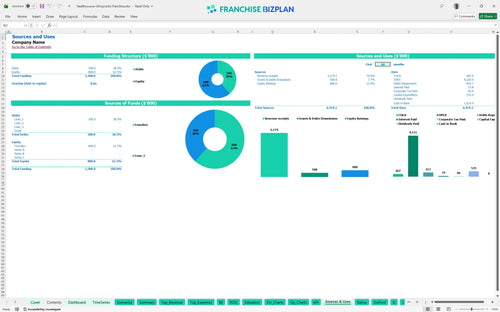
Lender-friendly financial outputs
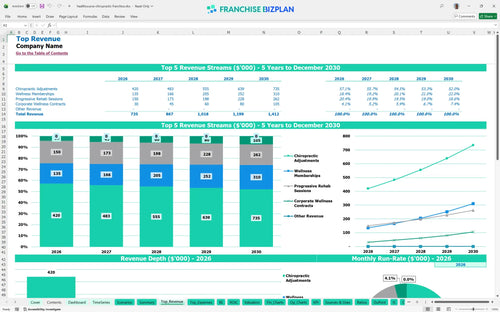
Revenue stream detailed view
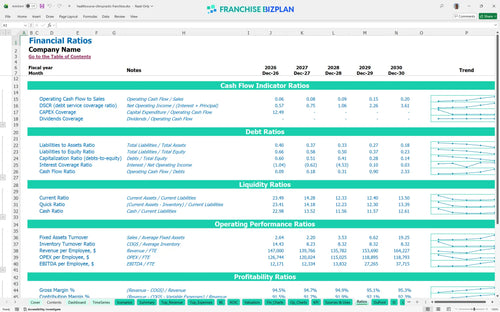
Performance metrics benchmark
We built this chiropractic franchise unit financial model using our own research into clinical workflows and healthcare overhead. Key assumptions like the $735,000 year-one revenue and 7% royalty fee are pre-populated and fully editable to help you plan your clinic's trajectory. This tool serves as a startup budget template for a physical therapy and rehab clinic, ensuring you cover every CAPEX (capital expenditure) and operating detail.
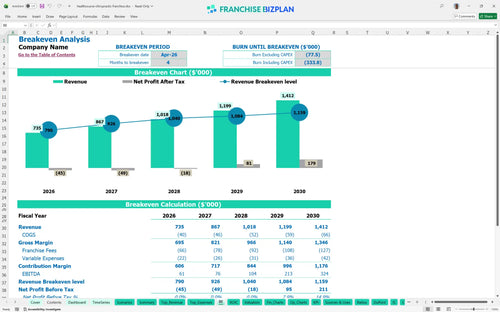
The clinic is projected to hit its break-even date in April 2026, just four months after launching. With a first-year EBITDA of $61,000, the model shows a steady climb to $324,000 by year five as patient volume scales. Profitability depends on maintaining a high average ticket across adjustments and rehab sessions.
You will need $535,000 in initial capital to cover the build-out and equipment for this chiropractic unit. This includes a $60,000 franchise fee and $220,000 for leasehold improvements to create a premium boutique environment. Plus, you need to account for the $130,000 in specialized chiropractic equipment required at launch.
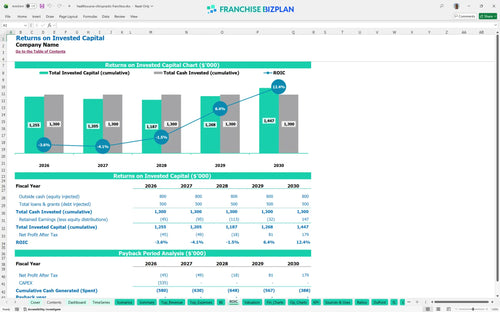
This model forecasts a strong 58% IRR (Internal Rate of Return) over a five-year period. While the initial cash outlay is high, the 18% return on equity shows the long-term value of the patient membership base. To be fair, the payback period extends after year five due to the heavy initial build-out costs.
Monthly break-even depends heavily on managing the $12,000 rent and the 7% royalty burden. You need to hit the break-even revenue level by month four to stay on track with the $735,000 annual target. Controlling labor costs for the associate chiropractor and rehab therapists is the biggest lever for reaching this point faster.
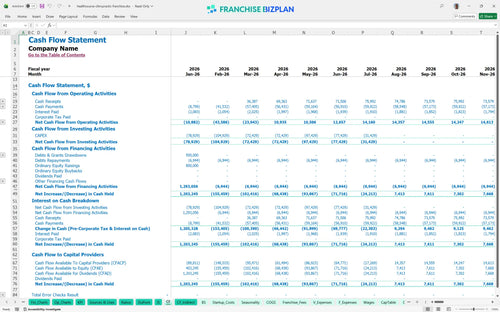
The lowest cash point hits $687,000 in July 2026, meaning you defintely need a solid buffer during the first six months. This runway accounts for the ramp-up in staffing costs and marketing spend before memberships mature. If opening takes 90+ days longer than planned, working capital pressure will rise quickly.
A high-performance scenario leverages the $105,000 corporate wellness growth to push EBITDA toward the $324,000 year-five mark. Low scenarios show how a 10% drop in adjustment volume can stretch the payback period significantly. High-volume units see much better margins as fixed costs like the $12,000 rent are spread over more patients.
This chiropractic franchise financial model is fully editable in Excel, allowing you to swap out clinic assumptions as your local market changes. You can adjust every variable from patient volume to medical supply costs, so the projections match your specific territory. It is a flexible franchise business plan template that handles the heavy lifting of healthcare franchise financial projections without requiring you to be an Excel expert.

Long-term planning is simple with five-year projections that map out your clinic's revenue, cash flow, and tax obligations. This investment analysis spreadsheet helps you see the transition from a $735,000 year-one revenue base to a mature $1.4 million operation by year five. It provides a clear view of store-level margin and long-term profitability for a single unit or a small multi-unit cluster.

Managing ongoing costs is easier when you can see exactly how the 7% royalty and 2% marketing fees eat into your monthly margins. The model includes a chiropractic franchise royalty and fee breakdown to ensure you account for every dollar owed to the franchisor. Honestly, tracking these obligations early is the only way to protect your store-level EBITDA (earnings before interest, taxes, depreciation, and amortization).

You can pinpoint your exact break-even point by comparing the $535,000 startup cost against your projected patient volume and ticket size. This section helps you calculate startup costs for a chiropractic franchise by detailing leasehold improvements, equipment, and initial inventory. Knowing your fixed and variable cost structure is vital for managing the ramp-up phase and protecting your initial capital investment.

Built-in benchmarks for labor and rent help you see if your $105,000 clinic director salary or $12,000 monthly rent is out of line with industry norms. This franchise unit financial performance benchmarking tool allows you to sanity-check your operational budget template against typical healthcare franchise standards. It is a reality check that ensures your financial feasibility study for a wellness franchise stays grounded in real-world economics.


Simply purchase and download the financial model template, then access it instantly using Microsoft Excel or Google Sheets. No installation or technical expertise required-just open and start working.

Enter your business-specific numbers, including revenue projections, costs, and investment details. The pre-built formulas will automatically calculate financial insights, saving you time and effort.

Leverage the investor-ready format to confidently showcase your financial projections to banks, franchise representatives, or investors. Impress stakeholders with clear, data-driven insights and professional reports.

Leverage the investor-ready format to confidently present your projections to banks, franchise representatives, or investors.