


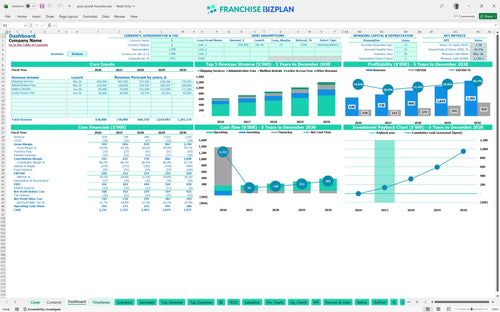
All-in-one Dashboard
Core inputs and core outputs



This franchise financial model template includes detailed shipping store startup costs, multi-carrier revenue streams, and a full Excel spreadsheet for franchise financial forecasting.
Core inputs and core outputs
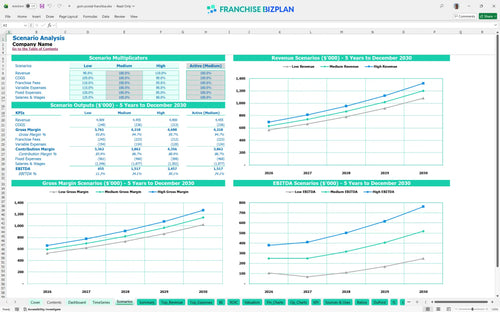
Three scenario analysis
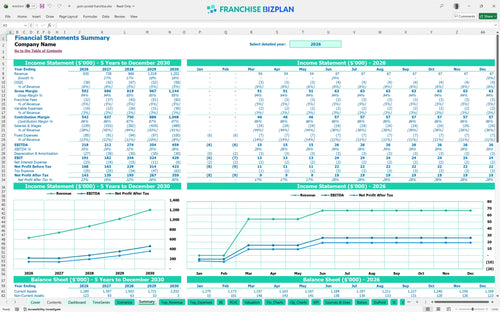
Presentation ready
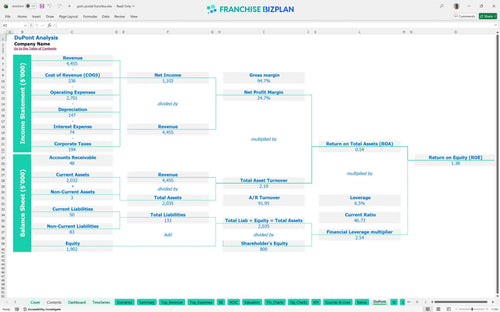
DuPont analysis
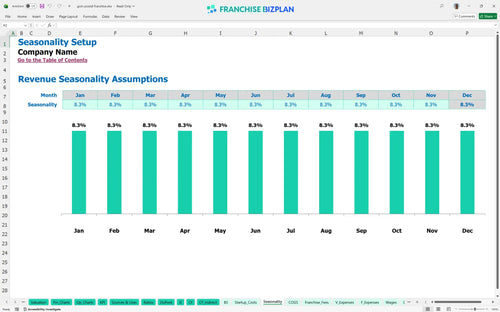
Researched revenue assumptions
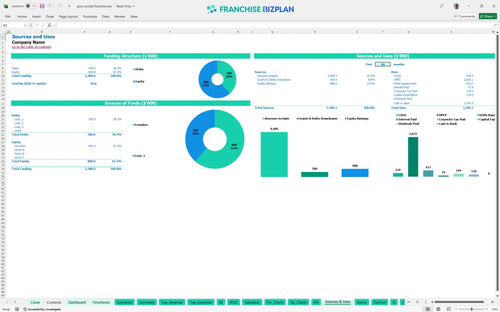
Lender-friendly financial outputs
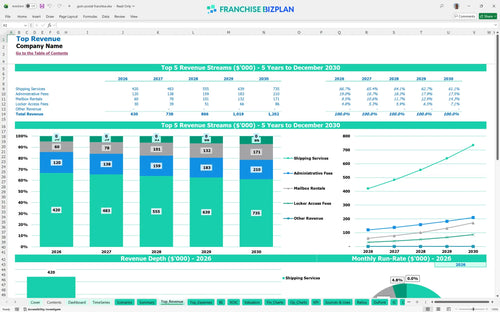
Revenue stream detailed view
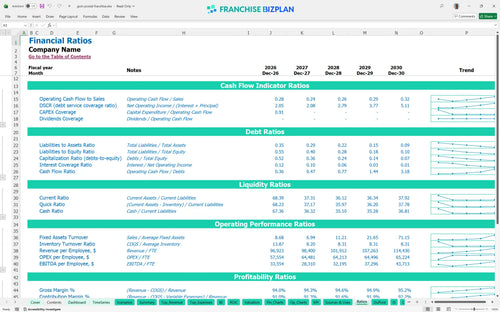
Performance metrics benchmark
We built this franchise unit financial model using our own research into the retail logistics sector. Key assumptions, including the $630,000 year-one revenue and the $150,000 startup investment, are pre-populated and fully editable to match your specific location. This tool helps you move from a general franchise business plan Excel to a precise operating budget with an expected 10.31% internal rate of return.
You can expect this franchise unit to reach break-even by March 2026, just three months after your initial launch. With a Year 1 EBITDA of $218,000, the model shows a fast path to positive cash flow by balancing shipping margins with recurring income from mailbox rentals and administrative fees.
Launching this unit requires $150,000 in upfront capital according to the startup investment requirements for logistics franchises. This covers the $15,000 franchise fee, $45,000 for store build-out, and $25,000 for secure lockers, ensuring you have the infrastructure for multi-carrier shipping software and 24/7 customer access.
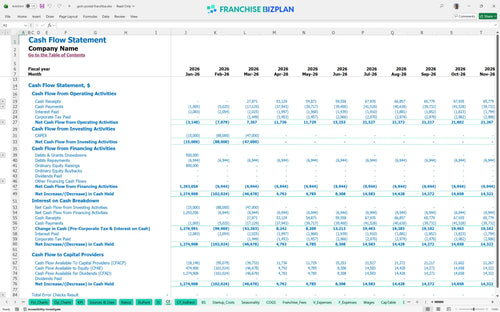
The franchise investment analysis shows a 10.31% IRR and a 2-year payback period on your initial capital. This is a solid return for a retail logistics business, especially with a return on equity of 1.38, reflecting the steady demand for small business logistics services in high-growth residential areas.
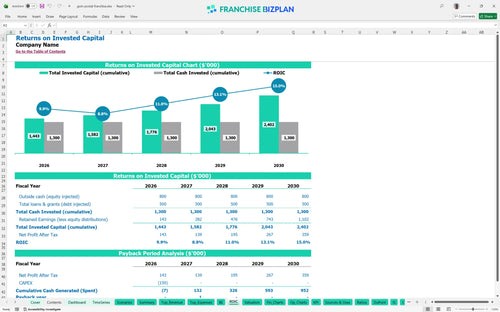
Your monthly break-even depends heavily on managing the $4,500 retail plaza rent and the payroll for your shipping clerks and supervisors. Since break-even occurs in month three, your focus must be on rapid local marketing and SEO to hit the $630,000 year-one revenue target quickly.
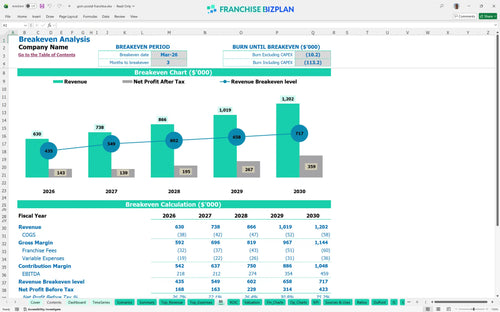
The lowest cash point hits in March 2026 at $1,126, which is defintely tight if your initial revenue lags behind the forecast. You will need a small cash buffer to handle the timing gap between paying carriers and receiving customer payments during the first 90 days of operation.
Moving from a medium to a high-growth scenario could push year-one revenue past $630,000, significantly improving your 10.31% IRR. The model allows you to test how a 10% drop in shipping volume affects your ability to cover fixed retail store operating expenses and manager salaries.
This franchise unit financial model is a fully editable Excel tool designed for real-world adjustments. You can swap out rent figures, adjust shipping margins, or change staffing levels to see how local market shifts impact your bottom line. It is built to move from a generic estimate to a site-specific reality by allowing you to modify every pre-filled formula to match your specific territory.

Planning for retail shipping franchise profitability requires looking past the first holiday rush to understand long-term sustainability. This model provides a detailed 5-year view of revenue and cash flow, scaling from $630,000 in year one to over $1.2 million by year five. It maps out how mature-unit performance differs from the initial ramp-up phase so you can plan for multi-unit expansion.

Every dollar sent to the franchisor is a dollar off your margin, so precision is required for your monthly budget. This franchise royalty fee calculation tool tracks the 5% royalty and the initial $15,000 fee to ensure you know exactly what remains for local operations. Budgeting for franchise royalties and operational expenses is automated to prevent surprises during your monthly financial reconciliations.

Knowing how to calculate startup costs for a shipping franchise is the difference between a smooth launch and a sudden cash crunch. This franchise unit break-even analysis template identifies the $150,000 initial investment and the specific sales volume needed to cover the $4,500 monthly rent and other fixed costs. It helps you visualize the path to the three-month break-even target based on local demand.

We use retail store operating expenses and labor ratios from the shipping sector to ground your franchise unit financial projection in reality. If your shipping clerk costs exceed the 3.5 FTE benchmark in year three, the model flags it for review. This allows you to compare your store-level performance against established averages for neighborhood shipping hubs and logistics centers.


Simply purchase and download the financial model template, then access it instantly using Microsoft Excel or Google Sheets. No installation or technical expertise required-just open and start working.

Enter your business-specific numbers, including revenue projections, costs, and investment details. The pre-built formulas will automatically calculate financial insights, saving you time and effort.

Leverage the investor-ready format to confidently showcase your financial projections to banks, franchise representatives, or investors. Impress stakeholders with clear, data-driven insights and professional reports.

Leverage the investor-ready format to confidently present your projections to banks, franchise representatives, or investors.