


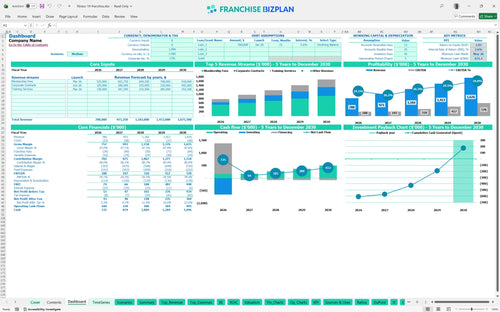
All-in-one Dashboard
Core inputs and core outputs



This Excel template for gym franchise financial planning provides a complete roadmap from initial investment to five-year exit valuation.
Core inputs and core outputs
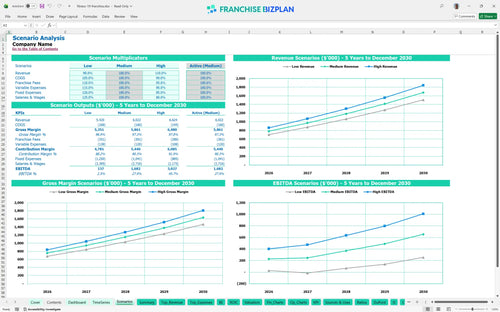
Three scenario analysis
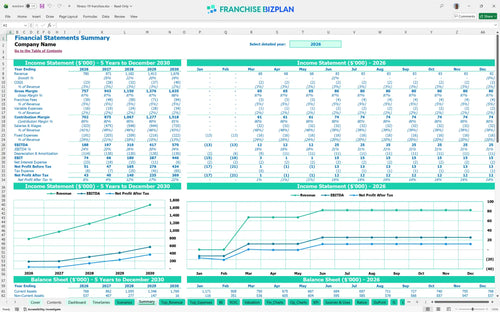
Presentation ready
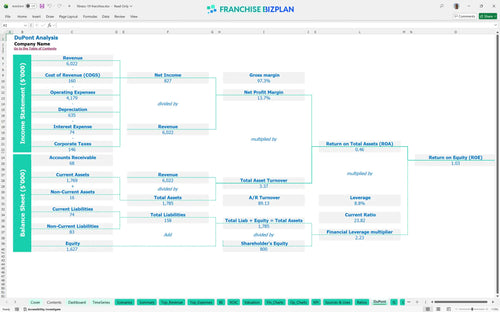
DuPont analysis
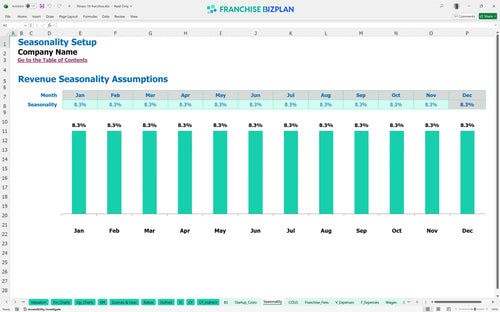
Researched revenue assumptions
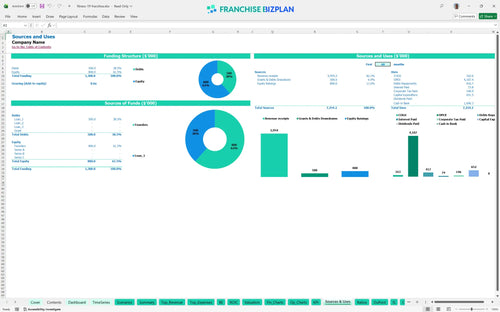
Lender-friendly financial outputs
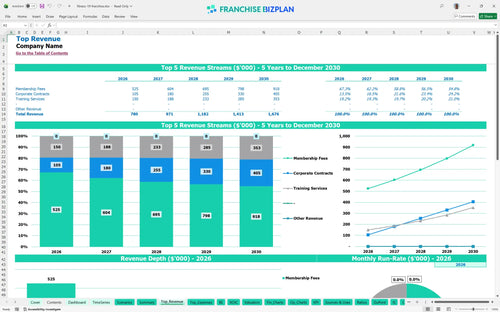
Revenue stream detailed view
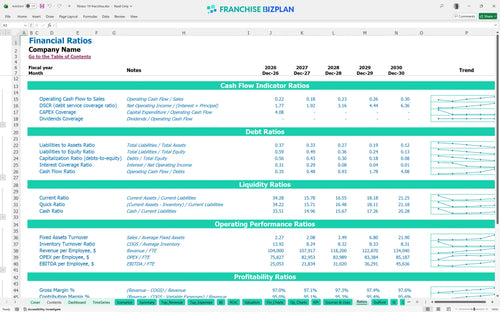
Performance metrics benchmark
We built this franchise unit financial model using our own research to provide a realistic look at the unit economics of this fitness concept. Key assumptions like the $16,500 franchise fee, 5% royalty, and $220,000 equipment package are pre-populated and fully editable. The model shows a clear path from a $780,000 year-one start to a mature $570,000 EBITDA by year five.
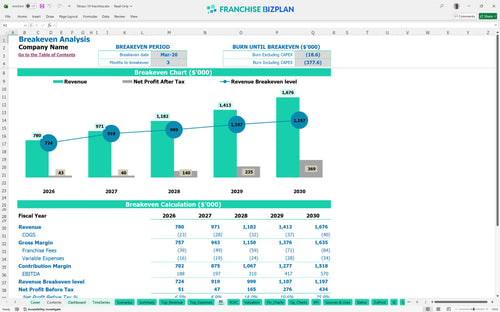
Based on the data, these fitness franchise startup costs are offset by a fast ramp-up, reaching operational breakeven by March 2026. While year one shows a solid $188,000 EBITDA, true bottom-line strength arrives in year five as revenue hits $1.67 million. You will defintely need to maintain high membership volume to offset the fixed $10,000 monthly rent.
You need approximately $651,500 to get the doors open, with the bulk of funds hitting leaseholds and equipment. This capital expenditure budget accounts for a $16,500 franchise fee and significant outlays for cardio and strength machines totaling $220,000. This financial feasibility study for boutique fitness studio shows a minimum cash need of $631,000 by May 2026 to stay liquid.
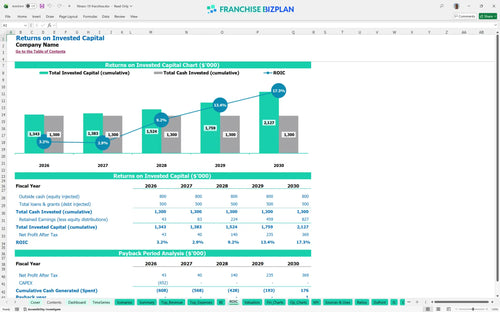
The model projects an Internal Rate of Return (IRR) of 2.57% and a 5-year payback period. While the ROE (Return on Equity) sits at 1.03, the real value lies in the scaling EBITDA, which grows from $188,000 to $570,000. Calculating ROI for gym franchise investment here assumes you hit your membership targets and manage financial performance metrics for gym franchises closely.
The unit hits its monthly break-even point in March 2026, just three months after launch. This rapid timeline depends on hitting $350,000 in membership fees in the first year while keeping the recurring revenue model stable. Estimating monthly operating expenses for a gym is critical since your $15,000+ in fixed monthly costs won't budge regardless of traffic.
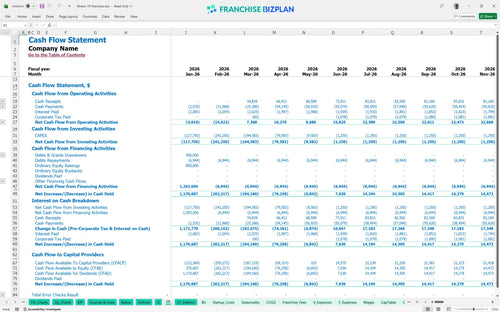
Your lowest cash point occurs in May 2026 at $631,000, meaning your initial capitalization must be robust. A cash flow forecast for new fitness gym location shows that early membership growth is the only thing protecting you from a liquidity crunch. We recommend using a franchise profit and loss statement template to track monthly variances against this $631,000 floor.
In a high-revenue scenario, year-five EBITDA could exceed $600,000 if corporate contracts scale faster than the base plan. Conversely, a low scenario where membership growth lags by 15% would push the payback period well beyond the five-year mark. This financial model for multi-unit fitness locations allows you to stress-test these variables before signing a long-term lease.
This gym franchise financial model is built in Excel, allowing you to tweak every lever from membership pricing to local utility rates. You can adjust pre-filled formulas to match your specific territory or real estate footprint without breaking the logic. It's a flexible tool designed to handle the messy reality of gym operations.

Planning a fitness center business plan template requires looking past the grand opening to see how the unit matures over half a decade. This model tracks revenue scaling from $780,000 in year one to over $1.6 million by year five. It maps out the long-term cash flow and franchise profitability analysis so you know exactly when the business starts paying you back.

Every dollar counts when you are managing a 5% royalty on gross sales. This franchise unit financial projection includes specific inputs for the $16,500 initial fee and ongoing brand obligations. By baking these costs into the monthly P&L, you get a realistic view of your store-level margin after the franchisor takes their cut.

Learning how to calculate startup costs for a fitness franchise is the first hurdle for any operator. With over $650,000 in initial investment, including $200,000 for leasehold improvements and $220,000 for equipment, you need to know your zero date. This model identifies the exact sales volume required to cover your $10,000 monthly rent and other fixed overhead.

We use fitness industry benchmarking to ensure your labor and supply costs stay within healthy ranges. For example, cleaning supplies and laundry are modeled at roughly 3% of revenue, which is standard for high-traffic gyms. These guardrails help you spot if your operating expense forecasting is too optimistic or if your payroll is bloated.


Simply purchase and download the financial model template, then access it instantly using Microsoft Excel or Google Sheets. No installation or technical expertise required-just open and start working.

Enter your business-specific numbers, including revenue projections, costs, and investment details. The pre-built formulas will automatically calculate financial insights, saving you time and effort.

Leverage the investor-ready format to confidently showcase your financial projections to banks, franchise representatives, or investors. Impress stakeholders with clear, data-driven insights and professional reports.

Leverage the investor-ready format to confidently present your projections to banks, franchise representatives, or investors.