


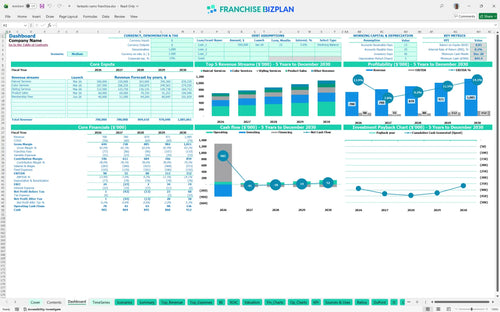
All-in-one Dashboard
Core inputs and core outputs



This comprehensive template includes a full 5-year P&L, startup cost tracker, and dynamic revenue drivers for a modern hair salon unit.
Core inputs and core outputs
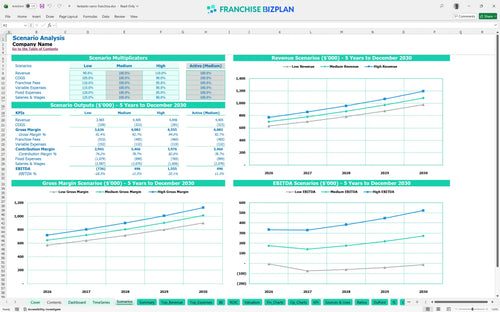
Three scenario analysis
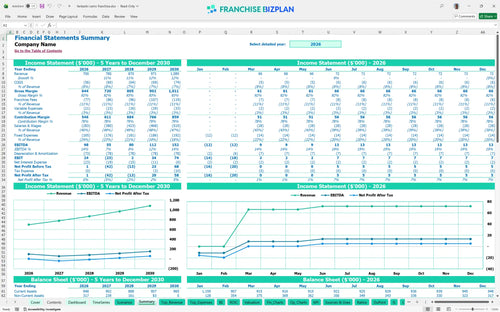
Presentation ready
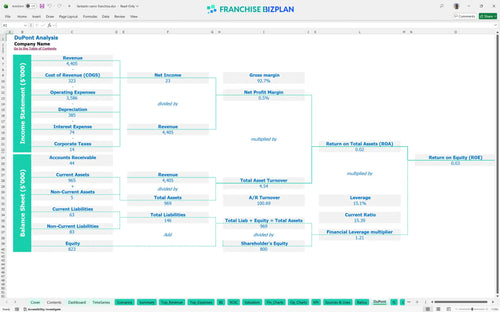
DuPont analysis
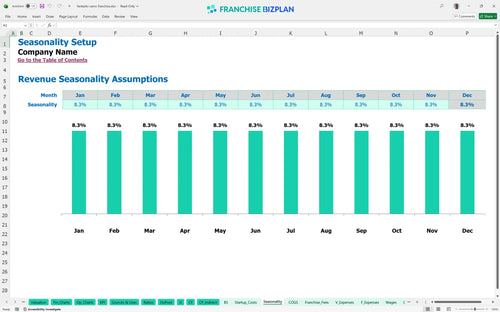
Researched revenue assumptions
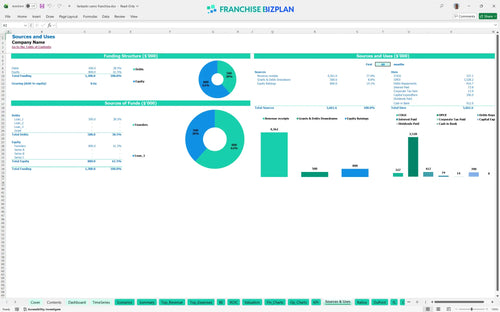
Lender-friendly financial outputs
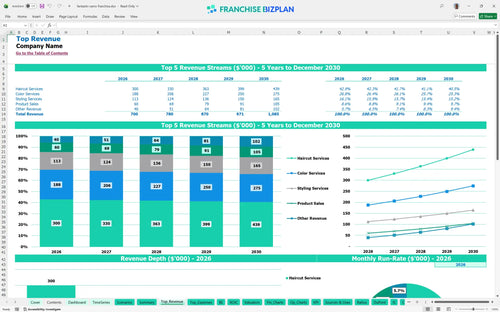
Revenue stream detailed view
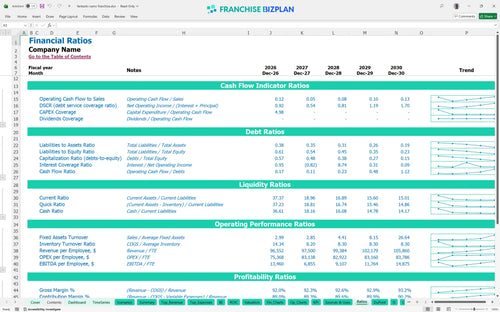
Performance metrics benchmark
We built this hair salon franchise financial model using our own research to provide a realistic roadmap for new owners. Key assumptions like haircut revenue ($200,000 in 2026), 6% royalties, and $10,000 monthly rent are pre-populated and fully editable. This tool serves as a salon franchise business plan for loan application that helps you see if the $98,000 Year 1 EBITDA is achievable in your market.
The unit reaches profitability quickly, but the franchise profitability analysis shows a dip in Year 2 to $55,000 EBITDA before climbing to $152,000 by Year 5. Retail salon product revenue forecasting is vital here, as product sales grow from $60,000 to over $104,000. It's defintely about the mix of services and memberships.
Building a financial forecast for a new franchise location requires looking at the $390,000 total initial outlay. This capital expenditure forecasting includes $200,000 for leasehold improvements and $30,000 for the franchise fee. You will also need $55,000 for chairs and stations before the doors open.
Your ROI projection shows a 21% IRR, which is a strong signal for this industry, even though the payback period extends past Year 5. With a 3% ROE, you are playing a long game focused on building a stable, multi-unit-ready asset. Still, the average net margin improves as revenue scales toward $1.08 million.
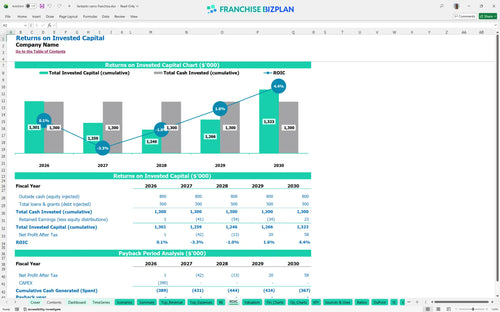
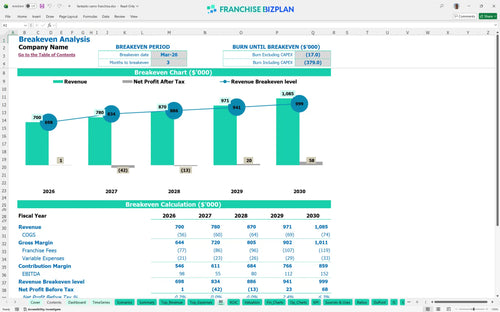
Calculating break-even point for hair salon services shows you hit the mark in March 2026, just three months after launch. This break-even analysis assumes you can cover $10,000 in monthly rent plus labor for five stylists. Volume is your biggest lever since fixed costs like insurance and cleaning stay flat.
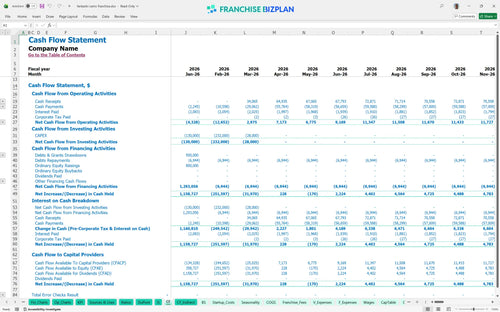
Estimating monthly operating expenses for hair salons reveals your lowest cash point is $845,000 in December 2028. You need to watch salon operating expenses closely during the first 24 months to ensure you don't burn through your buffer. Runway is safe, but keep an eye on those $1,500 monthly utility bills.
The financial model for multi-unit hair salon ownership lets you toggle between scenarios to see how a 10% drop in traffic affects your Year 1 margin. High-performance cases depend on stylist productivity and local marketing execution. If you hit the high case, Year 5 EBITDA could exceed the $152,000 baseline significantly.
This hair salon franchise financial model is built entirely in Excel, allowing you to swap out every variable to match your specific territory. You can adjust the salon franchise financial projection template excel to reflect local labor rates or specific lease terms without breaking the pre-filled formulas. It is a flexible tool designed for quick iterations during your due diligence process.

Planning for the long term is easier when you can see a franchise unit profit and loss statement example that scales from Year 1 to Year 5. This model tracks revenue growth from $700,000 to over $1.08 million, helping you visualize how store-level margins evolve as the unit matures. It provides a clear view of cash flow and balance sheet health to support your salon business plan template.

The model simplifies the franchise fee and royalty structure breakdown by automating the math on your 6% royalty and 5% marketing fund obligations. These off-the-top costs are calculated monthly against your service and product sales, so you always know your true net. Understanding these franchise royalty fees is critical for protecting your bottom line from the start.

Knowing how to calculate startup costs for a salon franchise is the first step to avoiding a cash crunch. This model aggregates your $390,000 in initial capital needs, including leaseholds and equipment, to determine your exact launch requirements. The built-in tools help you identify the franchise unit startup costs and the specific sales volume needed to cover your monthly fixed overhead.

This salon franchise investment calculator uses researched benchmarks to help you sanity-check your labor and occupancy costs against industry standards. If your projected stylist wages or rent-to-sales ratios fall outside typical ranges, the model highlights the variance immediately. It is a reality check that ensures your pro forma stays grounded in actual salon economics.


Simply purchase and download the financial model template, then access it instantly using Microsoft Excel or Google Sheets. No installation or technical expertise required-just open and start working.

Enter your business-specific numbers, including revenue projections, costs, and investment details. The pre-built formulas will automatically calculate financial insights, saving you time and effort.

Leverage the investor-ready format to confidently showcase your financial projections to banks, franchise representatives, or investors. Impress stakeholders with clear, data-driven insights and professional reports.

Leverage the investor-ready format to confidently present your projections to banks, franchise representatives, or investors.