


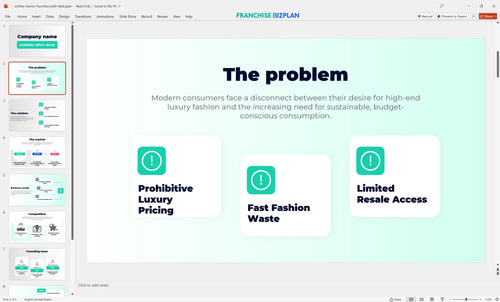
Problem
Defines market pain



This comprehensive package includes a 20-slide PowerPoint deck with pre-populated financial projections, market analysis frameworks, and essential slides for a franchise unit business plan.
Defines market pain
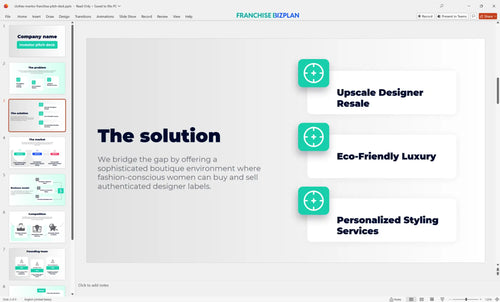
Explains your fix
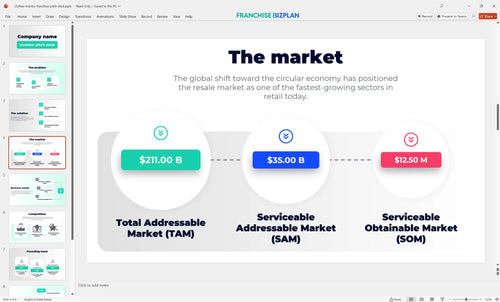
Quantifies opportunity size
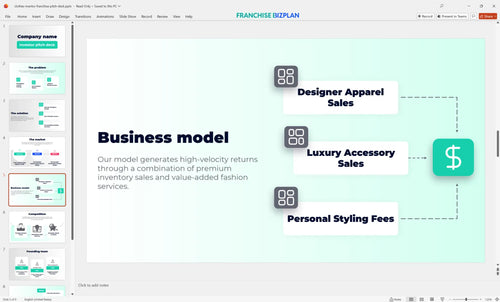
Shows revenue engine
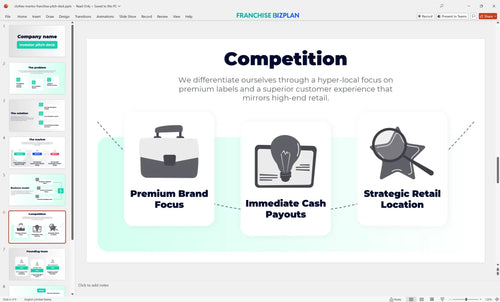
Highlights competitive edge
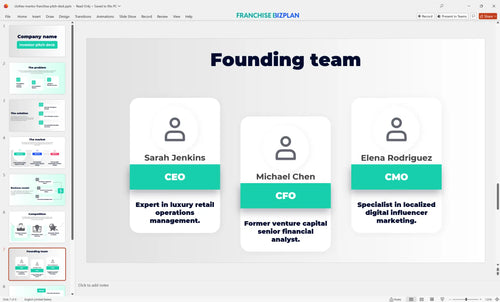
Proves operator credibility
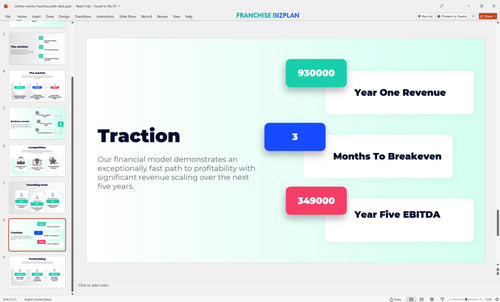
Demonstrates market momentum
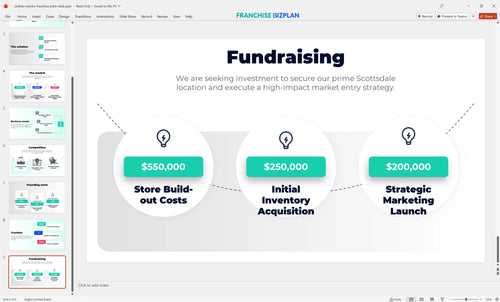
Details capital use
We built this franchise unit pitch deck in Microsoft PowerPoint format using our own deep-dive research into the resale sector. Every slide comes pre-populated with realistic data, such as a 3-month window to reach breakeven (the point where revenue covers all operating costs) and financial projections for apparel retail franchise success. These editable slides help you present a professional case for a unit projected to reach $1.49M in annual sales by year five. Speed to market is critical when the local demand is peaking.
Consumers are shifting toward sustainable fashion but still crave luxury labels. This unit fills the gap by providing high-end brands at a value, while offering sellers immediate cash for their items. Solving a local need is the fastest way to build a loyal customer base.
This model moves beyond the messy 'thrift' experience to offer a curated boutique environment. With personalized styling services and authenticated luxury goods, it provides a high-touch retail experience that traditional resale shops defintely cannot match. Quality and trust are the currencies of the resale market.
The target is affluent women and value-driven luxury shoppers in high-traffic corridors. With a projected Year 1 revenue of $930,000, the model captures a significant slice of the local resale market by focusing on premium labels like Lululemon and Prada. Knowing your buyer is the first step to owning the market.
Revenue flows from three primary channels: designer clothing, high-margin luxury accessories, and styling fees. Here's the quick math: with accessories projected at $160,000 in Year 1 and inventory costs held near 10.5%, the store-level margin stays healthy even after the 4% royalty and 5% marketing fees. Margins are won or lost in the inventory procurement phase.
Main competitors include online resale platforms and local consignment shops. This unit wins through its 'cash-on-the-spot' model and physical presence in prime locations, offering immediate gratification that digital apps lack. Winning locally requires a mix of digital reach and physical trust.
Total small business startup capital covers the $25,000 franchise fee and $180,000 in leasehold improvements (renovations to the retail space). These funds unlock the March 2026 breakeven milestone and set the path for a 5-year payback on the total investment. Capital is the fuel, but milestones are the destination.
Finance: update unit break-even and payback model by Friday
This franchise pitch deck template is a pre-structured tool designed to save you weeks of manual work. It is fully editable in PowerPoint, allowing you to swap in your specific territory data or funding requirements. Whether you are presenting to a bank for a franchise funding proposal or a private investor, the professional format ensures you look prepared from day one. Efficiency is the difference between a funded store and a missed opportunity.

Explaining how a resale retail franchise generates cash is vital for securing a franchise funding proposal. This template includes a clear revenue model slide that breaks down unit economics, showing how designer clothing and luxury accessories drive the top line. It simplifies the path to the $930,000 first-year revenue target so lenders see the logic behind the numbers. Cash flow is the only metric that keeps the doors open.

Success in boutique apparel management depends on understanding local density and demand. This template provides a framework to analyze the sustainable retail business model against traditional thrift and high-end retail. Use these slides to explain how to present a franchise business model to investors by proving why your location will capture the local fashion-conscious demographic. Location is strategy, but density is destiny.

A professional investor slide deck structure needs to be clean and data-heavy without being cluttered. We designed these slides to highlight store-level margins and store-level EBITDA (earnings before interest, taxes, depreciation, and amortization) clearly. You do not need a design degree to present a retail franchise business plan that stands out to committee members. Investors buy into the numbers, but they invest in the clarity of the plan.

This slide helps you articulate the 'why' behind the investment, focusing on the sustainable luxury angle. It defines the edge you have in providing immediate liquidity-cash on the spot-to sellers, which is a key differentiator. It turns a complex resale operation into a clear investment story for attracting investors for a boutique fashion franchise. A unique edge is your only defense against market saturation.


Get instant access to your pitch deck by downloading the template in PowerPoint or Google Slides. Open it in your preferred software and start customizing immediately.

Easily personalize each slide by replacing the placeholder text with your business information, market insights, and key financial details, ensuring the deck aligns perfectly with your vision.

Review and adjust the financial slides to align with your revenue model, cost breakdown, and funding needs, ensuring investors receive a clear and professional financial overview.

Refine your presentation for clarity and impact, ensuring it tells a compelling story about your business, highlights your competitive edge, and makes a strong case for investment.