


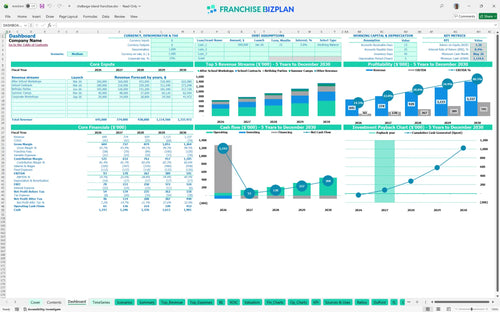
All-in-one Dashboard
Core inputs and core outputs



This franchise unit profitability spreadsheet includes a startup expense tracker, 5-year pro forma statements, and a detailed breakdown of revenue streams from school contracts to birthday parties.
Core inputs and core outputs
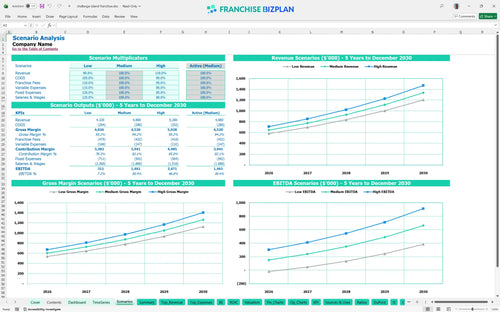
Three scenario analysis
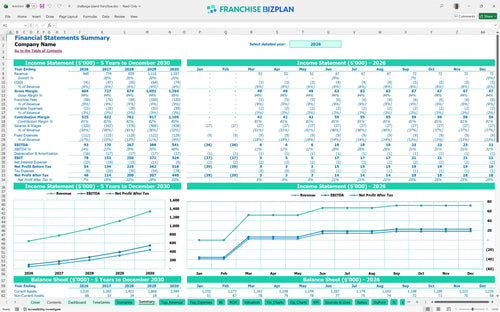
Presentation ready
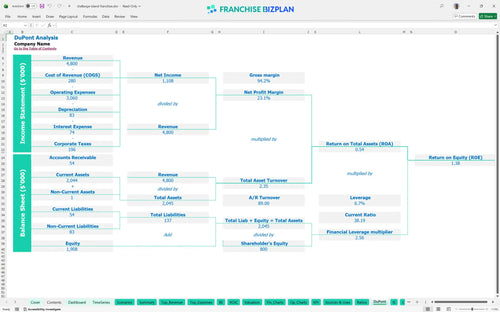
DuPont analysis
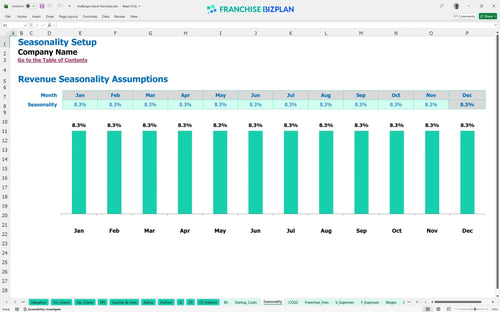
Researched revenue assumptions
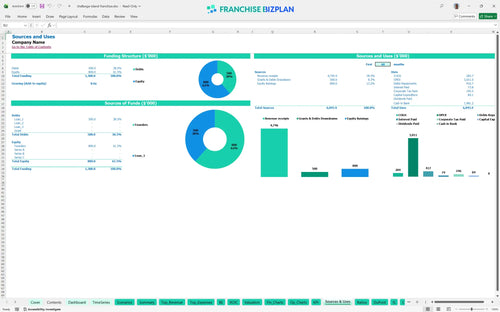
Lender-friendly financial outputs
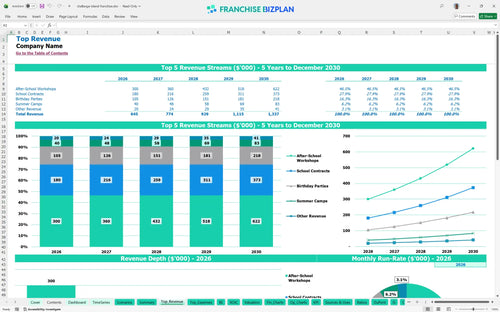
Revenue stream detailed view
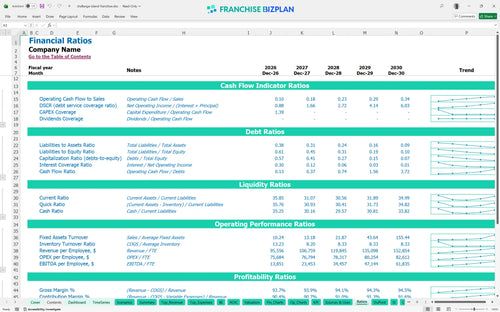
Performance metrics benchmark
We built this franchise unit financial model using deep research into the mobile and facility-based enrichment sector. The pre-populated data covers everything from $120,000 in Year 1 school contracts to the $3,200 needed for computers, all of which are fully editable to fit your local market. This model helps you move past abstractions and focus on the $93,000 EBITDA expected in your first year of operation.
The unit reaches profitability within its first year, generating $93,000 in EBITDA on $645,000 in revenue. By Year 3, as you mature your school partnerships and workshop density, EBITDA is projected to climb to $267,000. Here's the quick math: your net profit grows as fixed costs like the $5,500 rent become a smaller percentage of your total sales.
You need approximately $84,100 for the initial setup plus a cash buffer for the first few months. This includes the $49,900 franchise fee and $8,000 for facility improvements in the Mueller District or a similar high-traffic area. Estimating profit margins for after-school enrichment centers requires accounting for these upfront costs before the first workshop even starts.
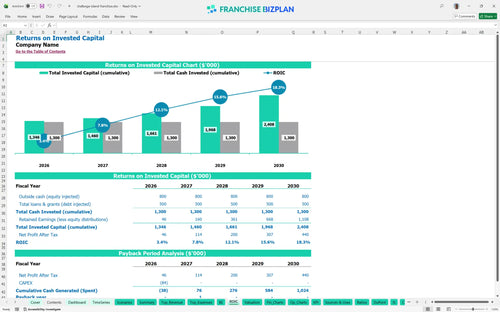
The model shows an Internal Rate of Return (IRR) of 8.43% and a Return on Equity (ROE) of 1.38. You can expect a full payback on your initial investment within 2 years. This assumes you hit your Year 2 revenue target of $774,000 while managing operational costs for hybrid education franchise models effectively.
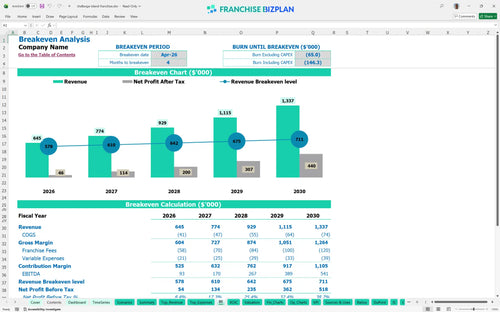
The franchise unit hits the break-even point in April 2026, just 4 months after launching. The primary driver for reaching this point is the volume of after-school workshops, which are projected to bring in $200,000 in the first year. If labor costs for your 3 initial instructors spike, your break-even timeline will shift, so managing productivity is vital.
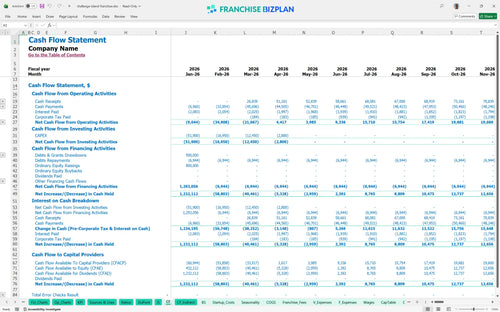
Your lowest cash point occurs in May 2026 with a balance of $1,125. This indicates a very tight runway during the initial ramp-up phase, so you must monitor every dollar closely. What this estimate hides is the potential for timing gaps between school contract billing and actual cash receipts, which can stress your working capital.
A High scenario, driven by better-than-expected school contract retention and higher birthday party tickets, can significantly pull forward your payback period. Conversely, a Low scenario where Year 1 revenue misses the $645,000 mark will require a larger cash buffer to survive the May 2026 low point. Best practices for forecasting revenue in a youth development franchise suggest planning for a 15% variance in workshop attendance.
Finance: update unit break-even and payback model by Friday.
This franchise unit financial model template is a professional Excel tool designed for total flexibility. You can adjust every pre-filled formula and assumption to match your specific territory, whether you are running a single site or a small chain. It makes small business financial modeling simple by letting you edit pricing drivers and local overhead to see how they impact your bottom line in real time.

Planning for long-term growth requires more than a one-year guess. This model provides a detailed 5-year outlook for revenue, costs, and cash flow, specifically built for an educational enrichment franchise financial projections. You can track how your STEAM franchise business plan template evolves as you scale from initial workshops to multi-year school contracts and summer programs.

Understanding your obligations to the franchisor is critical for calculating true franchise unit economics. The model includes specific inputs for the $49,900 initial fee, the 7% royalty, and the 2% marketing fund contribution. This ensures you see exactly how much cash stays in your pocket after all brand-level fees are paid each month.

Knowing how to calculate startup costs for a children's education franchise is the first step to avoiding a cash crunch. This tool aggregates your $84,100 in capital expenditures (CAPEX) and maps them against your monthly fixed costs, like the $5,500 rent. It identifies the exact sales volume needed to cover your expenses so you can plan your launch with confidence.

We included industry-standard benchmarks so you can defintely sanity-check your numbers against other youth development franchises. Use these metrics to evaluate if your $70,000 Program Director salary or your 1.8% spend on art supplies aligns with typical high-performing units. It is a built-in financial feasibility study for a STEAM education center that keeps your projections grounded in reality.


Simply purchase and download the financial model template, then access it instantly using Microsoft Excel or Google Sheets. No installation or technical expertise required-just open and start working.

Enter your business-specific numbers, including revenue projections, costs, and investment details. The pre-built formulas will automatically calculate financial insights, saving you time and effort.

Leverage the investor-ready format to confidently showcase your financial projections to banks, franchise representatives, or investors. Impress stakeholders with clear, data-driven insights and professional reports.

Leverage the investor-ready format to confidently present your projections to banks, franchise representatives, or investors.