


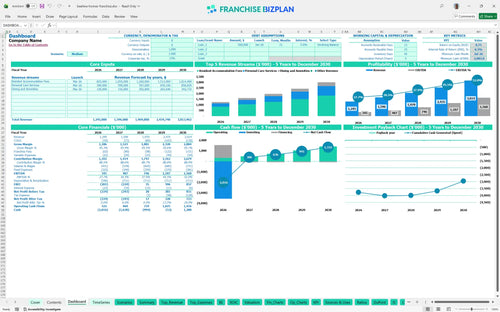
All-in-one Dashboard
Core inputs and core outputs



This financial model template for boutique senior care franchise provides a complete Excel template for franchise unit business planning, covering everything from initial CAPEX to 5-year EBITDA growth.
Core inputs and core outputs
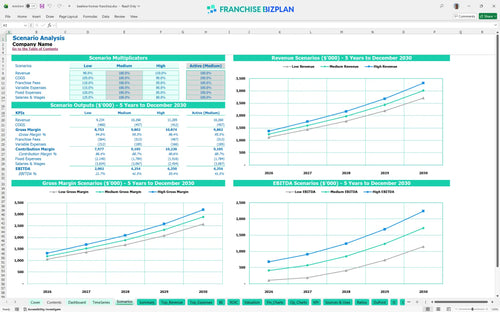
Three scenario analysis
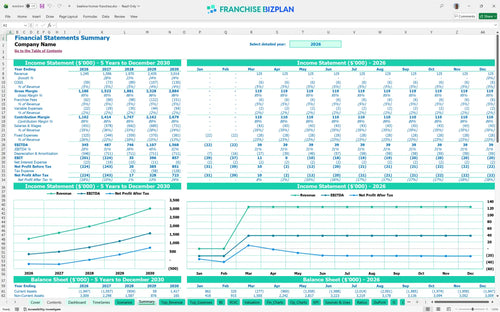
Presentation ready
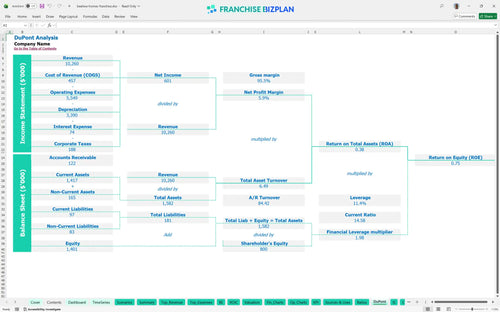
DuPont analysis
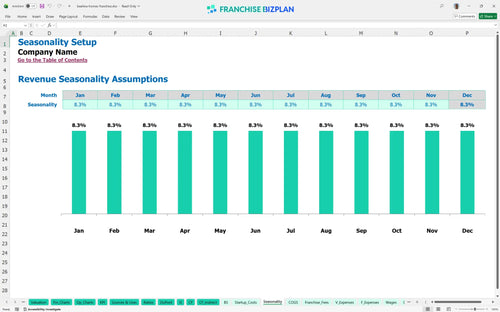
Researched revenue assumptions
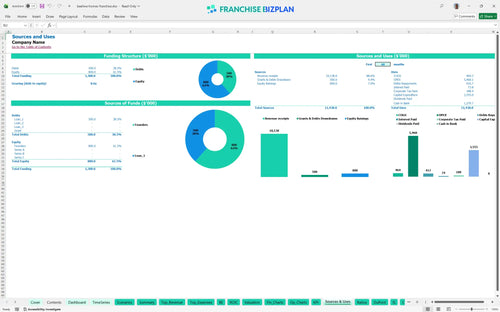
Lender-friendly financial outputs
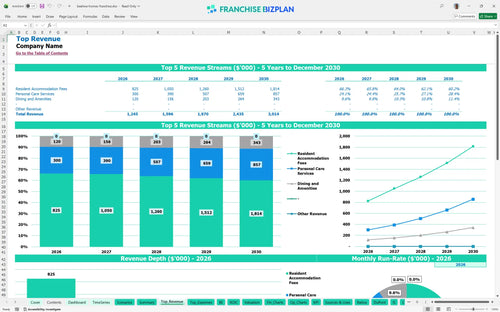
Revenue stream detailed view
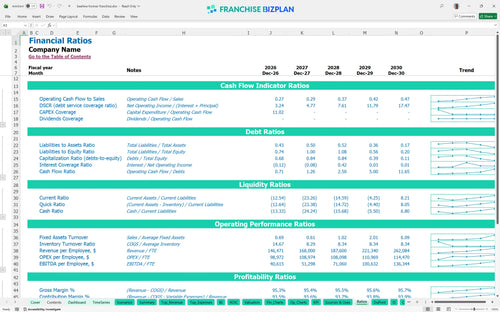
Performance metrics benchmark
We built this franchise unit financial model using our own research into the boutique senior care sector. Key assumptions like the $18,000 monthly facility lease and the 1:5 staff-to-resident ratio are pre-populated and fully editable. With Year 1 revenue starting at $1,245,000, this tool helps you validate if the private-pay senior living market in your area supports these numbers.
This assisted living franchise profitability analysis shows the unit becomes profitable by March 2026. After covering the 5% royalty and $345,000 in Year 1 EBITDA, the model tracks how rising occupancy drives net profit toward $1.56M by Year 5. Efficiency is the key to hitting these numbers early.
Launching this unit requires a total initial investment of over $3.5M, including a $75,000 franchise fee and $2,000,000 for leasehold improvements. The capital is primarily used for high-end build-outs and medical equipment to meet boutique brand standards. You need a clear view of where every dollar goes before breaking ground.
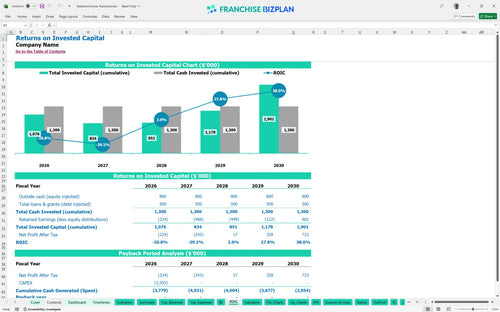
Our ROI analysis for boutique assisted living franchise indicates an IRR of 0.3% and a payback period extending past Year 5. While the initial cash outlay is heavy, the average net margin improves significantly as revenue grows from $1.2M to $3M. This is a long-term play for steady cash flow rather than a quick flip.
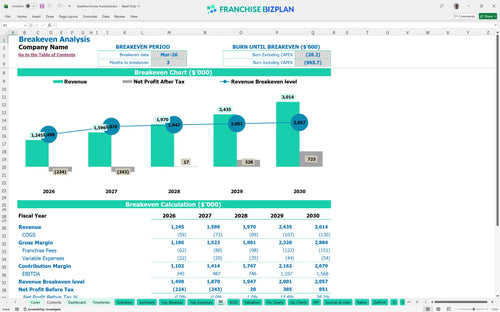
The monthly break-even point is reached in month 3, requiring enough residents to cover the $18,000 rent and high caregiver payroll. Estimating labor expenses for residential care homes is the biggest variable here, as a 1:5 ratio leaves little room for staffing waste. Speeding up move-ins is the fastest way to stop the bleed.
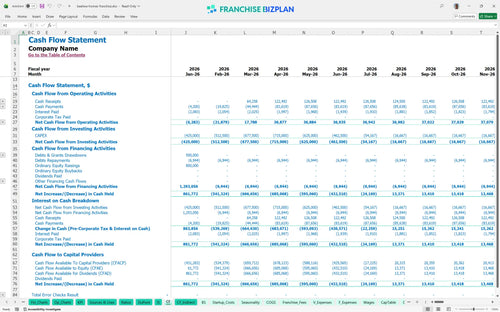
The lowest cash point is a deep -$2,083,000 in July 2026, so you defintely need a substantial cash buffer. Best practices for senior living financial forecasting suggest keeping at least six months of operating expenses in reserve during the ramp-up phase. Managing your burn during the build-out is critical for survival.
A franchise financial feasibility study for senior care must account for occupancy swings; the Low scenario could push profitability out by a year. Moving from Medium to High scenarios depends on your local marketing execution and ability to maintain high-end private pay assisted living revenue projections. Small changes in resident retention make a huge difference in Year 5 value.
Finance: update unit break-even and payback model by Friday
This assisted living franchise financial model is fully customizable in Excel, allowing you to swap out our researched data for your specific local numbers. You get pre-filled formulas and editable assumptions that make it easy to adapt to your specific territory, local labor rates, and resident capacity. Every cell is open, so you can stress-test your own assisted living startup costs Excel without breaking the logic.

Planning for senior care requires a multi-year outlook to account for resident move-in cycles and staffing ramps. This model provides detailed 5-year revenue, cost, and cash flow projections designed for a residential assisted living investment analysis. It helps you see beyond the opening month to understand how the unit scales as occupancy stabilizes. This franchise unit financial projection template turns a complex 60-month forecast into a clear roadmap.

We mapped out the specific financial obligations like the $75,000 initial fee and the 5% royalty structure to ensure you see the full picture. This section captures the real impact of franchise royalty fees on your bottom line before you sign the agreement. It handles the math on brand contributions so you can focus on store-level margin. Knowing your off-the-top costs is vital for any serious operator.

Knowing how to calculate startup costs for an assisted living facility is the first step toward a safe launch. This tool covers everything from the $2M leasehold improvements to the $200k contingency fund, showing exactly when your monthly revenue covers your burn. It breaks down the total investment so you can secure financing with confidence. A clear break-even analysis keeps you from running out of runway during the ramp-up.

The model includes built-in benchmarks for the staff-to-resident ratio and healthcare facility budgeting to keep your plan grounded. You can sanity-check your numbers against industry standards to ensure your labor and operational overhead stay within a healthy range. This prevents the common mistake of underestimating the cost of high-touch care. Use these guardrails to validate your pro forma against real-world performance.


Simply purchase and download the financial model template, then access it instantly using Microsoft Excel or Google Sheets. No installation or technical expertise required-just open and start working.

Enter your business-specific numbers, including revenue projections, costs, and investment details. The pre-built formulas will automatically calculate financial insights, saving you time and effort.

Leverage the investor-ready format to confidently showcase your financial projections to banks, franchise representatives, or investors. Impress stakeholders with clear, data-driven insights and professional reports.

Leverage the investor-ready format to confidently present your projections to banks, franchise representatives, or investors.