


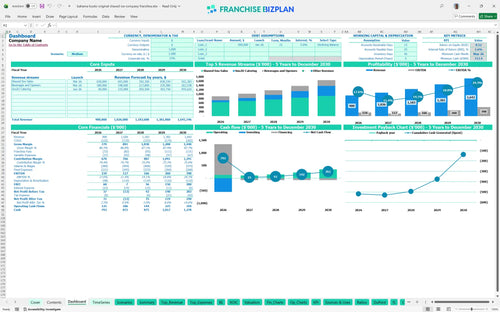
All-in-one Dashboard
Core inputs and core outputs



This franchise unit financial model template provides a complete Excel-based toolkit for forecasting revenue, managing startup capital, and analyzing long-term profitability for a premium shaved ice location.
Core inputs and core outputs
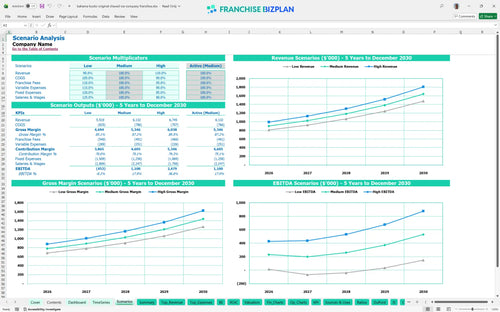
Three scenario analysis
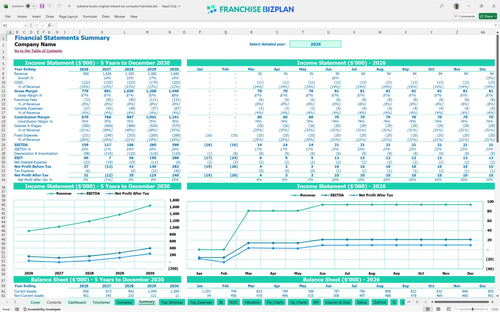
Presentation ready
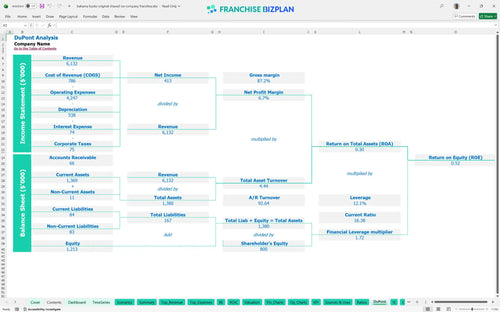
DuPont analysis
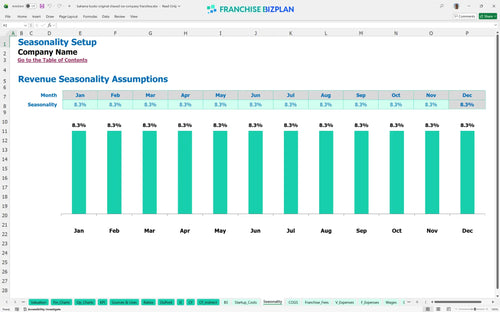
Researched revenue assumptions
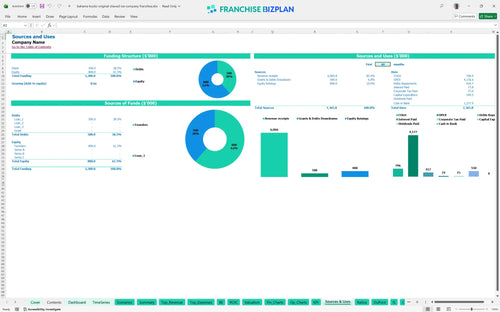
Lender-friendly financial outputs
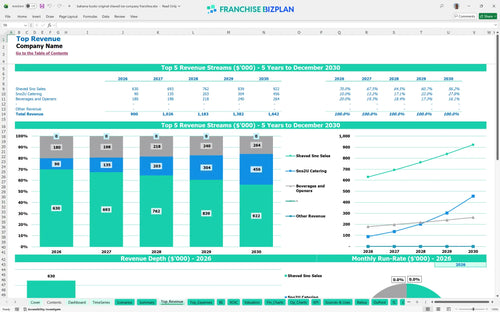
Revenue stream detailed view
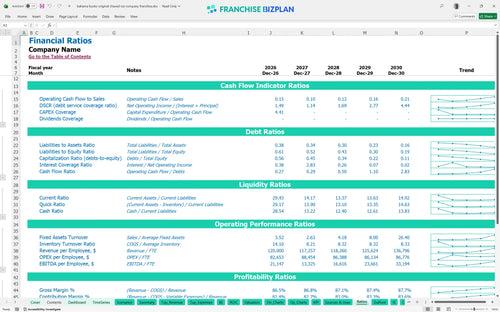
Performance metrics benchmark
We built this franchise unit financial model using deep research into the frozen dessert sector and specific brand requirements. Key assumptions like the $34,500 franchise fee, 8% total royalty/marketing load, and $320,000 build-out are pre-populated and fully editable. Our data shows a year one EBITDA of $159,000, giving you a credible starting point for your own investment assessment tool.
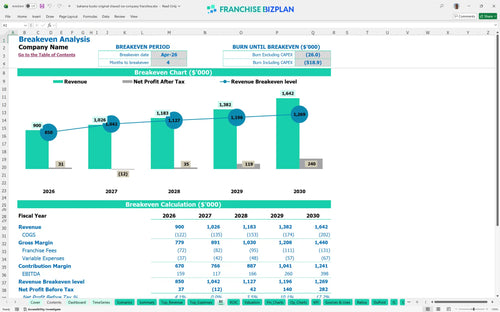
The unit hits the break-even point in April 2026, just 4 months after launch. While year one EBITDA is strong at $159,000, profitability defintely scales as catering revenue grows, eventually reaching $398,000 by year five. This assumes you manage the 12% food cost and high-traffic labor needs effectively during peak summer months.
You need $664,500 in startup capital for the physical build and equipment, plus a significant cash buffer. The largest outlays are the $320,000 for leasehold improvements and $110,000 for proprietary shaving equipment. The model also includes $85,000 for a mobile unit to drive off-site revenue, which is a key part of the business plan template.
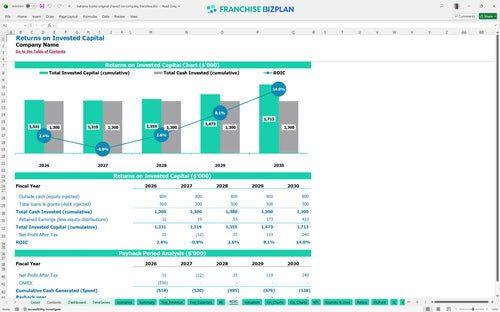
The internal rate of return (IRR) is 1.63%, and the return on equity (ROE) sits at 0.52. While the unit generates consistent cash flow, the high initial investment of over $660,000 means the full payback period extends beyond the first five years. This is a long-term play focused on steady cash flow rather than a quick flip.
The monthly break-even point is reached in month 4 of operations. The biggest hurdle is the $14,000 monthly rent for a prime location, which makes up a huge chunk of your fixed costs. To hit this fast, you need to maintain high volume from both the retail storefront and the mobile catering unit right out of the gate.
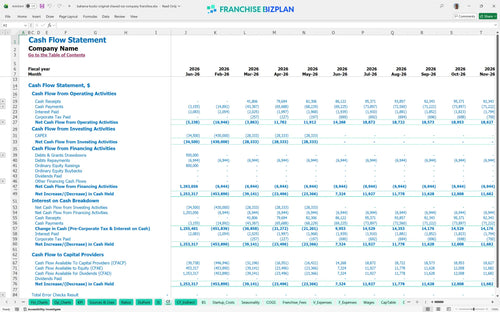
The lowest cash point is $713,000 in May 2026, which includes your initial investment and early operating losses. You need enough liquidity to cover the build-out phase and the first few months of staffing before the summer peak. We recommend a healthy buffer because a delay in the April opening could pressure your working capital.
In a high-growth scenario, pushing revenue toward the $1.64 million mark significantly improves your year 5 EBITDA to $398,000. However, a low-revenue scenario where you miss catering targets will make that $14,000 rent very heavy. The model shows that even small shifts in labor efficiency can swing your year 1 margin by several points.
Finance: update unit break-even and payback model by Friday.
This franchise unit financial model template is built in Excel to give you total control over your numbers. You can swap out pre-filled assumptions for your specific territory, adjusting everything from local rent to seasonal traffic patterns. It is defintely the most efficient way to see how a frozen dessert shop handles shifting labor costs or a spike in ingredient prices without breaking the underlying logic.

Planning for the long haul is the only way to survive in the retail dessert space. This model maps out a 5-year growth path, showing revenue climbing from $900,000 in year one to over $1.64 million by year five. You get a clear view of how scaling your catering arm and improving throughput impacts your bottom line as the unit matures and local demand stabilizes.

The model tracks every dollar leaving the store for brand obligations so you aren't surprised by the cash drag. It accounts for the $34,500 initial franchise fee and the ongoing 6% royalty and 2% marketing fund contributions. Seeing these as a percentage of your $900,000 base revenue helps you understand exactly how much volume you need to maintain a healthy store-level margin.

Calculating ROI for a food and beverage franchise starts with a realistic look at the $664,500 in hard startup costs. This tool breaks down leasehold improvements, specialized shaving equipment, and the mobile catering unit to show your total capital requirement. You will see exactly what sales volume is needed to cover your $14,000 monthly rent and other fixed overheads.

We have integrated real-world data to help you sanity-check your operational expense breakdown for retail franchise units. From food ingredients starting at 12% of sales to a structured management team, these benchmarks ensure your projections aren't just wishful thinking. It helps you spot if your $14,000 rent or $72,000 manager salary is out of line with typical high-traffic retail corridors.


Simply purchase and download the financial model template, then access it instantly using Microsoft Excel or Google Sheets. No installation or technical expertise required-just open and start working.

Enter your business-specific numbers, including revenue projections, costs, and investment details. The pre-built formulas will automatically calculate financial insights, saving you time and effort.

Leverage the investor-ready format to confidently showcase your financial projections to banks, franchise representatives, or investors. Impress stakeholders with clear, data-driven insights and professional reports.

Leverage the investor-ready format to confidently present your projections to banks, franchise representatives, or investors.