


All-in-one Dashboard
Core inputs and core outputs



This tool provides a complete Excel template for franchise financial projections, including detailed capital expenditure planning, staffing schedules, and multi-year revenue scaling for a diagnostic testing facility.
Core inputs and core outputs

Three scenario analysis
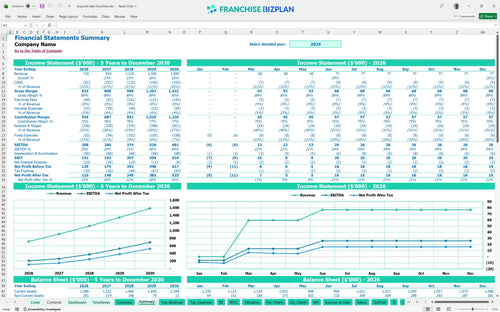
Presentation ready

DuPont analysis

Researched revenue assumptions
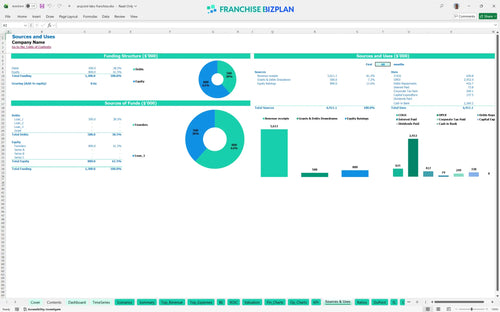
Lender-friendly financial outputs

Revenue stream detailed view

Performance metrics benchmark
We built this franchise unit financial model using our own research to ensure it reflects the day-to-day realities of running a testing center. Key assumptions like the $54,500 franchise fee and the 7% royalty rate are pre-populated, but you can edit everything to fit your specific location. With a projected Year 1 revenue of $715,000 and a 3-year payback period, this model provides a data-driven foundation for your investment decision.
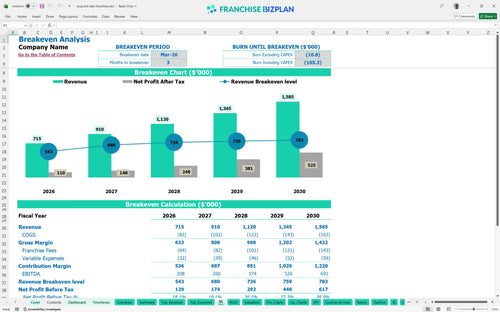
Based on the researched data, this unit reaches its breakeven date in March 2026, just three months after launch. With Year 1 EBITDA projected at $208,000, the model shows a clear path to scaling toward $691,000 in annual EBITDA by Year 5 as corporate contracts mature. You will defintely want to track your lab consumables, which start at 9.5% of revenue, to protect these margins as you grow.
Your total initial investment covers the $54,500 franchise fee and significant capital expenditure like $100,000 for leasehold improvements. The model also accounts for $80,000 in lab testing equipment and a $50,000 mobile testing unit to drive on-site revenue. This startup budget template for clinical laboratory franchises ensures you account for every dollar from signage to IT systems.
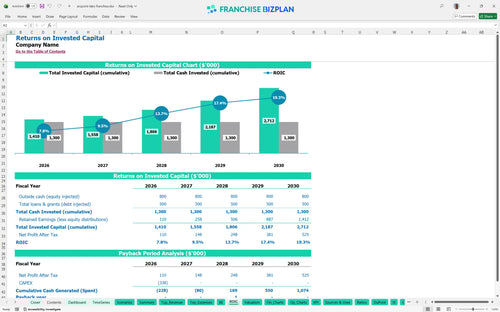
Investors can expect an Internal Rate of Return (IRR) of 6.03% and a Return on Equity (ROE) of 1.76. The years to payback is 3, meaning you recover your initial capital outlay by the end of the third year of operations. This franchise ROI calculator helps you visualize how the 43% EBITDA margin in Year 5 contributes to your total wealth creation.
The unit reaches monthly break-even in just 3 months, requiring enough volume to cover $5,000 in rent and $1,400 in combined insurance and utilities. The primary driver for reaching this point is the rapid onboarding of corporate contract fees, which are projected at $250,000 in the first year. Franchise financial forecasting for new lab owners depends heavily on hitting these early B2B targets.
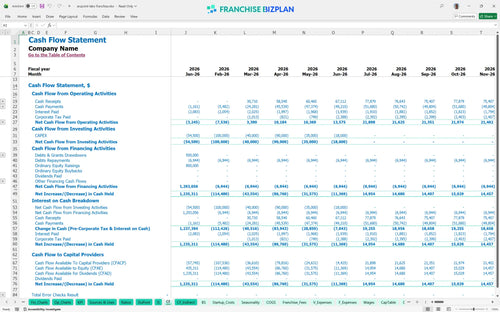
The lowest cash point occurs in June 2026, with a minimum cash balance of $948,000. This suggests you need a healthy liquidity buffer to handle the ramp-up phase, as the model shows the most significant cash pressure happens about six months after the initial franchise fee is paid. Forecasting mobile unit operating costs for franchises is vital to ensure you don't overextend during the first year.
Scenarios adjust for fluctuations in revenue and COGS, such as lab consumables which start at 9.5% and drop to 8.3% by Year 5. A high-performance case significantly improves the 3-year payback, while a low-revenue scenario might extend the months to breakeven beyond the initial 3-month estimate. This sample financial plan for diagnostic testing franchise allows you to stress-test your phlebotomist payroll against lower traffic.
Finance: update unit break-even and payback model by Friday.
This franchise financial model template is built in Excel, allowing you to tweak every lever from lab tech staffing to specimen kit costs. All formulas are pre-filled, so you can adjust for your specific territory or local rent prices without breaking the logic of the underlying math. It is the best financial model for laboratory service franchises because it adapts to your specific market density and labor rates.

Plan for the long haul with a laboratory franchise business plan that scales from year one through year five. The model tracks how corporate contract fees and on-site service premiums grow over time, providing a clear view of your future balance sheet and cash flow. This long-term view is essential for estimating profitability for mobile drug testing businesses as they expand their fleet.

This franchise profit and loss template handles the math for your 7% royalty and 2% marketing fund automatically. By mapping these obligations against your gross sales, you can see exactly how much cash stays in the unit after meeting brand standards. It simplifies calculating recurring revenue for corporate screening franchises by subtracting all brand-related fees before showing your net take-home.

Estimating startup costs for a medical testing franchise requires precision across leasehold improvements and lab equipment. This model calculates your total initial investment and identifies the exact sales volume needed to cover your $5,000 monthly rent and other fixed overhead. Use the break-even analysis spreadsheet to determine how many private clinical testing fees you need to collect each month to stay in the black.

We have integrated benchmarks for drug testing franchise investment analysis to help you sanity-check your numbers. Compare your lab tech lead salary or phlebotomist headcount against typical industry ranges to ensure your medical testing franchise startup costs remain competitive. This financial feasibility study for health and wellness franchises ensures your labor and occupancy costs stay within healthy percentage ranges.


Simply purchase and download the financial model template, then access it instantly using Microsoft Excel or Google Sheets. No installation or technical expertise required-just open and start working.

Enter your business-specific numbers, including revenue projections, costs, and investment details. The pre-built formulas will automatically calculate financial insights, saving you time and effort.

Leverage the investor-ready format to confidently showcase your financial projections to banks, franchise representatives, or investors. Impress stakeholders with clear, data-driven insights and professional reports.

Leverage the investor-ready format to confidently present your projections to banks, franchise representatives, or investors.