


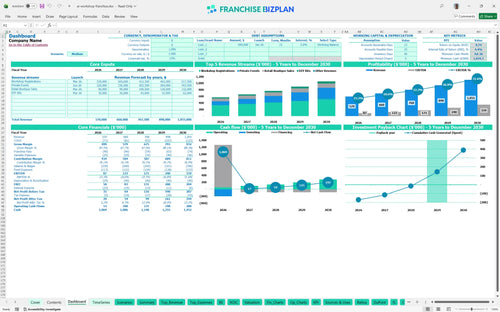
All-in-one Dashboard
Core inputs and core outputs



This tool provides a complete roadmap for preparing a financial model for a creative services franchise, covering everything from initial build-out to five-year exit values.
Core inputs and core outputs
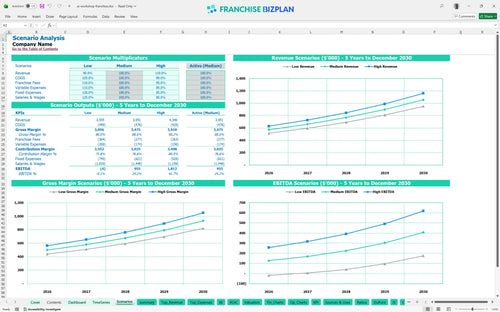
Three scenario analysis
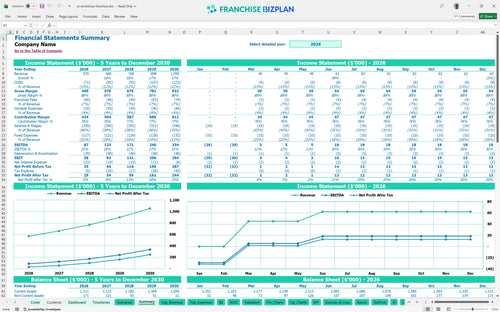
Presentation ready
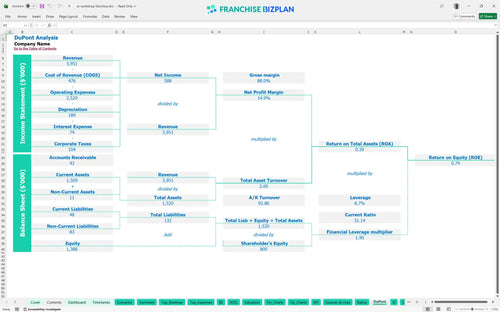
DuPont analysis
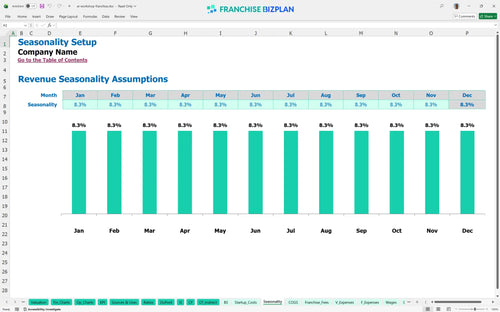
Researched revenue assumptions
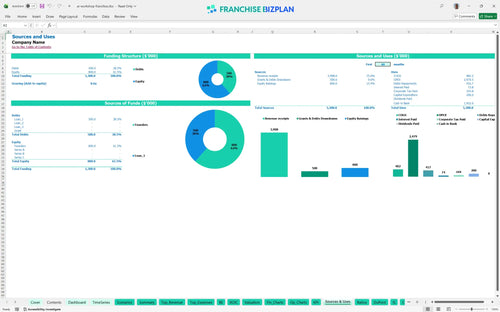
Lender-friendly financial outputs
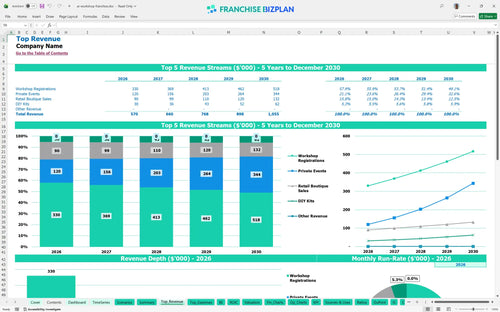
Revenue stream detailed view
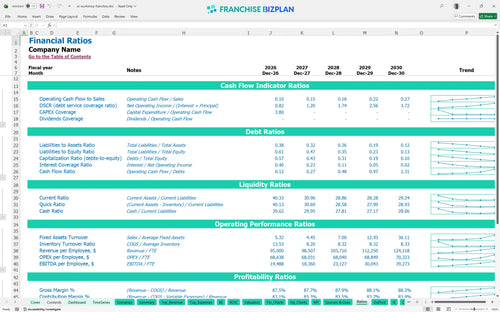
Performance metrics benchmark
We built this financial model using detailed research into the boutique DIY studio sector to provide a realistic look at unit economics. This financial feasibility study for DIY home decor franchise operations comes pre-loaded with a $570,000 first-year revenue target and an $87,000 EBITDA projection. Data beats guessing every single time. You can edit every line, from the $30,000 franchise fee to the specific hourly wages for your instructors.
The unit hits profitability in the first year with an estimated $87,000 EBITDA, scaling to $334,000 by year five as private events and retail sales ramp up. Typical profit margins for instructor-led DIY workshops are protected by keeping material costs around 9% of sales. Profit isn't just what's left over; it's what you plan for.
You will need approximately $200,000 to get the doors open, covering the $30,000 franchise fee and significant leasehold improvements. How to calculate startup costs for a craft studio franchise starts with the $80,000 build-out and $25,000 for tools and fixtures. Cash is king, but knowing where it goes is the kingdom.
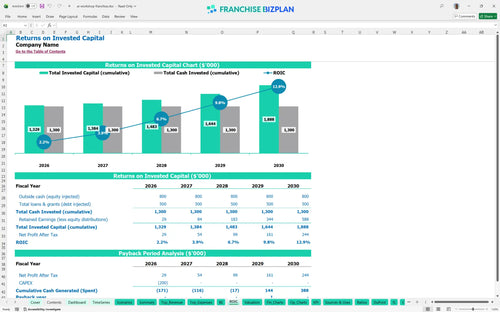
The model shows a 4.36% IRR and a 4-year payback period, which is standard for a retail-heavy creative concept. You will defintely want to monitor the 0.74 ROE to ensure the equity you put in is working hard enough. Patience is a virtue, especially with a four-year payback. This franchise investment ROI calculation assumes you hit your $570,000 year-one revenue target.
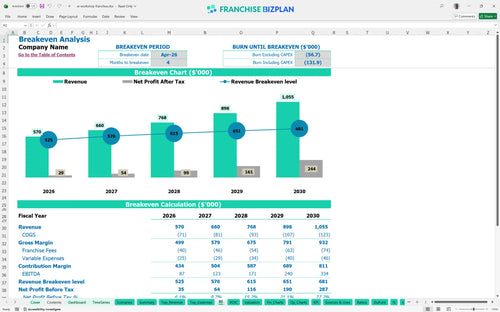
The studio is projected to break even in April 2026, just four months after launching operations. Estimating recurring revenue for boutique workshop business is key here, as your $6,500 rent and $15,000+ monthly labor bill create a high fixed-cost floor. Speed to break-even is the best stress reliever.
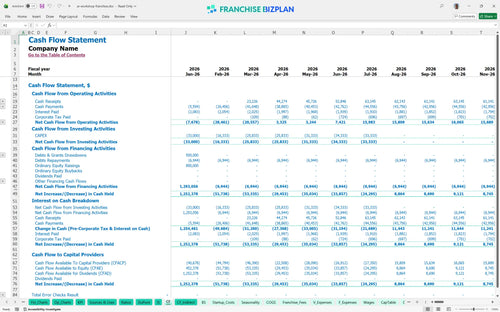
The lowest cash point occurs in July 2026 at $1,025, meaning your initial working capital is almost entirely deployed during the build-out and first few months of trading. Managing labor and inventory costs in a franchise studio is critical during this window to avoid a cash crunch. A cash buffer is your best friend during the ramp-up.
Franchise financial planning for first-time owners must account for revenue variance; a 20% drop in workshop registrations can push your payback out by two years. Forecasting corporate event revenue for small retail franchises is the biggest swing factor between the $570,000 base case and the $1M+ high-growth scenario. Always plan for the best but prepare for the worst.
Finance: update unit break-even and payback model by Friday
This franchise financial model template is built in Excel so you can tweak every variable to match your specific territory. It uses a small business financial projection template structure with pre-filled formulas, letting you adjust everything from local rent to specific supply costs without breaking the math. Every dollar in your budget should have a job.

Planning for the long haul is easier with this franchise business plan Excel tool that maps out your growth from $570,000 in year one to over $1 million by year five. You get a clear view of how scaling private events and retail sales impacts your bottom line over time. Five years is a lifetime in retail, so plan for the long haul. Plus, the Excel template for retail franchise cash flow forecasting helps you spot potential dry spells before they happen.

This model handles the heavy lifting of calculating your franchise fee structure and ongoing obligations. It automatically applies the 6% royalty and 1% marketing fund contribution against your gross sales so you see the true store-level margin. Royalties are the price of admission for a proven system. Use the royalty payment calculation logic to ensure your local pricing covers these corporate costs while keeping you profitable.

Estimating DIY workshop franchise startup costs requires looking at everything from the $30,000 initial fee to the $80,000 leasehold improvements. This tool includes a break-even analysis for retail that shows exactly when your workshop registrations and kit sales cover your $6,500 monthly rent. Knowing your zero-profit number keeps the lights on. It maps out the $200,000 total initial investment so you aren't surprised by the bill.

We included a retail franchise profitability analysis based on real-world operating expenses for DIY studio locations, including a $50,000 manager salary and lead instructor costs. You can use the franchise unit performance metrics spreadsheet to compare your projected 15% year-one EBITDA margin against industry standards. Don't fly blind when others have already mapped the terrain. It helps you sanity-check if your $1,100 utility budget is realistic for a high-traffic retail spot.


Simply purchase and download the financial model template, then access it instantly using Microsoft Excel or Google Sheets. No installation or technical expertise required-just open and start working.

Enter your business-specific numbers, including revenue projections, costs, and investment details. The pre-built formulas will automatically calculate financial insights, saving you time and effort.

Leverage the investor-ready format to confidently showcase your financial projections to banks, franchise representatives, or investors. Impress stakeholders with clear, data-driven insights and professional reports.

Leverage the investor-ready format to confidently present your projections to banks, franchise representatives, or investors.