


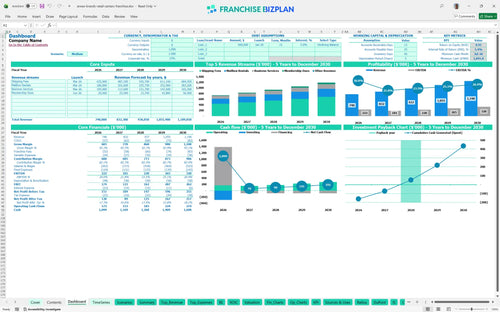
All-in-one Dashboard
Core inputs and core outputs



This franchise financial model provides a data-driven Excel template for retail franchise financial projections, covering everything from initial franchise capital requirements to 5-year EBITDA.
Core inputs and core outputs
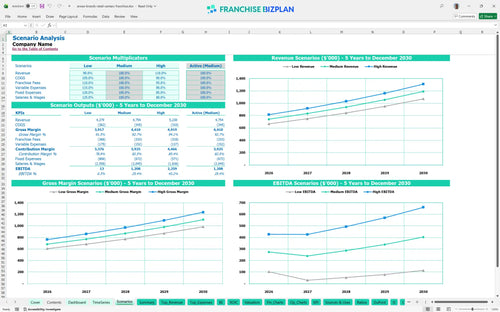
Three scenario analysis
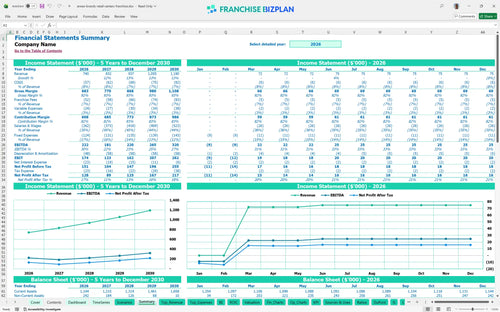
Presentation ready
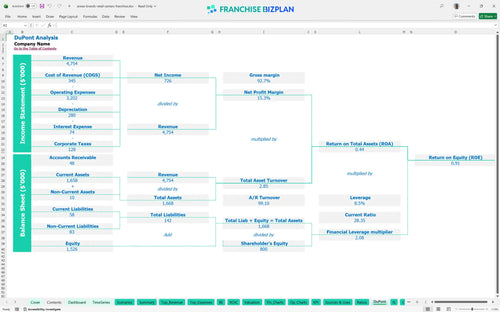
DuPont analysis
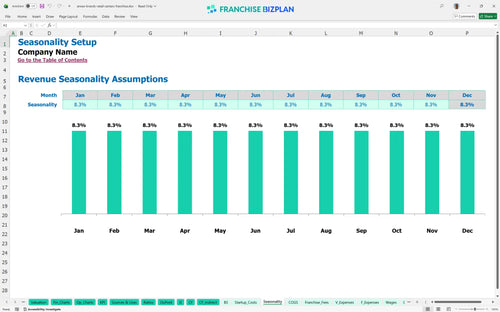
Researched revenue assumptions
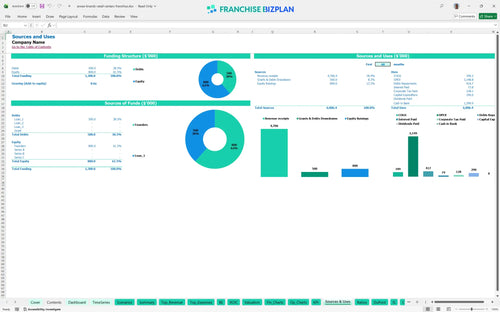
Lender-friendly financial outputs
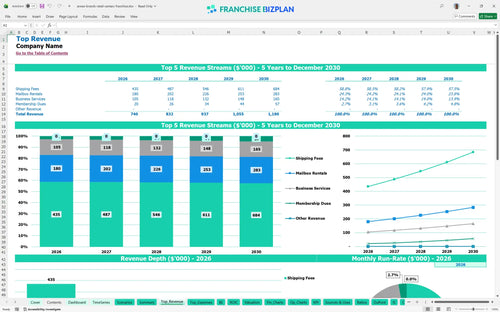
Revenue stream detailed view
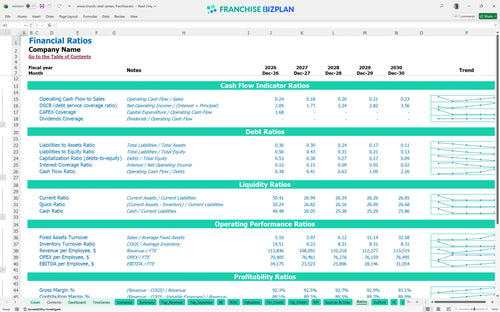
Performance metrics benchmark
We built this franchise unit financial model using our own research to provide a realistic franchise profitability analysis. Key assumptions like the $7,500 monthly rent, 5% royalty, and $35,000 franchise fee are pre-populated and fully editable to match your local market. With a projected year-one EBITDA of $222,000 and a 3-month path to breakeven, this model helps you track the real-world business cash flow projection of a retail logistics center.
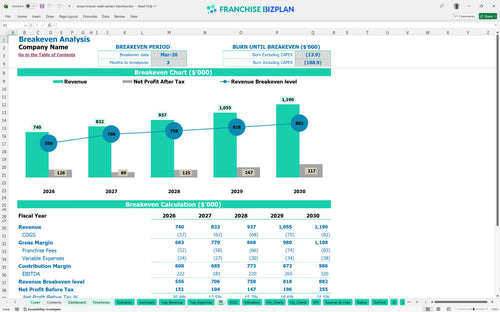
The unit reaches its break-even point in March 2026, just three months after opening. By year five, annual EBITDA is projected to reach $320,000 as revenue from shipping fees and mailbox rentals matures. Here's the quick math: your success hinges on managing the $11,333 monthly management payroll while scaling to $1.19M in sales.
You need a total initial investment of $290,000 to launch, with the largest portion being $140,000 for leasehold improvements. This budget also covers the $35,000 franchise fee and $35,000 in shipping equipment required for day-one operations. This is defintely a significant outlay, so tracking your $18,000 initial supply spend is vital for how to calculate startup costs for a shipping franchise.
The model projects a 3-year payback period and an internal rate of return (IRR) of 5.4%. With a return on equity (ROE) of 0.91, the investment offers a stable path for multi-unit operators looking to diversify their portfolio. Still, your actual retail franchise ROI will depend on local market capture and how well you manage your franchise financial forecasting template.
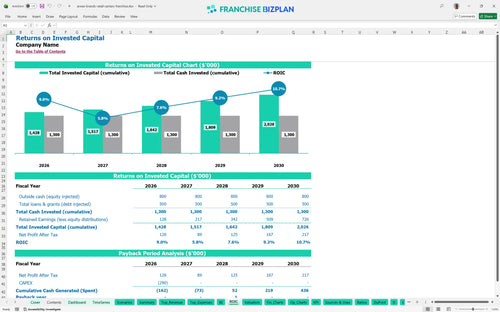
Your monthly break-even is reached when revenue covers the $7,500 rent and fixed costs like the $850 property insurance. The primary driver for reaching this point in 3 months is the volume of shipping fees, which are projected at $290,000 in the first year. If your average ticket drops, you'll need significantly more foot traffic to stay in the black.
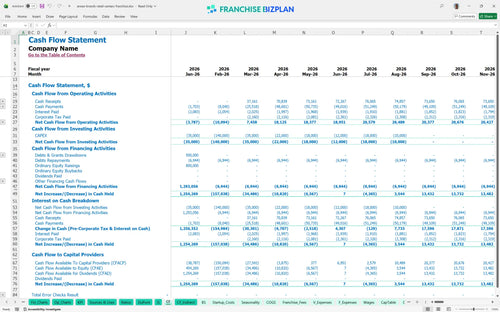
The lowest cash balance occurs in July 2026 at $1,041,000, assuming you start with sufficient working capital. This period accounts for the ramp-up of membership dues and the $18,000 spent on initial supplies. Honestly, keeping a tight grip on facility maintenance and software costs during these first six months is non-negotiable for a financial model for small business retail franchises.
A high-performance scenario shows projected revenue for shipping and logistics franchises climbing to $1,190,000 by year five, which significantly boosts your store-level margin. The model allows you to test how to forecast franchise operating expenses if labor costs rise or if business services revenue dips below the $70,000 year-one target. To be fair, hitting the high case requires a relentless focus on local B2B outreach and customer retention.
Finance: update unit break-even and payback model by Friday
This franchise financial model is built in Excel with fully editable assumptions, allowing you to tweak every revenue driver and expense line to fit your specific territory. You can use the pre-filled formulas to test different pricing for shipping fees or adjust staffing levels as your volume grows. Every 1-point margin leak matters in a single-unit model.

Plan your long-term growth with a detailed 5-year outlook that tracks revenue scaling from $740,000 to over $1.1 million. The model provides a clear view of your franchise P&L statement, cash flow, and balance sheet to help you manage the transition from a new store to a mature unit. Timing gaps between opening and maturity can sink a plan.

This tool automatically calculates your 5% royalty and 2% marketing fund contributions so you know exactly what stays in your pocket after brand obligations. It tracks the initial $35,000 franchise fee and ongoing costs to ensure your franchise profitability analysis is accurate. Royalties come off the top, so volume is your best friend.

Estimate your total retail franchise startup costs, including the $140,000 for leasehold improvements and $35,000 for shipping equipment. The model identifies the specific sales level required to cover your $7,500 monthly rent and payroll. Breakeven is about density, not just headline sales.

We've included researched benchmarks for labor, rent, and gross margins to help you sanity-check your business plan template for shipping and mailbox centers. Compare your expected $68,000 manager salary against industry standards to ensure your franchise unit economics remain competitive. Benchmarks keep your assumptions from drifting into fantasy.


Simply purchase and download the financial model template, then access it instantly using Microsoft Excel or Google Sheets. No installation or technical expertise required-just open and start working.

Enter your business-specific numbers, including revenue projections, costs, and investment details. The pre-built formulas will automatically calculate financial insights, saving you time and effort.

Leverage the investor-ready format to confidently showcase your financial projections to banks, franchise representatives, or investors. Impress stakeholders with clear, data-driven insights and professional reports.

Leverage the investor-ready format to confidently present your projections to banks, franchise representatives, or investors.