


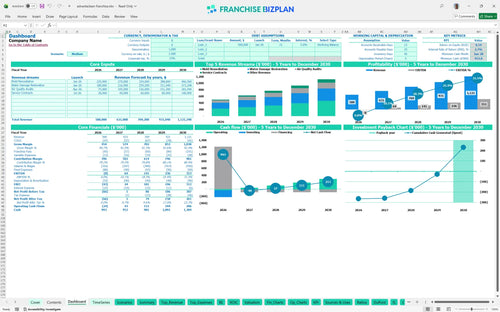
All-in-one Dashboard
Core inputs and core outputs



This franchise unit financial model template provides a complete Excel-based toolkit for projecting revenue, expenses, and investment returns for a professional restoration and environmental services business.
Core inputs and core outputs
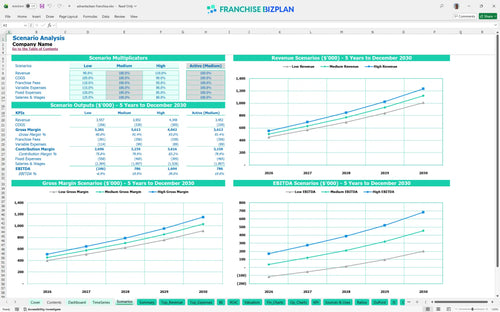
Three scenario analysis
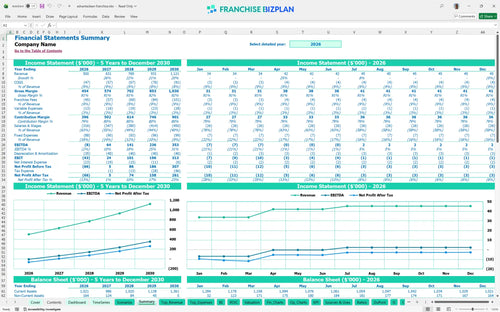
Presentation ready
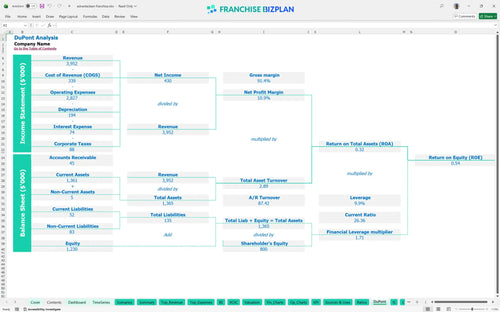
DuPont analysis
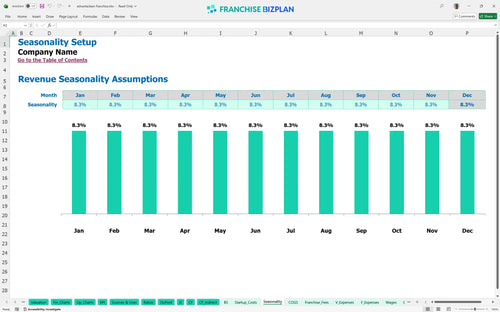
Researched revenue assumptions
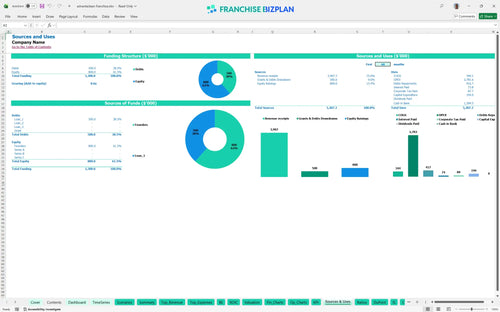
Lender-friendly financial outputs
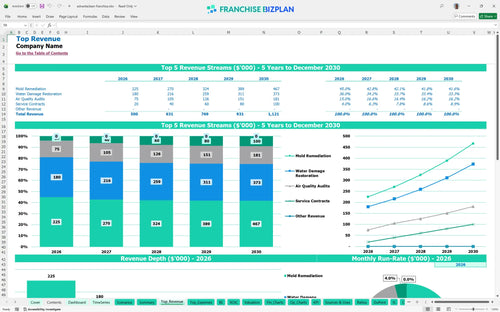
Revenue stream detailed view
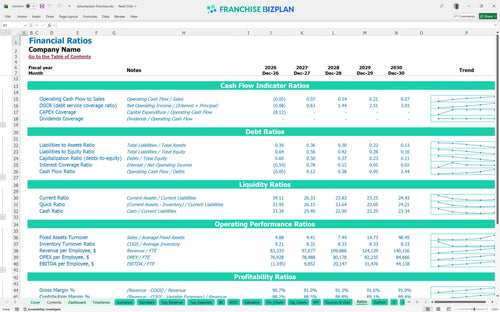
Performance metrics benchmark
We built this franchise unit financial model using our own research to help you navigate the restoration industry. Key assumptions, including the $500,000 year-one revenue and the 8% royalty fee, are pre-populated with researched data specific to this franchise unit and are fully editable. This tool allows you to see how a -$8,000 year-one EBITDA can transform into a $353,000 profit by year five. This is the roadmap for your first five years.
You can expect to see positive EBITDA by the second year, with the model showing a jump from a small $8,000 loss in year one to a $64,000 profit in year two. By year five, the unit is projected to generate $353,000 in EBITDA as service contracts and repeat referrals scale. Research is the difference between an investment and a gamble.
To launch this unit in the US, you will need approximately $199,000 in initial capital for equipment and build-out, plus working capital to cover early losses. The largest outlays go toward your fleet and specialized remediation tools to handle coastal humidity challenges. Growth is great, but cash is king.
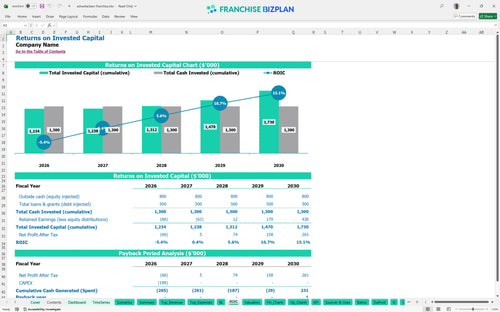
The model projects a 5-year payback period with an internal rate of return (IRR) of 2.68%. While the initial ROI for service franchises in this space can be slow due to high equipment costs, the long-term equity build is supported by a 0.54 return on equity (ROE) by year five. Payback is a marathon, not a sprint.
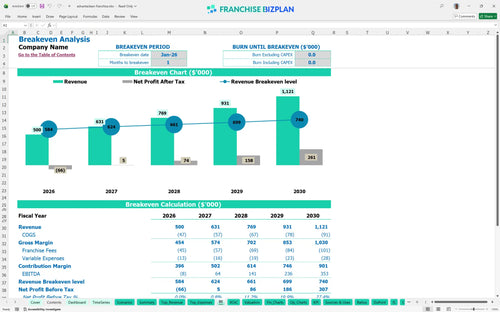
The unit reaches its monthly break-even point in January 2026, assuming you hit the ground running with mold remediation and water restoration leads. Your break-even depends heavily on managing the $4,500 monthly rent and the fixed salaries for your GM and lead technician. Break-even is your first real victory.
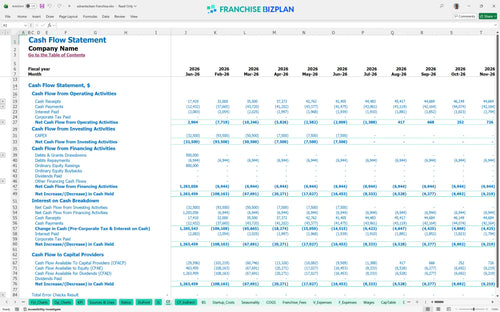
Your lowest cash point hits in January 2028 with a balance of $953,000, assuming your initial funding covers the ramp-up. You need enough runway to handle the gap between finishing a mold job and getting paid by insurance companies. Still, having a cash buffer is defintely recommended to survive the timing gaps. Keep your powder dry for the slow months.
Moving from a medium to a high-growth scenario hinges on your ability to capture more water damage restoration jobs, which have higher margins. A 10% drop in revenue in a low case could delay your $353,000 year-five EBITDA target significantly, making local marketing execution the primary driver of success. Scenarios help you sleep better at night. Finance: update unit break-even and payback model by Friday.
This franchise financial model template is built in Excel, allowing you to tweak every variable from technician headcount to local disposal fees. You get pre-filled formulas and editable assumptions that make it easy to adapt to your specific territory, whether you are in a high-humidity coastal market or a dry inland area. Every 1-point margin leak matters fast in a single-unit model.

Planning for a restoration business requires looking past the first few floods to see the long-term horizon. This model provides a detailed 5-year view of revenue, costs, and cash flow, helping you see how scaling from 3 to 5 service technicians impacts your bottom line. Creating a 5-year financial projection for a new franchise ensures you aren't surprised by the capital needs of year four. Timing is everything when you're balancing floods and payroll.

Royalties and brand funds are the off-the-top reality of franchising that can squeeze your margins if you don't plan for them. This tool tracks the 8% royalty and 1% marketing fund contributions against your projected sales, so you know exactly what stays in your pocket. It's essential for understanding the real economics of the unit before you sign the paperwork. Royalties never take a holiday, even when sales are slow.

Launching a restoration unit involves significant upfront costs, from $80,000 in service vehicles to $25,000 in dehumidifiers. This model includes a break-even analysis for small business owners to determine the exact monthly revenue needed to cover fixed costs like your $4,500 operations hub rent. Knowing how to calculate startup costs for a mold remediation franchise prevents mid-launch cash crunches. Your truck is your office; treat it like a profit center.

We've baked in industry standards for restoration business startup costs and labor margins to help you sanity-check your numbers. If your remediation materials costs are defintely trending above the 7.5% benchmark, the model flags it so you can investigate waste or pricing. It's a reality check against typical franchise unit economics that keeps your projections grounded. Numbers don't lie, but they do hide things if you don't look closely.


Simply purchase and download the financial model template, then access it instantly using Microsoft Excel or Google Sheets. No installation or technical expertise required-just open and start working.

Enter your business-specific numbers, including revenue projections, costs, and investment details. The pre-built formulas will automatically calculate financial insights, saving you time and effort.

Leverage the investor-ready format to confidently showcase your financial projections to banks, franchise representatives, or investors. Impress stakeholders with clear, data-driven insights and professional reports.

Leverage the investor-ready format to confidently present your projections to banks, franchise representatives, or investors.