


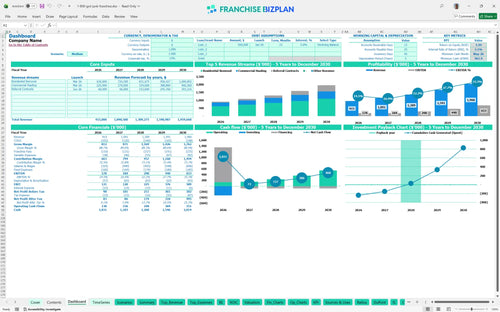
All-in-one Dashboard
Core inputs and core outputs



This franchise unit profitability analysis includes a full pro forma, automated dashboard, and detailed schedules for trucks, staffing, and territory ramp-up.
Core inputs and core outputs
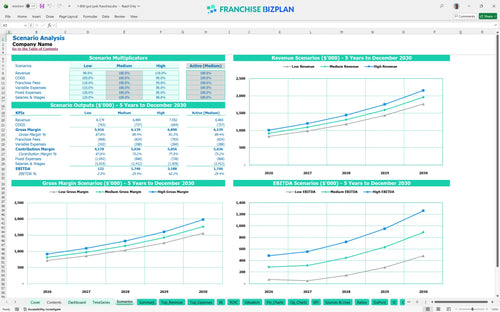
Three scenario analysis
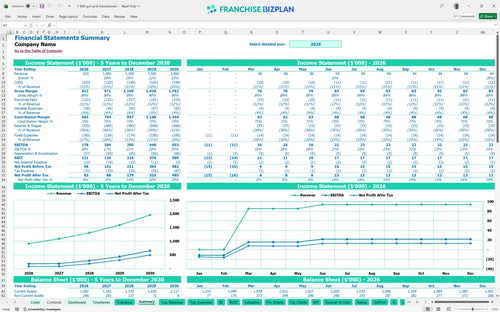
Presentation ready
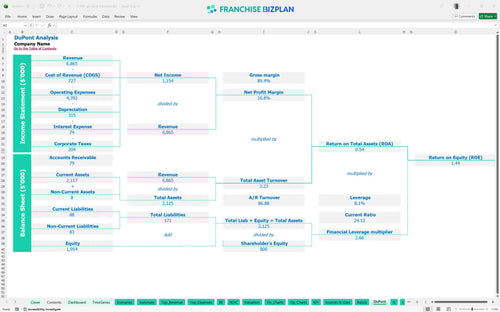
DuPont analysis
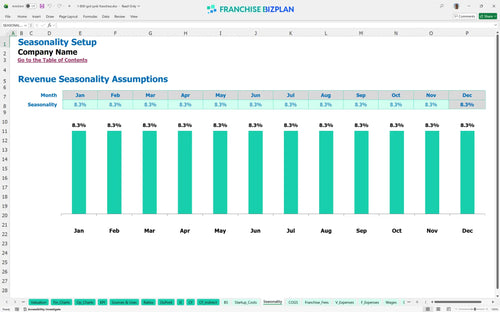
Researched revenue assumptions
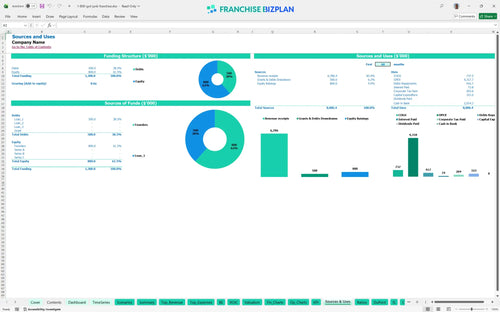
Lender-friendly financial outputs
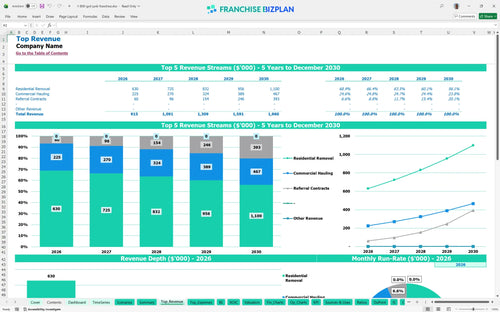
Revenue stream detailed view
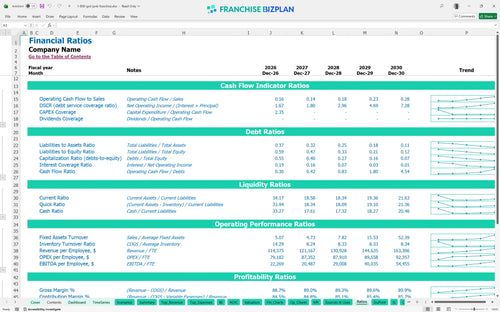
Performance metrics benchmark
We built this junk removal franchise financial model using deep research into the hauling industry's unit economics. Key assumptions like the $65,000 franchise fee and truck-level productivity are pre-populated but fully editable to match your local market. With a projected year-one EBITDA of $178,000, the model helps you track every dollar from the first pickup.
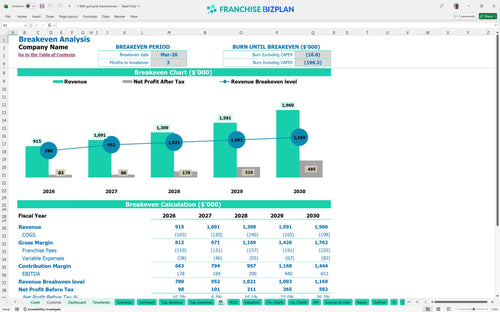
This unit hits profitability almost immediately, reaching its break-even date in March 2026, just three months after launch. By year three, EBITDA is projected to reach $290,000 as you scale your residential and commercial volume. Speed to profit is the best hedge against market risk.
You need roughly $323,000 in initial capital to cover the franchise fee, two trucks, and yard improvements. This includes $140,000 for the fleet and $65,000 for the brand rights, plus $45,000 for yard setup. You can't haul junk without the right tools in the yard.
The model projects an internal rate of return (IRR) of 5.09% and a full payback on your initial investment within three years. While the IRR is steady, the cash-on-cash return grows significantly as the fleet expands to nine crew members by year five. Equity growth is the real prize in the franchise game.
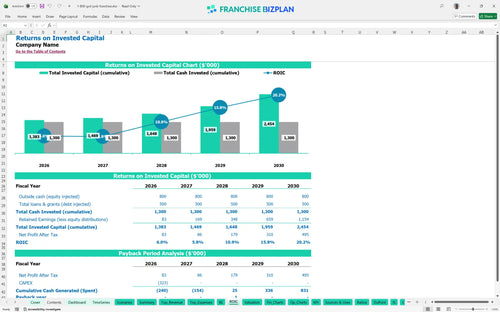
Monthly break-even occurs in month three, driven primarily by the high volume of residential removal jobs. Your biggest lever is labor productivity; if your truck crews aren't hitting their daily job targets, fixed costs like the $7,500 rent will eat your margin. Efficiency in the field translates directly to cash in the bank.
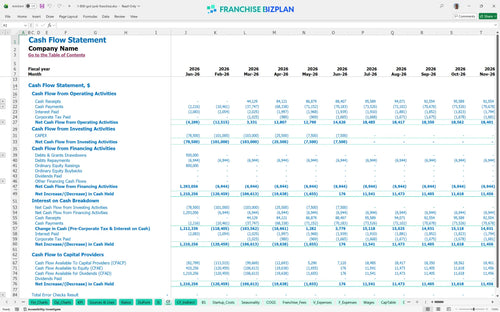
The lowest cash point hits in May 2026 at $962,000, assuming you start with a strong capital base. You need enough runway to handle the $12,000 in office tech and $18,000 in truck wraps before the commercial contracts fully kick in. A dry tank stops more than just trucks; it stops your business.
A high-performance scenario focuses on hitting the $733,261 residential target by year five, which significantly boosts the 5.09% IRR. Low scenarios usually stem from high disposal fees or poor fuel management, which can delay payback beyond the three-year mark. Execution beats a perfect plan every single day.
Finance: update unit break-even and payback model by Friday.
This junk removal franchise financial model is built in Excel so you can tweak every variable to match your specific territory. You can adjust disposal fees, fuel costs, and local labor rates to see how they impact your bottom line in real-time. Static spreadsheets are where business plans go to die, so we made this one fully interactive.

Mapping out five years helps you see the transition from a single-truck operation to a multi-unit fleet. With revenue projected to grow from $915,000 in year one to nearly $2 million by year five, you need to track how EBITDA (earnings before interest, taxes, depreciation, and amortization) scales alongside your crew size. Long-term planning is the difference between owning a job and owning a business.

This model bakes in the 8% royalty and 4% marketing fund contributions right off the top of your gross sales. At $1.3 million in annual revenue, that means $156,000 goes to the franchisor before you pay for fuel or disposal. Royalties are a tax on top-line success, so you must protect your store-level margins through high volume.

Starting this hauling unit requires significant upfront capital for trucks, equipment, and the initial $65,000 franchise fee. The model shows a fast path to break-even in just three months, provided you hit your residential and commercial volume targets early. Cash flow is the only metric that matters when the bills are due during ramp-up.

We've included benchmarks for disposal fees and labor to ensure your junk removal business plan template stays grounded in reality. If your disposal costs are way off the 9.5% starting point, your margins will defintely suffer as you scale. Don't guess when you can benchmark against proven service-industry standards.


Simply purchase and download the financial model template, then access it instantly using Microsoft Excel or Google Sheets. No installation or technical expertise required-just open and start working.

Enter your business-specific numbers, including revenue projections, costs, and investment details. The pre-built formulas will automatically calculate financial insights, saving you time and effort.

Leverage the investor-ready format to confidently showcase your financial projections to banks, franchise representatives, or investors. Impress stakeholders with clear, data-driven insights and professional reports.

Leverage the investor-ready format to confidently present your projections to banks, franchise representatives, or investors.